A long, elegantly set table stretched along Dimosthenous Street before branching toward Lykourgou Street. At the exact point where the two roads meet, cutting through Piraeus’ Historic Central Market, a podium stood waiting. From there, Piraeus Mayor Yannis Moralis officially opened the 5th Piraeus Taste Festival – Sea Food and More.
This year, however, the festival had another reason to celebrate the city’s local identity and distinctive flavors: the heart of its historic market had begun beating again, in a way worthy of its history.
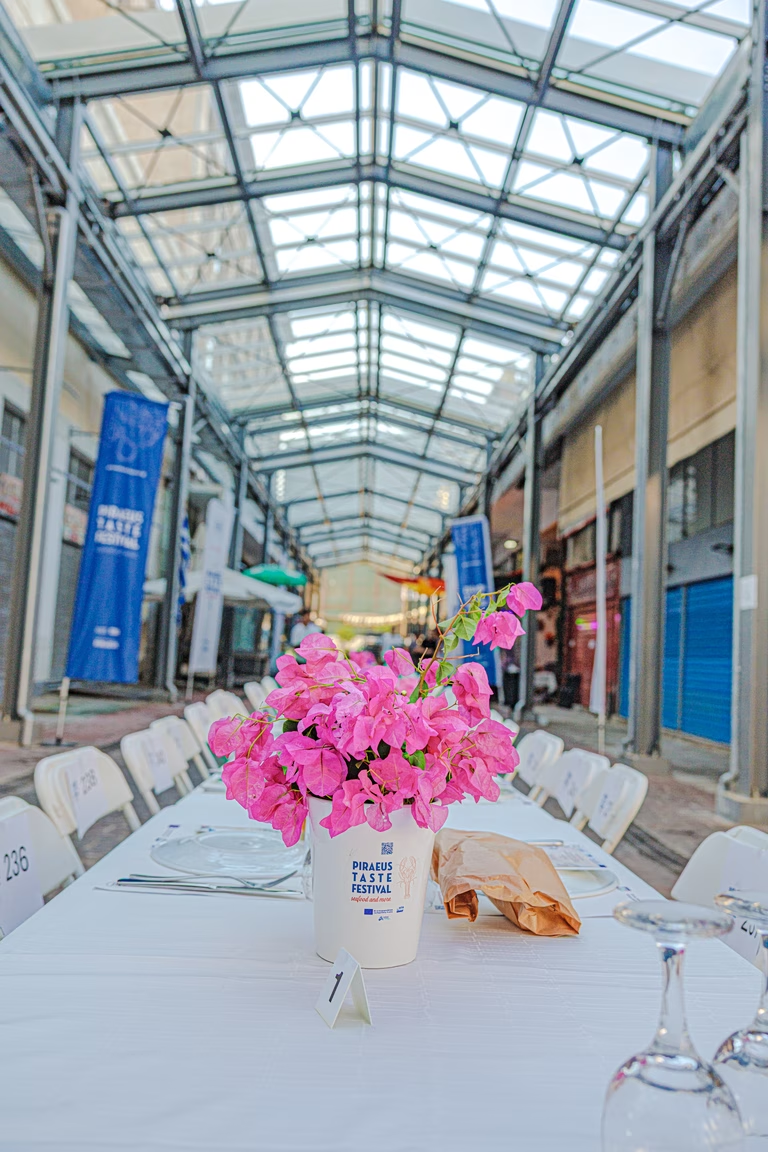
The large table set for the opening of Piraeus’ Historic Municipal Market.
166 years of history
The market complex is 166 years old. It began operating in May 1860 and continued to take shape until 1864, when it acquired its definitive form. The complex brought together bakeries, greengrocers, butcher shops, and fishmongers, becoming an integral part of everyday life in the port city.
A major fire in early 1921 destroyed almost the entire market. Yet even that did not bring its operation to an end. The market continued to function and played a pivotal role in the life of Piraeus after the arrival of Greek refugees from Asia Minor in 1922, following the Greco-Turkish War and the subsequent population exchange.
It remained open until 1969, when it finally closed its doors.
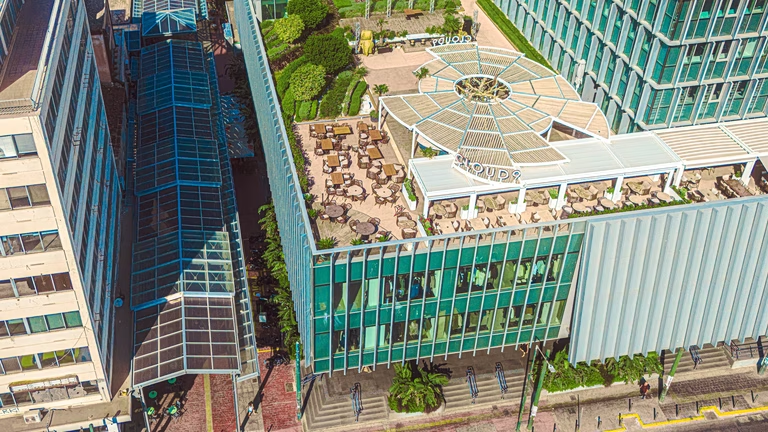
The Piraeus Tower took its place. Although the tower eventually became one of the city’s landmarks, it could never replace the living, breathing market: the voices, the bargaining, the constant flow of people, the shopkeepers who raised their shutters before dawn to receive their deliveries, exchanging a few words over a quick cup of Greek coffee.
Today, the Piraeus Tower has been transformed into a state-of-the-art bioclimatic skyscraper housing major stores and offices—a genuine landmark and a jewel for the city.
And now it is the Municipal Market’s turn to claim, and finally receive, the second chance it deserved.
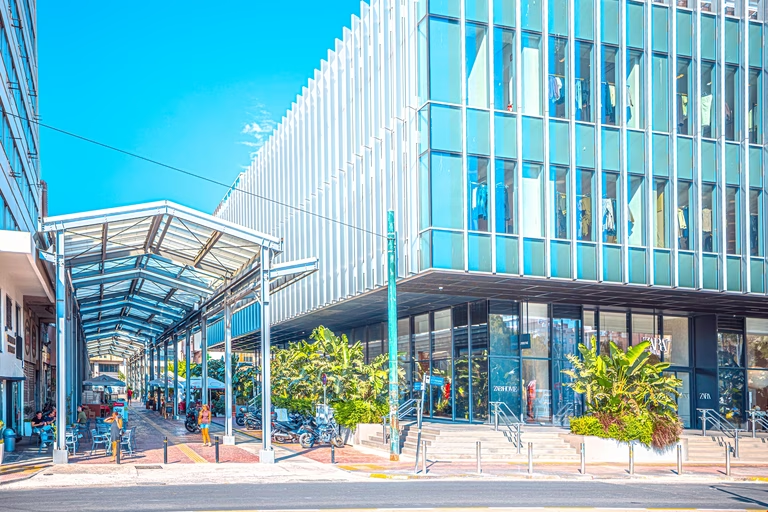
The new face of the Municipal Market, designed to meet the demands of modern life.
“We had marked this particular area as a priority back in 2014, when the ‘Piraeus the Winner’ municipal administration took over the city,” Mayor Moralis said at the beginning of his speech. “This is where the people of Piraeus, commerce, and entrepreneurship come together, and it needed an intervention. I believe the intervention that has been carried out is both substantial and beautiful. It offers multiple benefits, aesthetically and in terms of the operation of the businesses active here, as well as for the economy and bioclimatic performance.”
And indeed, the market’s new appearance is a far cry from the sense of abandonment that had come to define it—a market that seemed stuck in the past, unable to keep pace with the present.
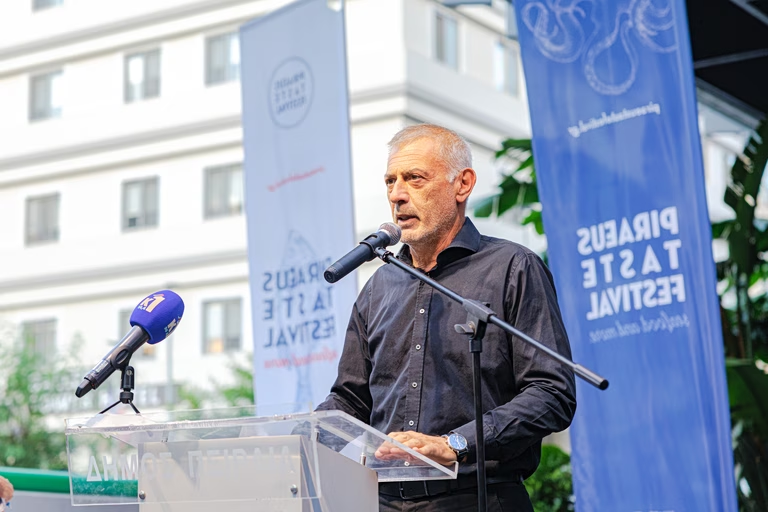
Piraeus Mayor Yannis Moralis hands the renovated Central Market back to the city’s residents.
A market built for today
The Municipal Market of Piraeus unveiled last Saturday now proudly features a new bioclimatic canopy incorporating metal and glass elements.
Photovoltaic systems provide energy for lighting the space, with no operating electricity cost and a reduced energy footprint, transforming the entire area into a thoroughly modern and functional public space.
It is the kind of place you want to visit, walk through, and make part of your everyday life.
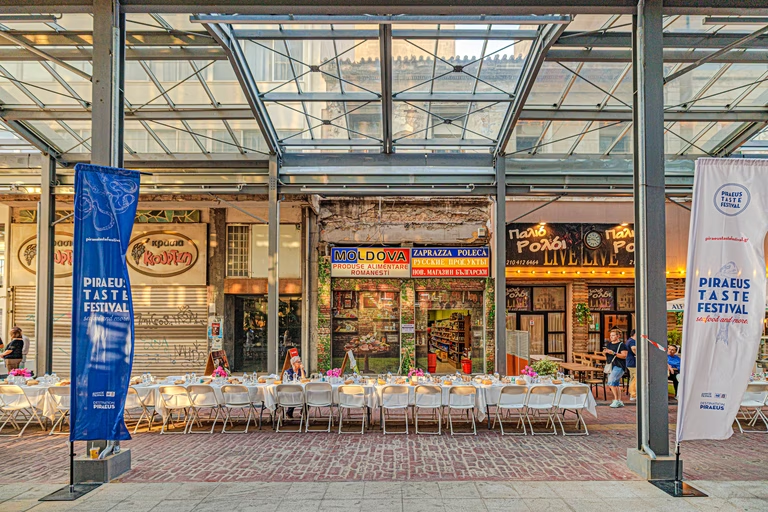
Under the modern bioclimatic canopy, entrepreneurship is flourishing.
In such a space, commercial activity can truly flourish. So can the businesses operating here—and beyond—which joined the celebration by contributing their own flavors to the table.
It was as if a large part of Piraeus had come together to present the city as it deserved to be seen: as a place of authentic culinary tradition and hospitality.
“My wish was for 168,000 Piraeus residents to be here today. Obviously, that isn’t possible. So we thought the next best thing would be to have representatives of the citizens here and set a table for everyone. I would like to thank the city’s businesses, which helped make this happen,” Moralis said.
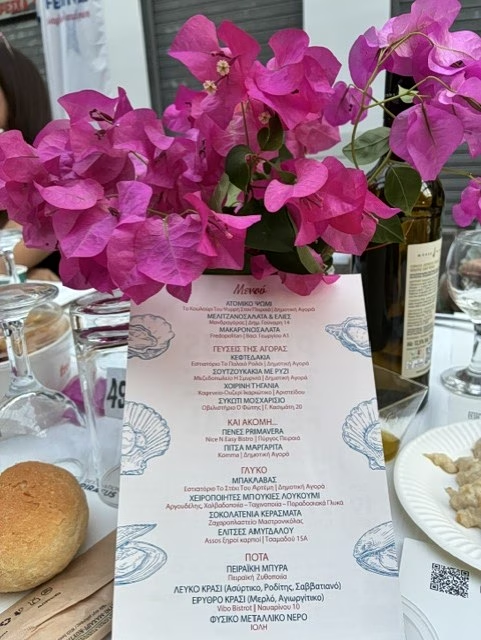
Businesses from across the city contributed their own specialties to the menu for the large table hosted by the Municipality of Piraeus.
A table full of Piraeus
The table, then.
There is perhaps no better way to bring people together than around food—to share flavors, memories, and stories.
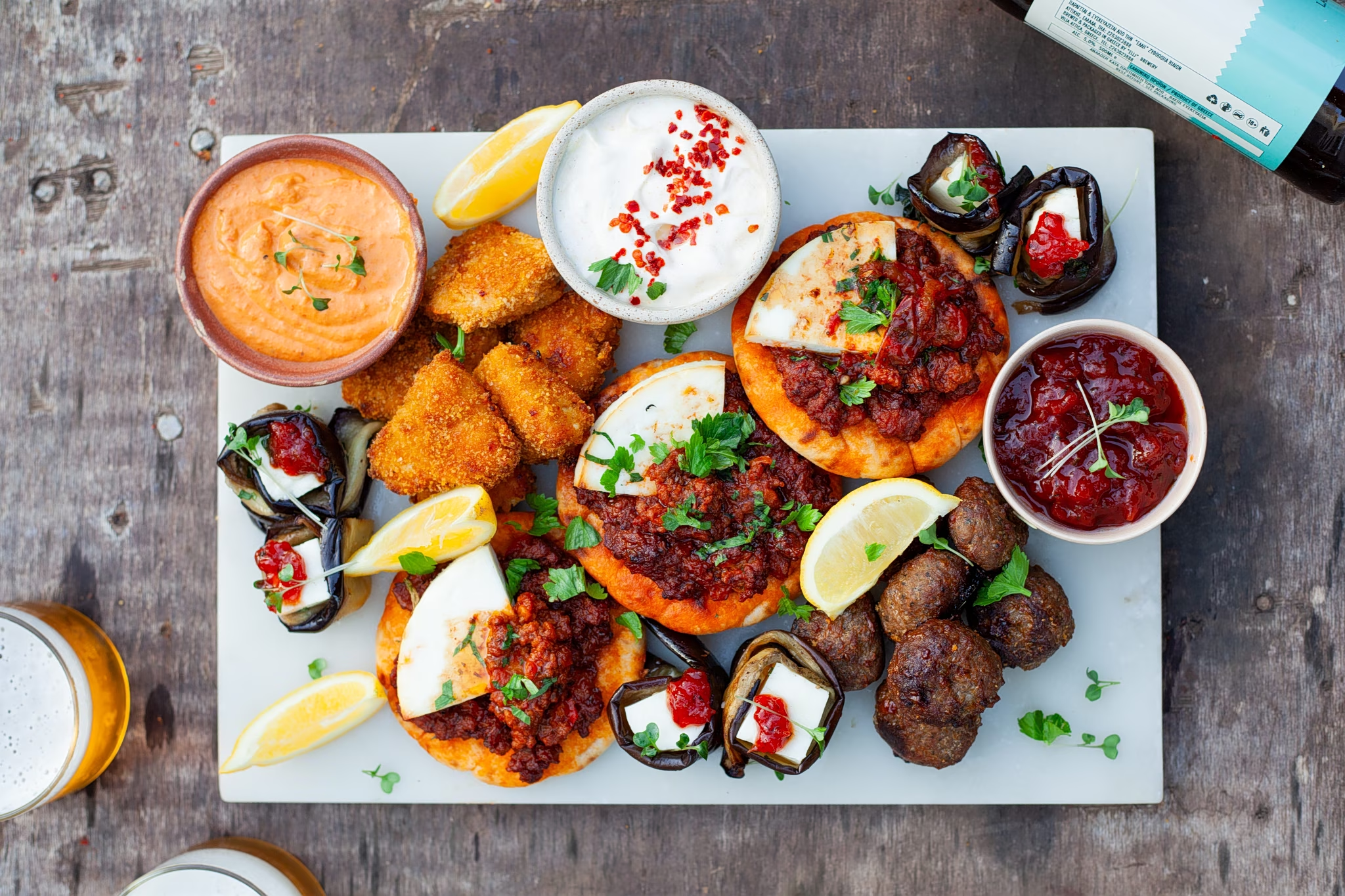
This was a table that was abundant yet simple, filled with dishes that have been part of generations of Piraeus families. Just as they were then, so they are today: eggplant dip and pasta salad, meatballs, soutzoukakia with rice, pork tigania—a traditional Greek pork dish cooked in a pan—and beef liver.
But there was also a bridge to the present: penne primavera, tomato sauce and fresh pasta, and an authentic Neapolitan Margherita pizza.
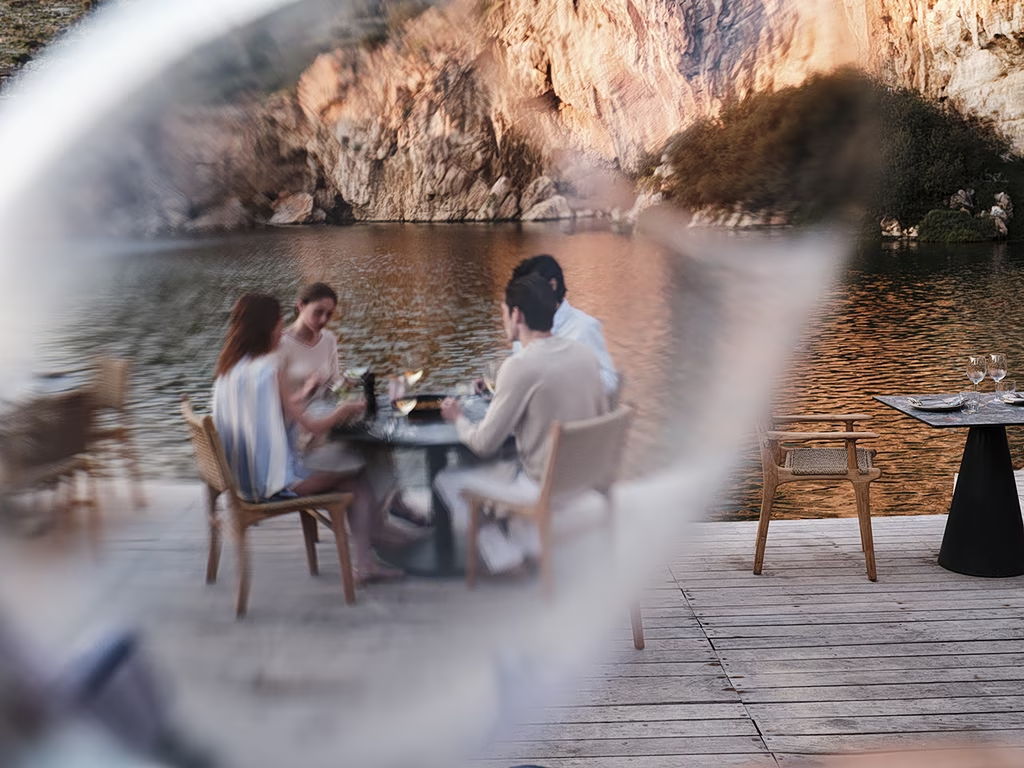
Piraiki beer, produced in Piraeus and carrying a protected designation of origin, was served alongside red and white wine. Dessert brought the meal to a sweet close: handmade loukoumakia, small traditional Greek doughnuts; chocolate treats and “little olives”; and a generous, richly prepared baklava, reaffirming the city’s long tradition of exceptional syrup-soaked pastries.
And, of course, there was music, dancing, and celebration.
The Municipality’s Brass Band Philharmonic Orchestra set the festivities in motion. Later, as the meal continued, the baton passed to the beloved Greek popular songs that invariably accompany the country’s most joyous community celebrations.
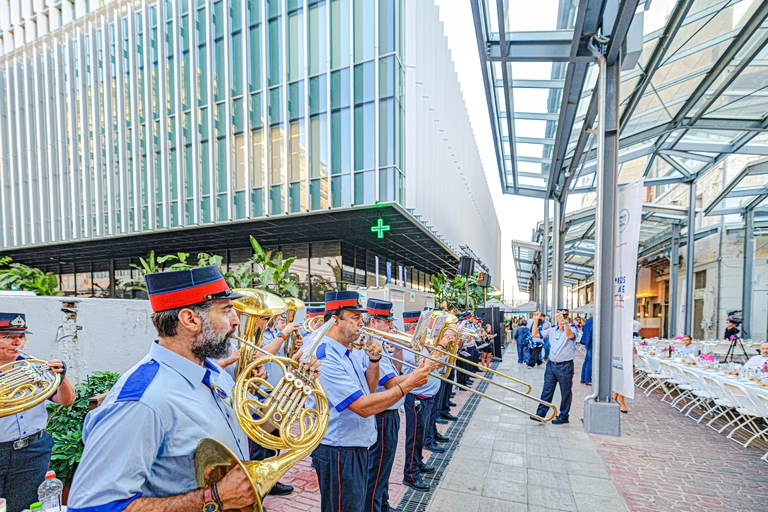
The Municipality’s Brass Band Philharmonic Orchestra set the tone for the celebration before handing over to the traditional Greek popular music ensemble later in the evening.
A market that is alive again
Last Saturday was a celebration—and a big one.
But it will not end when the 5th Piraeus Taste Festival – Sea Food and More concludes on September 27. Its continuation will be found every day in the shops that carry on Piraeus’ long culinary tradition, and among the merchants who keep the city’s gastronomic identity alive.
It will be found in the shops and among the traders of the Municipal Market itself.
Because for the past few days, the market has been living again.
And with its new face, it is giving the city around it a new lease on life.