 Μake us preferred on Google
You don’t have to be a nature expert—or even particularly knowledgeable about food—to know that this is mushroom season. After all, the weather is finally turning colder and wetter, much to the delight of mushroom lovers. All it takes is a little observation to spot them sprouting from tree trunks or pushing through the soil beside a roadside curb the morning after a rainy night. These particular mushrooms, of course, aren’t edible. But they’re perfect for photographs, resembling alien life forms that have somehow decided to colonize our otherwise concrete-dominated everyday surroundings.
Mushrooms are fungi. They feed on fallen leaves and decaying branches on the forest floor, which makes the damp soil of autumn their undisputed kingdom. Still warm from the summer sun but newly moistened by the first autumn rains, the mountain earth becomes a fertile breeding ground for mushrooms of every kind. To the untrained eye, many of them look decidedly exotic.
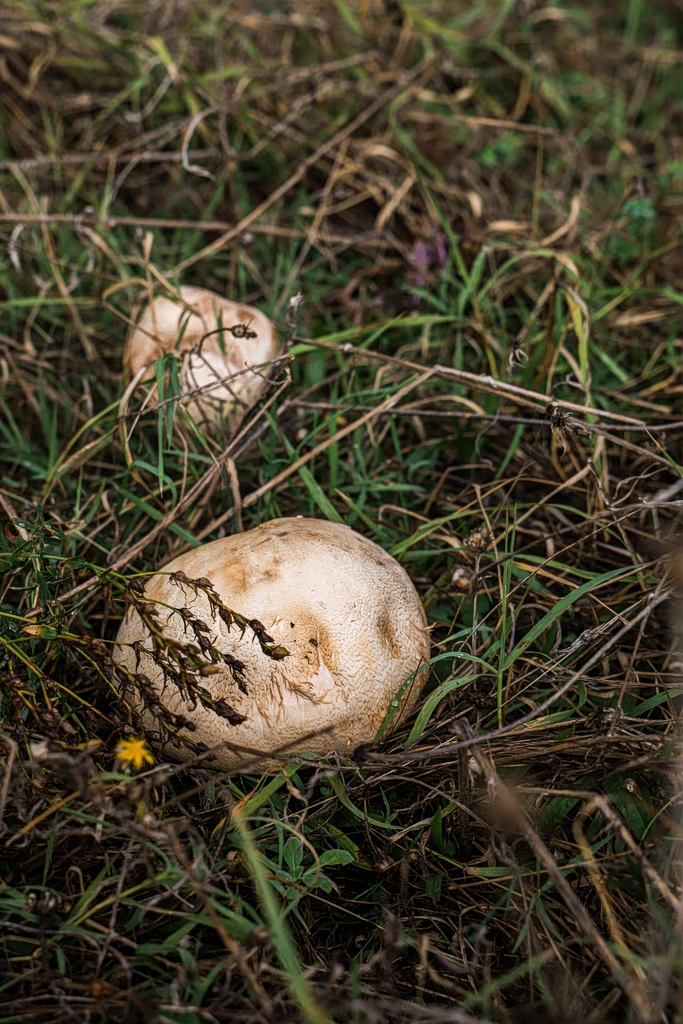
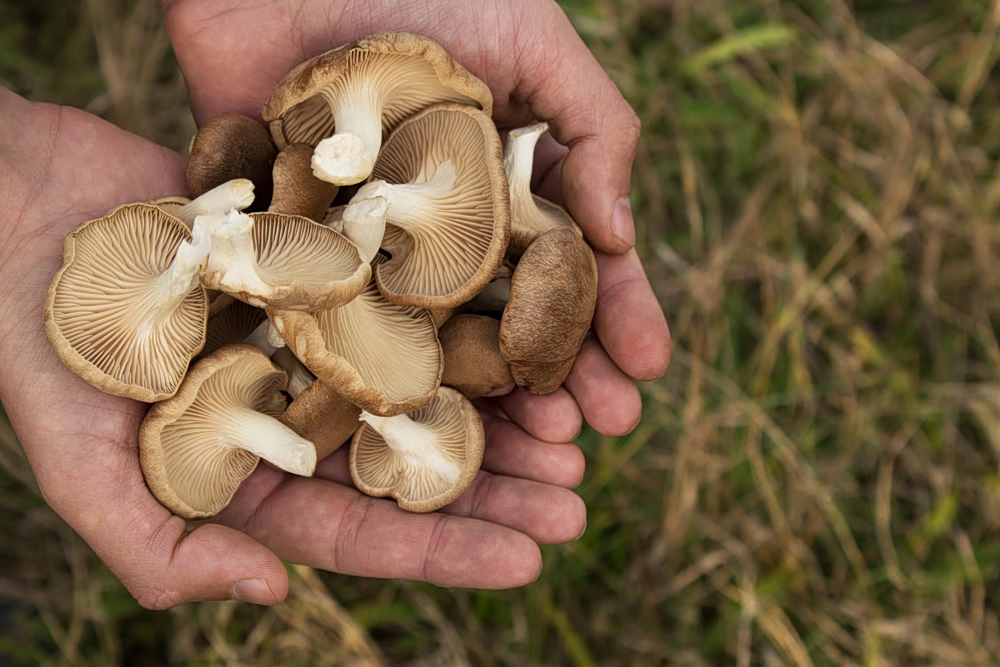
Photo: Giorgos Adamos
Perhaps that’s precisely what makes foraging for wild mushrooms, which emerge across the countryside every autumn, so captivating. There are thousands of species, their shapes seemingly lifted from fairy tales and the cartoons we watched as children. Yet many are toxic or poisonous, and some can even be deadly.
Mushroom foraging requires an exceptional level of knowledge. It’s certainly not something just anyone can do. There are no shortcuts, and experimentation is out of the question. It takes experience, caution, and absolute respect for nature. In short, you need a guide: someone who can take you by the hand and introduce you to this mysterious world.
An expert will tell you which mushrooms are safe to collect and which are better left for photographs. They’ll show you how to pick them, clean them, and store them properly. As for cooking them, that’s something you can get creative with on your own.
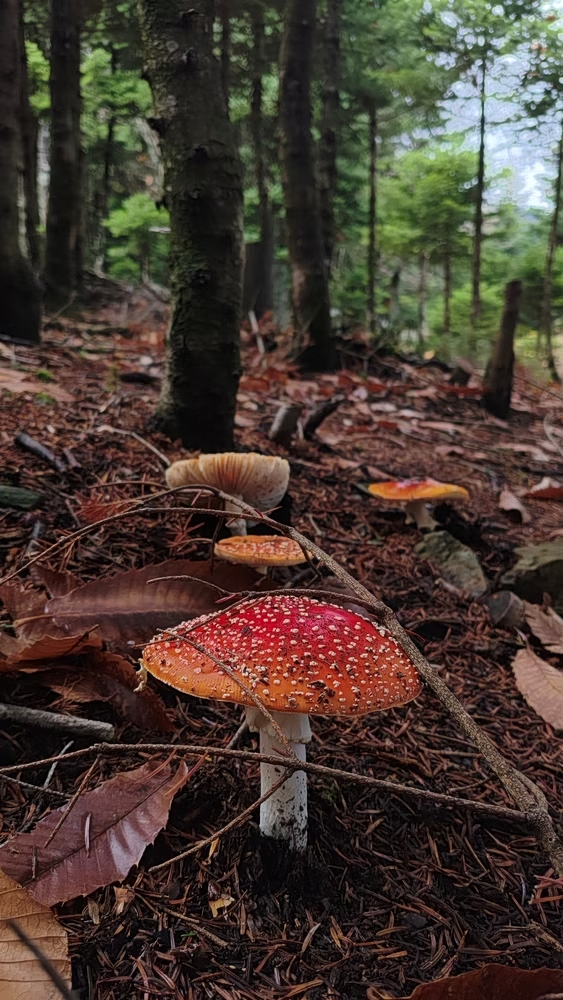
Head for the hills
Fortunately, you don’t have to venture too far from Athens to experience mushroom foraging. The nearby mountains, covered in fir and oak forests, are particularly abundant in mushrooms at this time of year.
Mount Parnitha, Kithairon, Velouchi, Chelmos, Parnassos, and Dirfys are all excellent destinations for nature excursions. Experienced foragers can identify a variety of wild mushrooms in these areas, many of them edible.
Porcini (known in Greece as volites) are among the most common, alongside chanterelles, red-capped mushrooms, field mushrooms, and oyster mushrooms. But recognizing them correctly and avoiding potentially dangerous lookalikes requires an experienced guide.
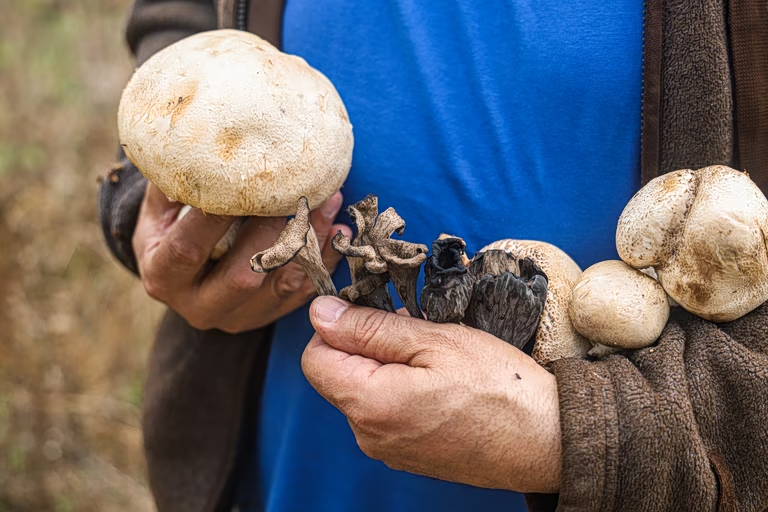
Photo: Giorgos Adamos
It’s one of the first lessons anyone heading into the forest to observe and collect mushrooms learns: growing alongside the harmless, safe, and delicious varieties are toxic and poisonous species. Many look almost identical, differing only in subtle details that an untrained eye would easily miss.
So, before buying a wicker basket, a specialized mushroom knife, and heading for the mountains, it’s best to turn to the experts. Several groups specialize exclusively in mushroom identification and foraging, regularly organizing guided excursions into the countryside.
Thankfully, there are quite a few of them—and just as many people eager to get better acquainted with the mysterious world of mushrooms. To smell the damp earth, follow forest trails, crouch down among the roots of trees, and discover everything that an apparently insignificant fungus can conceal.
It’s certainly more exciting than walking to the supermarket refrigerator and dropping a plastic container of cultivated field mushrooms into your shopping basket.
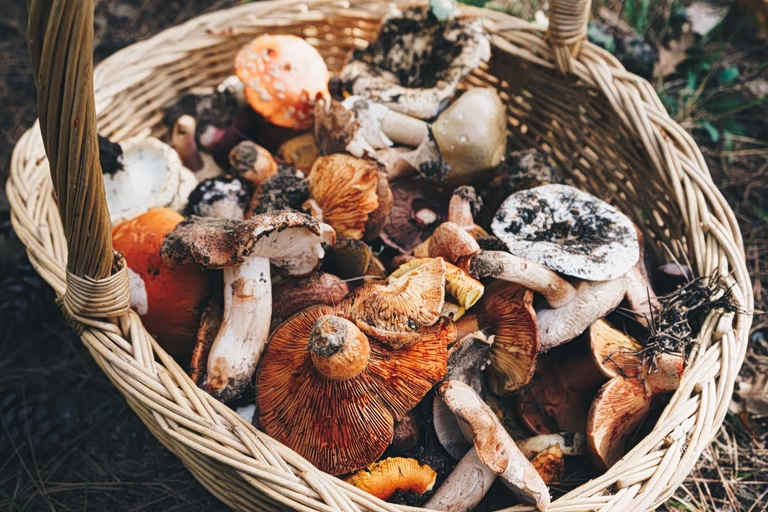
Fungi Hellas – Mushroom Foraging Excursions
Nektarios Filippopoulos, founder of Fungi Hellas, has been organizing mushroom foraging excursions for 40 years. That’s four decades of experience in mushroom identification and collection, as well as in the increasingly popular pursuit of wild truffles.
Eager to share his knowledge and introduce others to the natural treasures Greece has to offer, he established a specialized team that organizes corporate trips to forests and lakes, as well as foraging workshops for individuals in some of the country’s richest mushroom-growing regions.
View this post on Instagram
The team’s excursions follow a specific protocol. First, the group leader provides participants with a briefing, covering everything they need to know about identifying and collecting mushrooms, along with essential safety guidelines.
Then comes the hike and the actual foraging, always under the guidance of experienced mushroom collectors. Once the mushrooms have been gathered, the experts identify each species and sort them into three categories: edible, neutral, and poisonous.
And then comes the best part: a picnic in the great outdoors, featuring dishes made with wild mushrooms, accompanied by a selection of fine wines.
The group’s upcoming excursions—all day trips—are scheduled for November 1 in Kalavryta, November 8 in Arvanitsa, Boeotia, November 15 in Seliana, Achaia, and November 22 on Mount Dirfys in northern Evia.
View this post on Instagram
As Filippopoulos explains, participants visiting these mountains will have the opportunity to collect several edible species, including Lactarius, chanterelles, Boletus edulis, Macrolepiota procera, field mushrooms (Agaricus), Laetiporus sulphureus, Clitocybe odora, Ramaria botrytis, and Amanita caesarea.
“We are the number one group in Greece in terms of the number of people participating in our excursions!” he proudly points out.
He also invites everyone to attend the group’s fourth Mushroom Festival, taking place on November 29 in Kymi.
Can you think of a better way to spend a Sunday?
Dirfys Mushrooms
Two agricultural scientists, Lefteris Lachouvaris and Thanasis Mastrogiannis, have been professionally involved in the mushroom industry since 1996. In 2003, they founded what has become one of the best-known mushroom companies among enthusiasts in Greece.
At the foot of the imposing Mount Dirfys in northern Evia, they established a mushroom production and processing facility that turns out tons of cultivated and wild mushrooms every year, alongside a range of other products, from soups to risottos and pasta.
But the founders’ vision extended well beyond growing and selling mushrooms.
View this post on Instagram
In the heart of the Dirfys olive grove, they created the Dirfys Mushroom Park, which they describe as a living space dedicated to knowledge and experiences. Their aim is to bring visitors closer to the world that had captivated them so many years earlier.
The park features a mushroom identification trail, natural mushroom cultivation on tree trunks, green spaces, herb and vegetable gardens, a lake, an educational and environmental awareness center, and a restaurant.
But there’s more to the experience than simply visiting the themed park. Mushroom enthusiasts can also contact the company to arrange guided tours of its cultivation rooms and take part in specialized mushroom identification workshops.
Lefteris Lachouvaris explains:
“Visitors can start with a guided tour of our mushroom farm. They get to see, touch, and taste the varieties we cultivate. Besides oyster mushrooms, we grow some rather rare, gourmet, and particularly impressive species.”
There is also the option of heading into the mountains.
View this post on Instagram
“Visitors venture into the foothills of Mount Dirfys to discover its wild mushrooms. The activity involves photography, while only very specific species, identified and recommended by our guides, are collected. Afterwards, the group returns to our park’s restaurant for a meal prepared with local ingredients and traditional recipes, giving visitors the opportunity to discover the area’s culinary heritage.”
The park also offers educational programs for schools, making it an ideal place for children to connect with nature and learn about mushrooms.
Guided tours of the mushroom farm are available from October 1 through June 15. Mountain excursions take place on selected weekends in autumn and spring, provided there is no snow, while school visits are organized throughout the academic year.
Mycooperativa
Agricultural scientists specializing in mycology, researchers, and scientific collaborators from the Agricultural University of Athens have joined forces to create Mycooperativa, a group that organizes mushroom identification workshops in Greek forests.
The team members—Giorgos Koutrotsios, Ilias Polemis, Vasilis Daskalopoulos, and Savvas Christodoulou—have devoted years to studying fungi. Their excursions go beyond hiking, observing, and collecting mushrooms: they also include theoretical presentations designed for both beginners and experienced foragers.
“What we’re trying to do is teach people how to approach mushrooms. We explain some basic identification principles and focus on simple, easy-to-recognize species, so that visitors aren’t overwhelmed with too much information,” Vasilis Daskalopoulos tells us.
View this post on Instagram
“From there, how far each person wants to take it is entirely up to them. Learning to identify mushrooms with a reasonable degree of confidence takes practice and experience. And, of course, if you have even the slightest doubt, eat something else,” he emphasizes.
The group’s next excursions have already been scheduled: October 31–November 1 at Lake Plastiras, November 7–8 on Mount Velouchi, and November 14–15 on Mount Parnassos.
Participants can expect to encounter several interesting and edible mushroom species along the way.
“Mushrooms form symbiotic relationships with two main groups of trees: conifers and broadleaf trees. The forests we visit combine firs, pines, oaks, and beeches, so the mushrooms we encounter in these areas tend to be similar. Their presence and variety, of course, always depend on the prevailing weather conditions,” Daskalopoulos explains.
View this post on Instagram
“We also make sure every excursion includes a theoretical component covering mycology, ecology, and the different uses of mushrooms.”
As a result, those who join Mycooperativa’s excursions return home having learned a great deal about fungi—and with an extra incentive to head back into the forest and put their newfound knowledge into practice.