 Μake us preferred on Google
 There are certain dishes that transcend food. They become symbols, memories, and markers of time. In Greece, gemista—vegetables stuffed with rice, herbs, and sometimes meat—are one of them.
For many Greeks, summer once officially began the moment a tray of gemista went into the oven. It meant that the markets were finally filled with ripe tomatoes, peppers, and zucchini. Today, thanks to year-round produce, gemista often make their appearance as early as spring. Yet for those who believe anticipation heightens desire, the dish still belongs to the first truly hot days of summer.
As much as I would like to approach gemista from a purely culinary perspective, I find myself drawn instead to their literary—or even poetic—dimension. There are enough stories centered on gemista to fill entire volumes, none of them cookbooks.
Gemista are often a bridge back to childhood homes. They evoke summer vacations in rural villages. They are the food container sent across the country on an intercity bus, carrying a taste of home to a son or daughter living far away. They are the Sunday project of millennials who rarely have time to cook during the week. They are a labor-intensive dish that can feel almost therapeutic to prepare. They are even, perhaps surprisingly, the perfect breakup meal—because at least both people leave with an excellent taste in their mouths.
Above all, gemista are an expression of care. They are proof that someone was willing to spend time preparing something just for you.
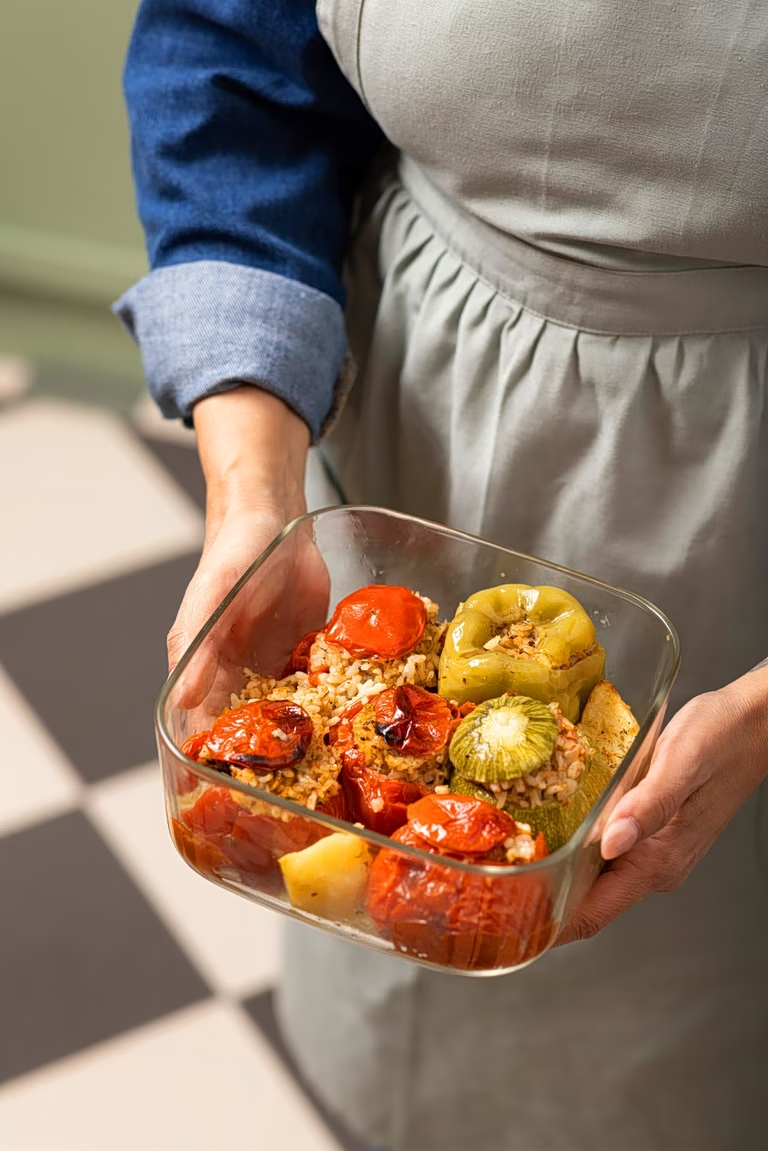
Photo: Vasilis Polychronakis
The Dish Everyone Loves
One of the most remarkable things about gemista is how often they appear at the top of people’s list of favorite foods.
And not just among ordinary home cooks. Many professional chefs cite them as their favorite dish. In two recent interviews, chefs Giannis Galanopoulos and Giannis Parikos both gave the same answer when asked about the meal they love most: gemista.
That matters.
When a humble dish can overshadow countless others made with more expensive or exotic ingredients, it says something about its cultural power. It may also explain why so many chefs have reimagined it over the years.
View this post on Instagram
There have been stuffed-vegetable-inspired nigiri creations by chef Alexandros Tsiotinis. Chef Nikos Karathanos famously deconstructed the dish, serving the filling immersed in tomato jelly alongside feta sauce. Years earlier, chefs Lefteris Lazarou and Giannis Parikos presented grilled cuttlefish with gemista cream and feta mousse.
Meanwhile, a simple online search reveals countless gemista recipes. In recent years, the dish has even found its way onto international food websites. Not every version gets it right—but that’s beside the point. At least people who never had the good fortune of growing up with a Greek grandmother are getting a glimpse of what they’ve been missing.
Rice, Meat, or Something Else?
No discussion of gemista is complete without addressing one of Greece’s great culinary debates.
Should they be made with minced meat or without?
The meatless version is known as orfana—literally “orphaned” gemista—and its defenders are every bit as passionate as those who grew up eating them with meat.
Arguments also rage over which herbs belong in the filling, whether a pinch of sugar should be placed inside each tomato, whether breadcrumbs belong on top, and what type of rice works best.
Everyone defends their version fiercely. Nobody compromises.
Because gemista are personal history.
If your family’s recipe calls for handfuls of mint instead of parsley, that story belongs to you. As with every beloved traditional dish, taste remains deeply subjective. What matters is finding the combination that becomes part of your own family’s story—the recipe you pass on to your children, nieces and nephews, or at the very least, your closest friends.
A Bag Full of Summer
Today, we are sharing three different gemista recipes. One of them comes with a story that perfectly illustrates why this dish means so much.
About a month ago, while returning from Lake Plastiras in central Greece, I received a persistent phone call from Stefania Koufopoulou and her mother, Tasoula. They had seen that I was nearby and wanted me to stop by their restaurant in Karditsa so we could share a meal together, like family.
I could not imagine eating another bite before a long drive home, but I also couldn’t imagine not seeing them.
I wanted to spend a little time in their embrace, exchange a few words, breathe in the aromas from their kitchen, and experience once again the effortless hospitality that defines their restaurant.

This is how Stefania Koufopoulou greeted us at her front door: holding a tray of gemista. Photo: Dora Mastora
Photographer Alexandros Alexandris and I stopped by. We laughed, talked, and enjoyed each other’s company.
Before we left, they handed us two bags.
Inside were gemista prepared by Tasoula, homemade bread baked by Stefania, a local walnut cake with cream known in Karditsa as melachrini, and a jar of preserved figs in syrup.
I consider myself fortunate to do the work I love. But when I meet people who brighten my heart, I feel truly blessed.
Later that evening, opening that bag of food at home felt like opening a package filled with love. It nourished far more than hunger. It was one of the most beautiful moments I can remember in a very long time.
And yes—the gemista contained minced meat, while I remain a devoted supporter of the meatless version.
But I have to admit: they were extraordinary.
A burst of summer in every bite.
That is why I say: cook gemista, and live the stories they inspire.
Because gemista are not merely food.
They are poetry.
And honestly, who could argue with that?
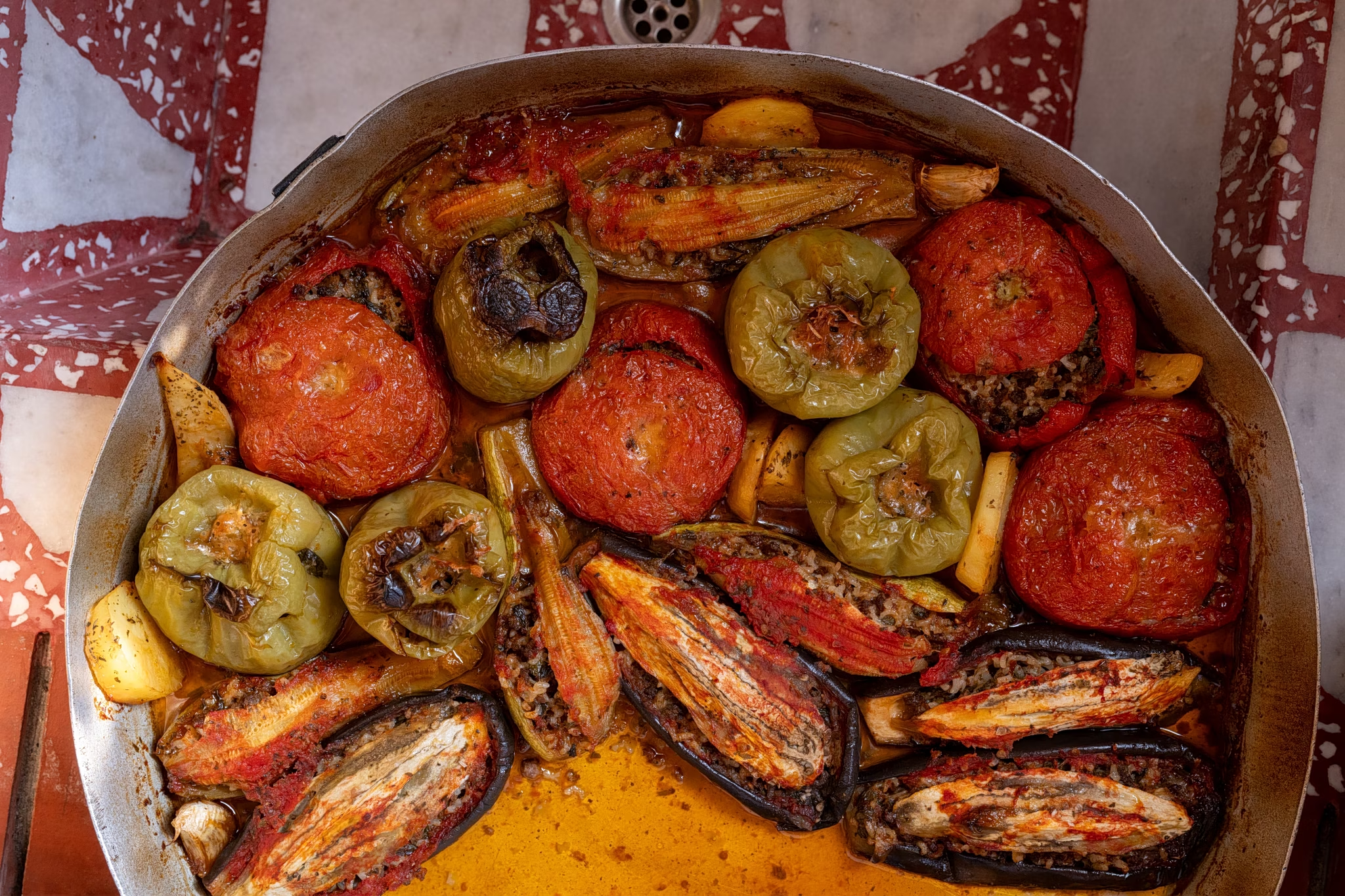
Tasoula Koufopoulou’s Gemista with Minced Meat
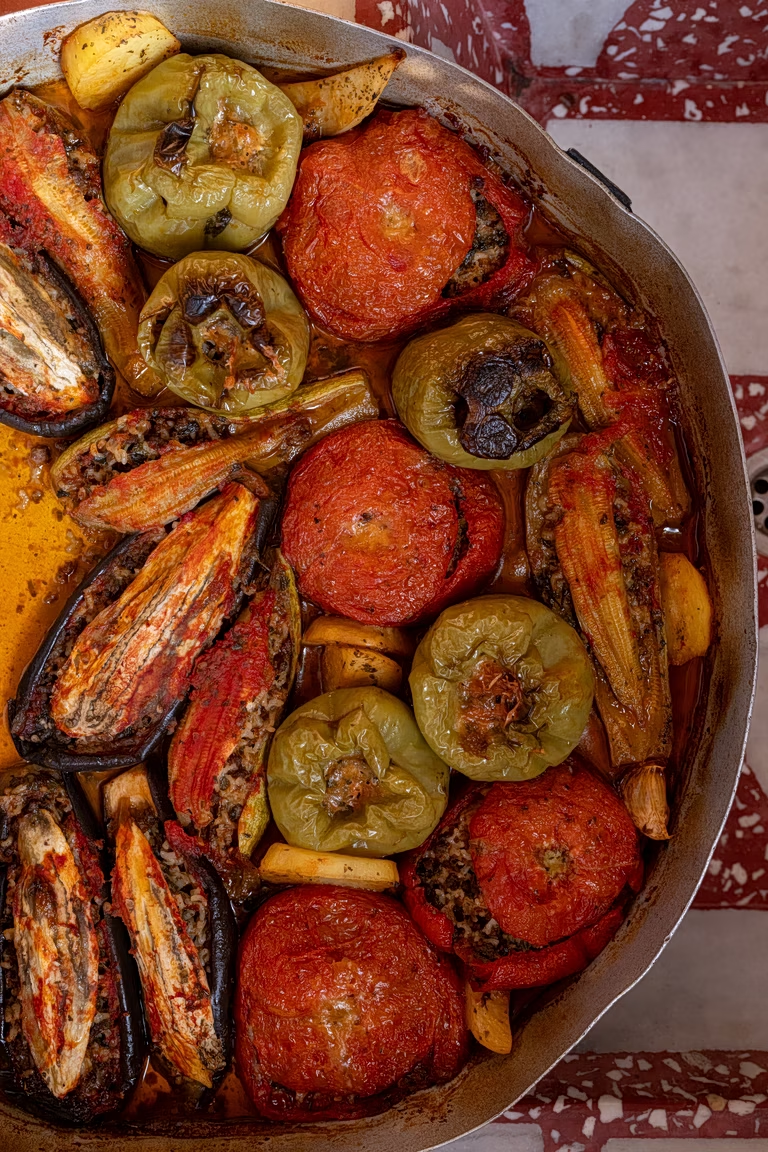
Photo: Alexandros Alexandris
Preparation Time: 40 minutes
Cooking Time: 2 hours
Difficulty: Easy to Moderate
Serves: 6-7
Ingredients
- 6 ripe tomatoes
- 2 large eggplants
- 4 peppers
- 2 zucchini
- 500g mixed minced meat
- 4 onions, finely chopped
- 2 garlic cloves
- 2 potatoes, cut into wedges
- Salt and pepper
- Sugar
- Dried oregano
- Olive oil
- Fresh mint, finely chopped
- Fresh parsley, finely chopped
- 6 tbsp Carolina rice
- Grated kefalotyri cheese (optional)
Method
- Cut the tops off the tomatoes and hollow them out, reserving the flesh. Blend the tomato flesh and set aside.
- Halve the zucchini and eggplants, reserving part of each as a lid. Remove the seeds from the peppers.
- Heat a little olive oil and sauté the minced meat. Once browned, add the onions and season with salt and pepper. Stir in half of the blended tomato, the herbs, and the rice. Cook for 1-2 minutes and remove from the heat.
- Place a pinch of sugar inside each tomato and eggplant. Fill all vegetables with the meat and rice mixture, leaving room for expansion during cooking.
- Arrange them in a baking tray. Nestle the potatoes and garlic between them. Pour over plenty of olive oil and the remaining tomato mixture. Sprinkle with kefalotyri if desired.
- Bake at 220°C (425°F) for 15 minutes, then reduce the temperature to 180°C (350°F) and continue baking for approximately 1 hour and 30 minutes.
- Allow to cool slightly before serving. Traditionally, they are accompanied by barrel-aged feta from the Agrafa region.
Pot-Cooked Gemista from Serifos
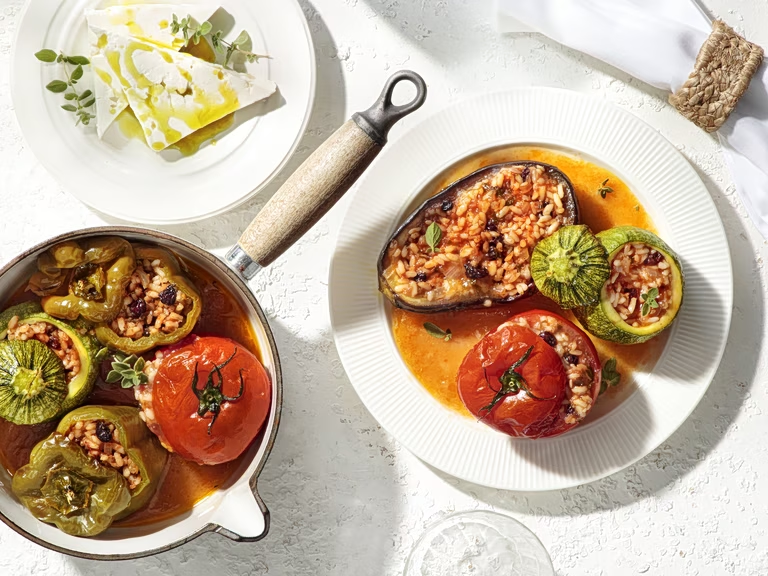
Photo: Giorgos Drakopoulos Food Styling: Olivia Artemis Webb
Recipe by Margarita Paraskevopoulou-Gerontari
Preparation Time: 30 minutes
Cooking Time: 30-40 minutes
Difficulty: Easy to Moderate
Serves: 5
Ingredients
- 6 large tomatoes
- 2 large or round zucchini suitable for stuffing
- 1 eggplant
- 2 large green peppers
- 3 onions, finely chopped
- 1 bunch parsley, finely chopped
- 250g rice
- ½ cup extra virgin olive oil
- 3 tbsp black raisins
- Salt and pepper
- 2-3 pinches sugar
Method
- Wash the vegetables. Cut off the tops of the tomatoes and reserve as lids. Hollow out the tomatoes and finely chop their flesh. Repeat with the zucchini, eggplant, and peppers.
- Mix the chopped vegetable flesh with parsley, onion, rice, half the olive oil, raisins, salt, pepper, and sugar.
- Fill the vegetables with the mixture and arrange them in a wide, shallow pot.
- Drizzle with the remaining olive oil and cook over very low heat for 30-40 minutes. Add a little water if necessary.
Stuffed Tomatoes with Rice and Syros Sausage Paste
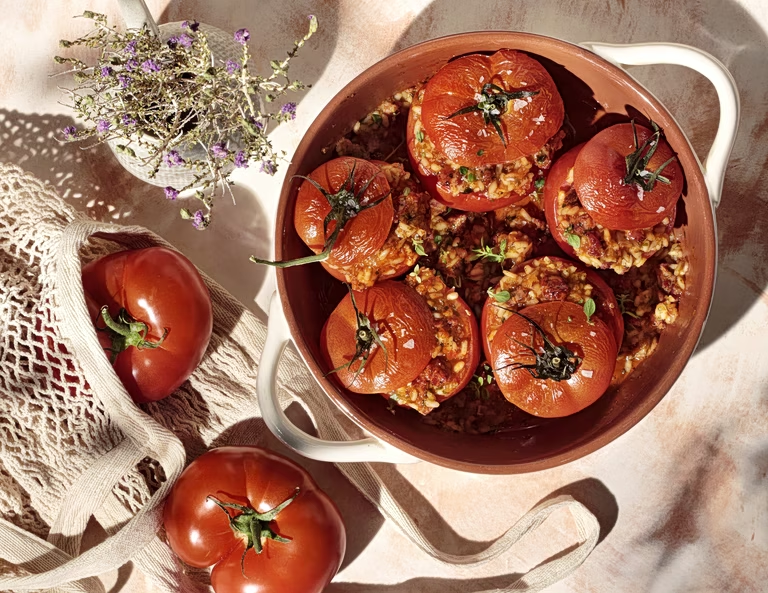
Photo: Giorgos Drakopoulos Food Styling: Olivia Artemis Webb
Recipe by Thodoris Kassavetis
Preparation Time: 15 minutes
Cooking Time: 60 minutes
Difficulty: Easy to Moderate
Serves: 4
Ingredients
- 4 large tomatoes
- 80g Carolina rice
- 160g minced Syros-style sausage meat
- 2 onions, grated
- 4 garlic cloves, grated
- 200g extra virgin olive oil
- 2 tbsp salt
- 2 tsp pepper
- 40g parsley, finely chopped
Method
- Wash the tomatoes, cut off the tops, and carefully scoop out the flesh. Blend the flesh until smooth.
- Heat a non-stick pan over high heat and sauté the sausage meat and onion without additional fat. Add the garlic and season lightly with salt and pepper.
- Add the rice, 2-3 tablespoons olive oil, parsley, and blended tomato. Cook for 5 minutes.
- Season the hollowed tomatoes lightly and fill them with the sausage mixture, taking care not to overfill.
- Arrange them in a baking tray, drizzle with the remaining olive oil, and bake at 200°C (390°F) for 45-60 minutes.