In the “Questionnaire” column of Nea Epohi—a newspaper column with fixed questions—the last question is dedicated to politics: “Would you agree that, in the end, everything is politics?” Among the young writers, poets, playwrights, and actors featured in the column, the vast majority answer yes—“Even the water we drink and the air we breathe,” said Marina Agathangelidou, author, translator, and theater scholar, in the previous issue.
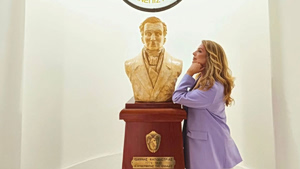
One could add: “Even the cinema we watch, whether we realize it or not.” Even a folkloric figure like Kapodistrias, who speaks with the Virgin Mary and moves thousands of spectators as a symbol of a Greece that deserved better, has become a political issue—from film critics to social media. Well, at least we’re arguing about “politics.”
But wait a minute. Wasn’t this supposed to be an apolitik era? Wasn’t political time supposed to have stopped one or two generations after the most politically engaged generation of the post-dictatorship era—the “Polytechnic Generation”—which faced heavy criticism, even mudslinging, for its political choices and evolution after its political achievements during the dictatorship years? Weren’t today’s youth supposed to care nothing about what happened then—or even about what is happening now? And what else could explain their absence from parties and abstention from voting?
The era was apolitik—it isn’t anymore. What has changed is the way politics is perceived. Consequently, the greatest challenge for the political system is to change the way it exercises politics. There are no longer party armies to pull parties out of the closet. If Kapodistrias can become a political issue, so too are very real concerns: the housing crisis, endemic corruption, the labor market, incentives to bring back exiled scientists, and reasons why those who remain don’t leave.
Truly political issues include the weakening of the West, our geopolitical “belonging,” and our place in the world—especially now that younger generations are watching, fully engaged, everything happening from domestic politics to global affairs. And these matters matter because, in this corner of the world, we didn’t just welcome a happy New Year—we also entered an election year. 2026 is a (pre-)election year. What will the prime ministerial candidates discuss? Political issues like Kapodistrias? Or those that are entirely real and affect our lives? Will they indulge in self-absorbed political cooking? Or will they focus on the real political stakes of the times? Time will tell. Happy political year!
P.S.: No, the era isn’t apolitik anymore. Evidence can be seen in the new magazine titles appearing around the world and in newspapers that are holding—or even increasing—their sales. But it can also be found in small personal testimonies. For example, a new reader of “V”, Stefania S., who wrapped her New Year’s gift by “searching through the entire newspaper to find two pages that were nice and matched.” And her friends? “They thought it was super clever and nice, and my gift ended up with a friend doing her PhD in Physics—it fit perfectly.” The two pages of wrapping paper came from Science, the newspaper’s science supplement. It was the best gift for all of us writing in newspapers, whose words wrap readers in some of the most tender moments of everyday life.