 Μake us preferred on Google
 In 2024, a Cornell University student went to campus police after being drugged and gang-raped by fraternity members, a lawsuit alleges . Local prosecutors decided not to press charges, believing she hadn’t alleged any criminal behavior.
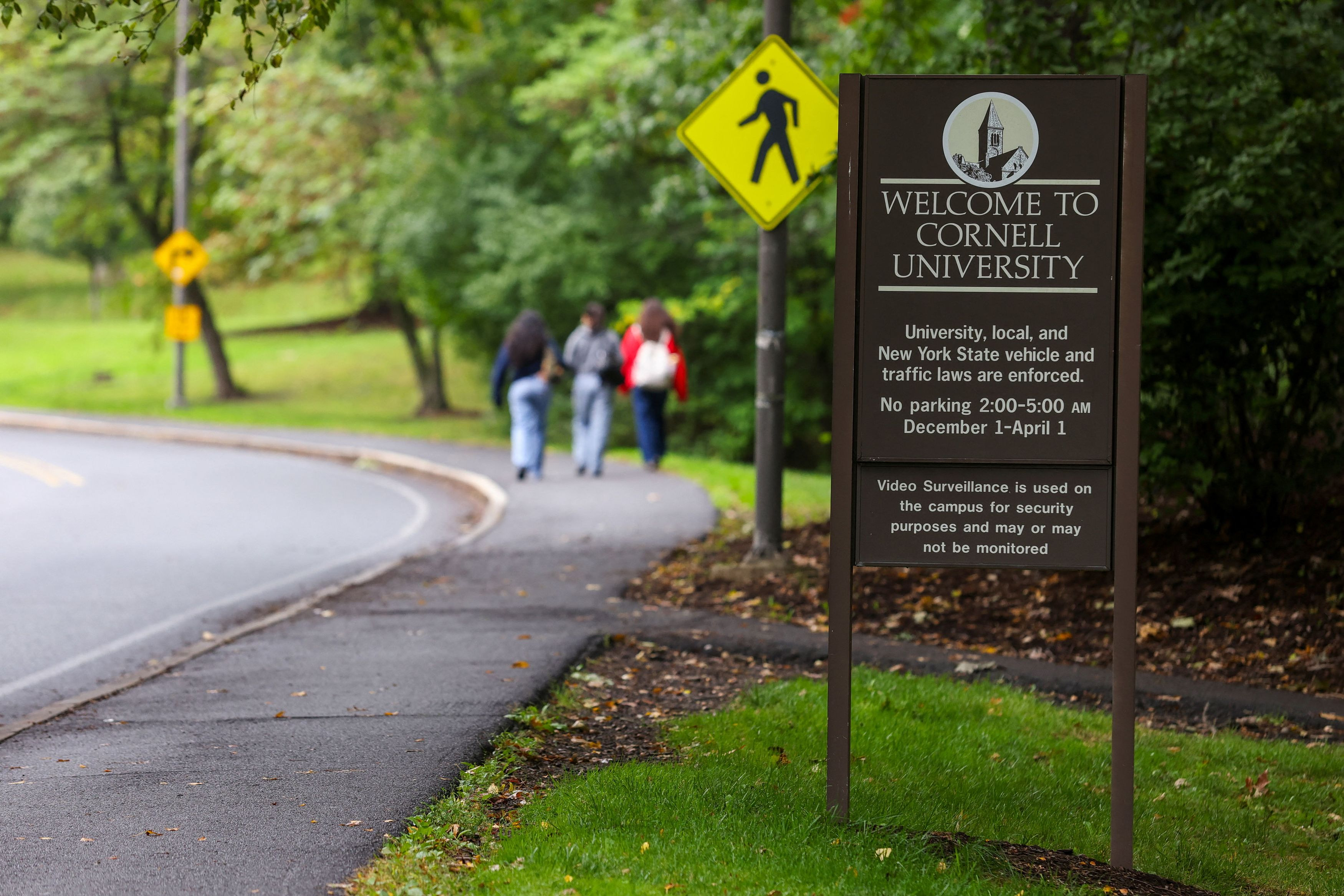
Now, two years later, controversy over the handling of the case has erupted, throwing the Ivy League school into crisis.
A recently filed civil suit asserting that Cornell failed to protect the woman has sparked a firestorm of criticism on and off campus. On Tuesday, New York Gov. Kathy Hochul called for an independent investigation and questioned whether the school fulfilled its duty to protect students. Hochul wants Cornell’s board of trustees to appoint outside attorneys to scrutinize the university’s response and its campus culture.
That demand followed a call by the mayor of Ithaca, Cornell’s hometown, for a moratorium on student-event permits due to the school’s “appalling response” to the allegations. On Sunday, Rep. Alexandria Ocasio-Cortez (D., N.Y.) denounced the school’s “culture of rape.”
“We want to know what happened in this case and what went wrong,” said Eeshaan Chaudhuri, Cornell’s student body president.
Tuesday night, Cornell’s president, provost and chair of the board of trustees wrote a letter to the Cornell community addressing the uproar. “The events that took place on our campus in 2024 were appalling then and remain so now,” the message said. “Everyone in the Cornell community must be able … to live, work, and study without fear of sexual assault or abuse.”
The controversy is throwing an uncomfortable spotlight once again on the Ivy League institution. The school and its peers are still trying to find their footing after spending much of last year battling the Trump administration over accusations of liberal excess, with Cornell agreeing to a $60 million settlement in order to get research funding back.
Cornell University President Michael Kotlikoff , now in the hot seat, took over two years ago following months of turmoil and demonstrations over the Gaza war. Last week, the school issued a more-than-200-page internal report confronting what it called an unprecedented crisis in higher education, thanks to unstable federal funding, falling public trust and the rise of artificial intelligence.
The backlash to Cornell’s handling of the case started to boil in September on social media after an attorney for the woman filed a civil lawsuit against Cornell and seven fraternity members. The suit alleges she was gang-raped by seven Chi Phi fraternity members in 2024 and that the school failed to properly investigate her allegations. It also alleges members of the fraternity messaged each other during the assault with invitations to join.
After learning that rumors of the incident were spreading across the school, the young woman went to campus police and in November 2024 signed a six-page statement to the Cornell University Police Department, according to the Tompkins County district attorney.
District Attorney Matthew Van Houten said this week that his office decided not to press charges in 2024 because her initial sworn statement “did not allege that she was drugged against her will or gang raped. On the contrary, Jane Doe’s statement described her participation in drug use and sexual conduct as voluntary, conscious, and consensual.”
Cornell conducted its own investigation after the alleged assault. It suspended the fraternity chapter and sanctioned the students involved. Discipline included expulsions and suspensions as well as assigned essays.
Cornell launched a task force aimed at preventing sexual assault on campus. Their work consisted of surveys and focus groups that found 15% of Cornell students said they had been victims of “nonconsensual sexual contact,” up from 11% in 2023. That included 35% of undergraduate women, up from 20% in 2021. Residence halls were the most common location of nonconsensual sexual contact among undergraduate women, followed by off-campus residences and then fraternity houses.
For months, the 2024 case lay dormant. Then this September, news of the civil suit broke, sparking a wave of outcry on social media.
Among the critics was Oscar-nominated British actress Florence Pugh, who appealed to men to take a greater role in addressing sexual violence. Her post, which implored men to be “as horrified and sickened” as women about the alleged rape, accrued more than more than 1.7 million likes and has been shared hundreds of thousands of times.
On Monday, Van Houten, the Tompkins County district attorney, said he had reopened the case. The office would present the case against seven fraternity members to a grand jury for potential criminal charges, he said.
An attorney for Scott Kretzschmar, one of fraternity members named in the civil suit, described the action as a “money grab” and “not only intentionally dishonest but morally repugnant.”
“While Scott responded to and made an immature comment on Snapchat, he did nothing else,” attorney Jeremy Saland wrote in an email to The Wall Street Journal. “For the few minutes he was in the room with the plaintiff and confirmed she was all right, Scott did not see her in duress or undress, was involved in no sexual activity nor touched the plaintiff in any way.”
Write to Douglas Belkin at Doug.Belkin@wsj.com and Jack Morphet at jack.morphet@wsj.com