 Μake us preferred on Google
 In Hungary, this is neither a simple continuation nor a routine change of power. What is being tested is a model of post-illiberal political realignment.
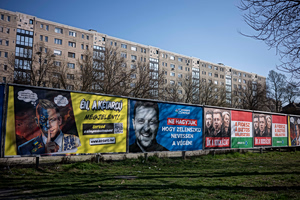
The electoral upheaval in Hungary marks a moment of historic political turning point with broader significance for post-communist Europe and the European Union. In an electoral system that combines single-member districts with majoritarian allocation and list seats distributed proportionally—and which was redesigned after 2010 by Fidesz through the practice of gerrymandering in order to weaken the opposition’s electoral strength and reinforce that of the governing majority—Tisza Party recorded a sweeping victory.
With 92 single-member seats and 44 list seats, it secured 136 out of 199 seats, a two-thirds supermajority, surpassing even that held by Viktor Orbán at the height of his political dominance. With voter turnout approaching 80%—around ten points higher than in the previous election—the victory of Péter Magyar amounts to an electoral triumph. This outcome shows that when social shifts run deep, even a manipulated political map and institutions designed to entrench majorities can operate in reverse, turning political wear into electoral collapse.
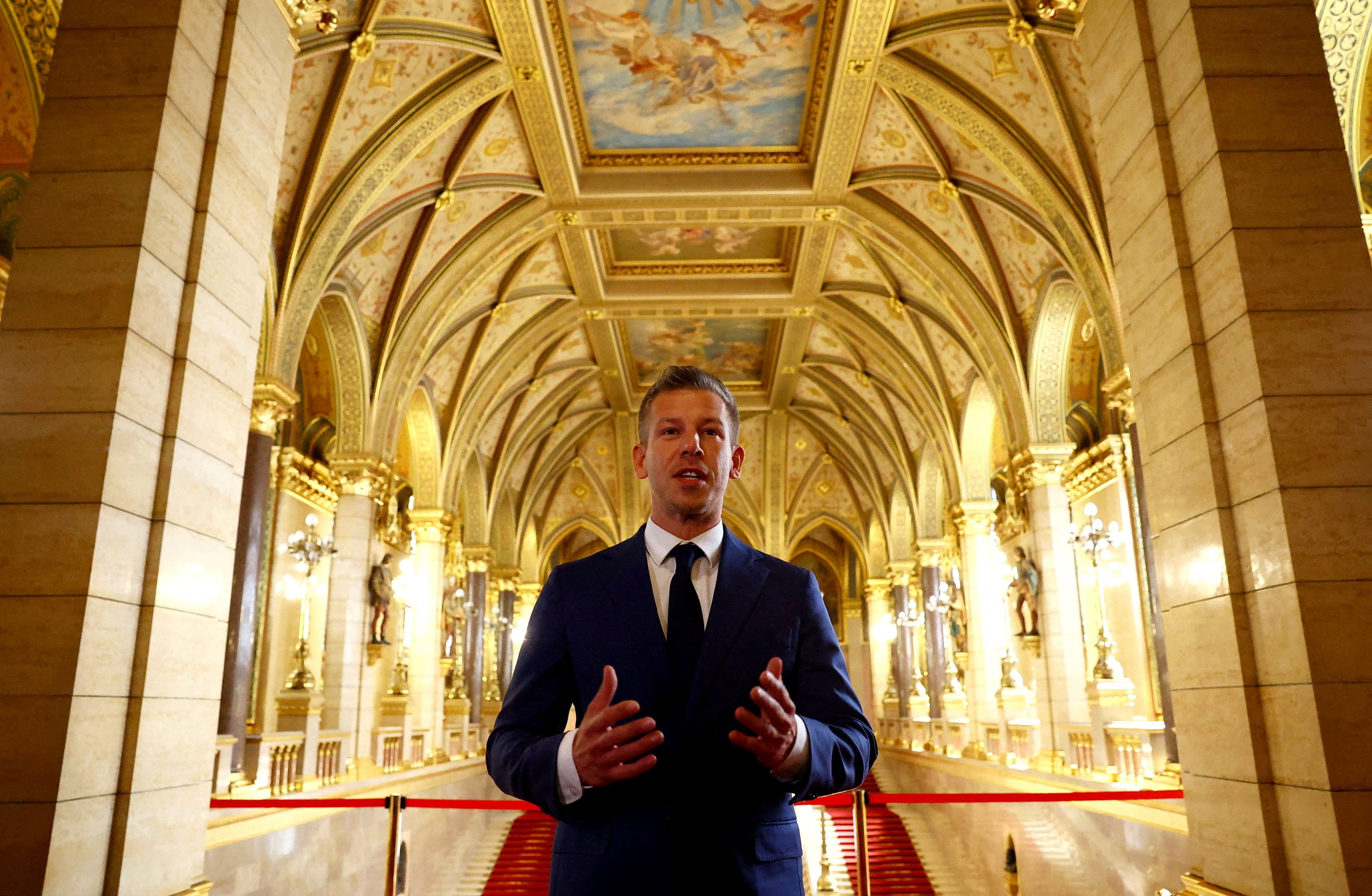
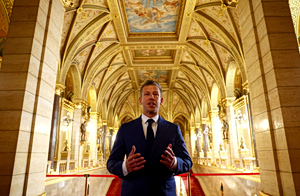
FILE PHOTO: Hungary’s election winner Peter Magyar talks to the media after talks between parties on preparations for the first session of the Parliament in Budapest, Hungary, April 17, 2026. REUTERS/Bernadett Szabo/File Photo
Péter Magyar, a 45-year-old lawyer and Member of the European Parliament, elevated the Tisza Party into the main vehicle of political change, displacing the sixteen-year dominance of Fidesz under Viktor Orbán. Coming from within the Fidesz ecosystem—where he had been active in an organized way for nearly two decades—Magyar leveraged a decisive advantage: internal access to the Fidesz system and the credibility of an insider for a significant segment of voters who had previously supported the party.
Moreover, this position allowed Magyar to transform insider knowledge of the Fidesz ecosystem into a publicly legitimized narrative of rupture. Just as in markets the credibility of insiders serves as a signal of trust for investors, so in political regimes—especially semi-competitive and authoritarian ones where information is restricted—elite defections signal weakness in the system of power, and internal fractures are often more corrosive than the actions of the traditional opposition (O. J. Reuter & D. Szakonyi 2019).
The defection of figures from the inner core of power is not merely a political loss; it reveals the regime’s internal fragility, accelerating institutional decay and destabilization.
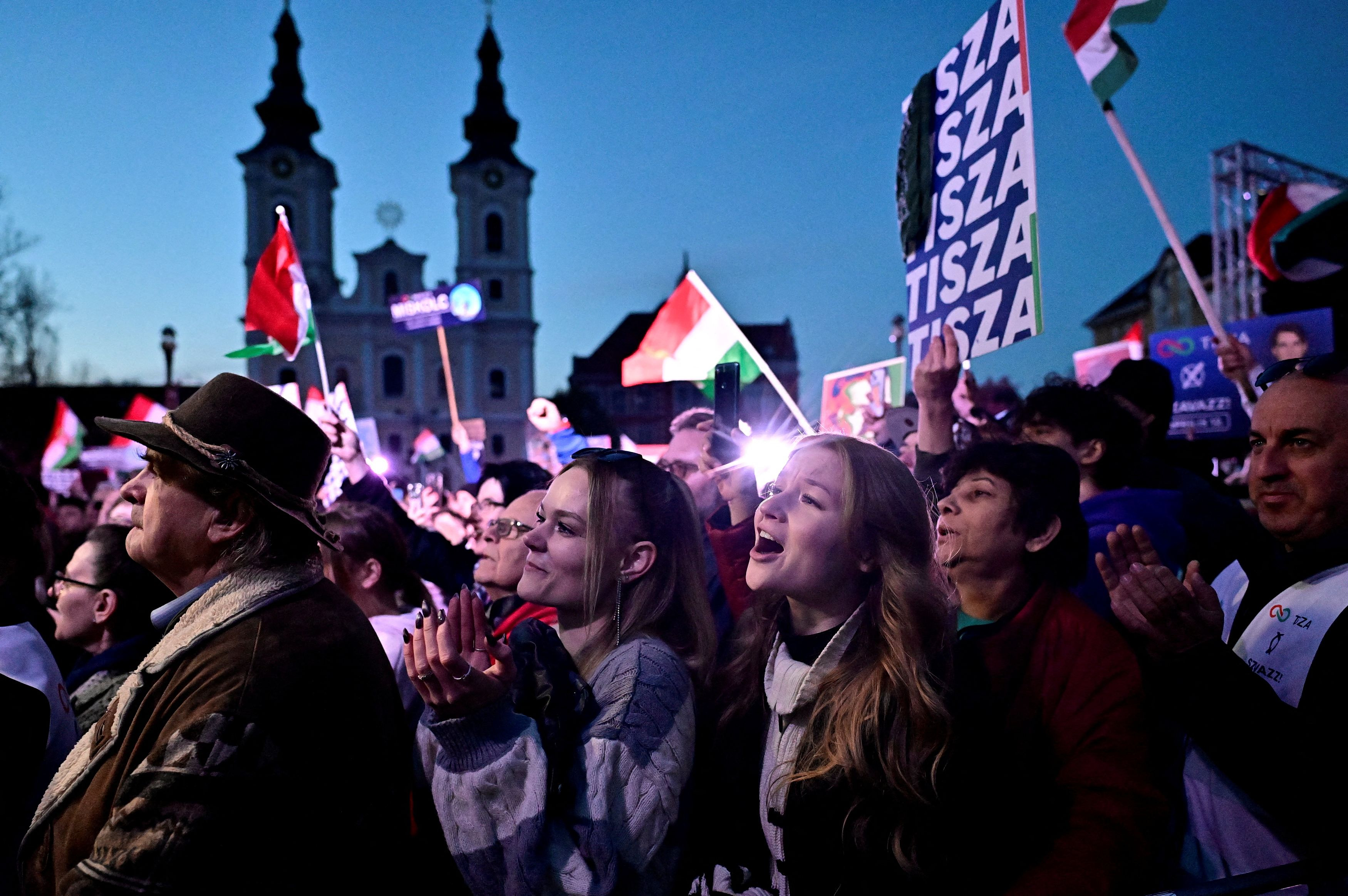
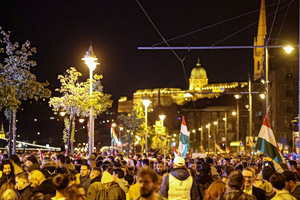
FILE PHOTO: People attend a election campaign rally for Peter Magyar, leader of the opposition Tisza Party, in Miskolc, Hungary, April 10, 2026. REUTERS/Marton Monus/File Photo
The Tisza Party has a detailed political program (243 pages in total) which, in terms of orientation, combines economic pragmatism with the restoration of democratic institutions. In the economic sphere, it proposes tax cuts, especially for those earning below the average wage, as well as the introduction of an annual tax on the very wealthy and on assets exceeding one billion forints (approximately €2.5–3 million). It also proposes a stable budget, recovery of European funds, and increased spending on healthcare and the welfare state.
On the institutional and political axis, it emphasizes restoring the rule of law, media independence, participation in the European Public Prosecutor’s Office, and strengthening checks and balances. At the same time, it maintains a strict stance on banning irregular migration and places emphasis on national sovereignty and strong borders. In energy policy, it promotes disengagement from Russian energy by 2035, increasing the share of renewable energy by 2040 (Reuters, 7/2/2026).
As for the party’s manifesto, it represents an effort to form a post-Orbán majority without clashing with the entrenched conservative reflexes of Hungarian society. The Tisza campaign itself focused on issues of corruption, economic stagnation, oligarchization (“a few families own half the country,” Magyar repeatedly said, shifting the debate from identity to governance), the deterioration of the healthcare system, and living conditions.
Magyar avoided taking positions on ideologically charged issues, especially those that trigger cultural conflicts (such as LGBTQ rights), and kept a low profile on the Ukraine issue, although he openly criticized Russia’s stance. On the night of the victory, the slogan “Europe” dominated, and the winners promised a “return to Europe,” signaling a decision to realign Hungary with the EU, without adopting a cosmopolitan narrative.
The international dimension of the election revealed the symbolic importance of Hungary within the broader ideological landscape of an increasingly authoritarian West. The open support of Donald Trump and JD Vance for Viktor Orbán was not limited to a bilateral political relationship, but highlighted Hungary as a model of governance opposed to the liberal European model. For Trump, Orbán embodies a version of the West as a model of “cultural self-defense” against the woke agenda, green transition policies, and multiculturalism.

A person wears a t-shirt featuring an image of Hungarian Prime Minister Viktor Orban and U.S. President Donald Trump, on the day Vice President JD Vance and Prime Minister Orban attend a Day of Friendship event, in Budapest, Hungary, April 7, 2026. REUTERS/Jonathan Ernst/Pool
At the same time, however, Magyar’s victory does not constitute a straightforward liberal counteroffensive. The cautious approach of major international media (such as the Guardian and Die Zeit), which described him as politically uncharted and, for now, unpredictable, reflects precisely this fluidity: Hungary is entering a transitional phase where dismantling the illiberal model does not automatically mean restoring the liberal paradigm.
However, Péter Magyar is not a mirror image of Viktor Orbán. Observing his trajectory from the last European elections to the recent national vote does not suggest the profile of an authoritarian leader. His case may be seen as an example of a post-illiberal political leader: emerging from within the Orbán system, he draws clear lines of distancing without attempting an ideological break with its cultural core.
At the same time, the country’s realignment with the European Union is framed within a mixed narrative of national identity and institutional restoration, while the political conflict with the Fidesz system shifts from the “culture war”—centered largely on migration—to issues of corruption and quality of governance.
In Hungary, this is neither a simple continuation nor a routine change of power. What is being tested is a model of post-illiberal political realignment which, according to its narrative, promises to restore institutional functioning and European alliances without alienating the social base that supported the previous regime.
In other words, a form of “normalization after authoritarianism” is being tested, and the critical question that arises is whether this type of realignment can provide a stable framework for democratic governance that will genuinely revitalize pluralism and free political competition, or whether it will prove to be a transitional phase toward an uncharted political landscape.
Ms. Vasiliki Georgiadou is Professor of Political Science at Panteion University and Director and Chair of the Board of the National Centre for Social Research (EKKE).
O. J. Reuter & D. Szakonyi (2019). “Elite Defection under Autocracy: Evidence from Russia.” American Political Science Review 113(2): 552–68.