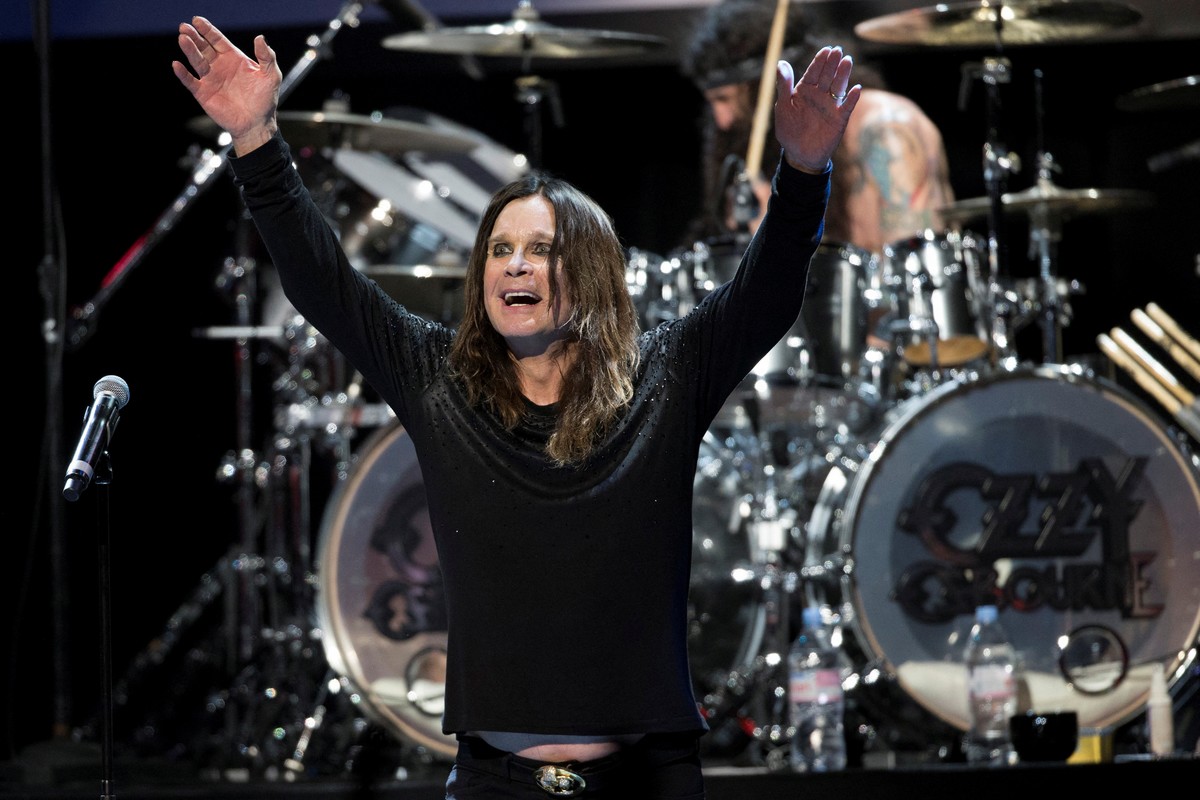
It was the early 1980s in Piraeus, Greece. My friends and I—teenagers from Drapetsona—would walk uphill to Perivolaki in Nikaia. Destination: the “Ypoga,” a basement-level rock club we affectionately nicknamed. Officially, it was called “Victoria,” and for us, it was legendary.
By then, the old-school rivalry between “chair people” (those who sat at music cafés) and “rockers” had faded. We didn’t care for such divisions. The only debate that mattered to us was: Are you a rocker or a metalhead?
I can still picture it clearly—late afternoons in the square. Dozens of kids, mostly 18 to 20, gathering from all over Piraeus and Athens. The capital had its own iconic rock venue, “Ombre,” though we rarely went there—it attracted fans of AEK football club. We were Olympiacos, die-hard fans from Gate 7. If we didn’t hit “Ypoga,” we went to “Aris” in Plaka, where Olympiacos scarves hung from the ceiling.
We didn’t have money. We scraped together change from weekly allowances and whatever we could beg off people on the street—back then, folks always gave something. It didn’t take much. We sipped cold frappé coffee at Victoria—a rock club serving frappé? Sounds strange, but that was our reality.
We dressed the same: denim jeans, denim jackets, with patches stitched on the back. Lots of Motörhead, Iron Maiden, Black Sabbath, and Scorpions. But the most iconic of all was a simple patch: Paranoid and the name Ozzy.
When Paranoid played, it was our cue. We’d jump on the dancefloor, fake-shredding imaginary guitars, swinging our long hair in rhythm. You couldn’t be a true metalhead without long hair—anything else felt like a betrayal.
“Paranoid” even became a nickname. I remember conversations in Gate 7 at the old Karaiskakis stadium: “Where are you, Paranoid?”
“Here, Lemmy! You see Ozzy?” – “If we get split up, meet at the Clock Tower in Pasalimani.”
What made Black Sabbath stand out to me wasn’t their lyrics—I’d heard more poetic and even more radical ones. It was Ozzy himself. His eerie voice. His unpredictable presence on stage—before he ran out of inspiration, started biting bats, and became a reality TV persona.
I didn’t love the theatrics he later adopted. I used to point to Rory Gallagher as the ultimate example—no gimmicks, just talent. I was lucky to see him in that unforgettable gig at the Nea Filadelfia stadium. Jeans and a denim jacket were all he needed.
Lemmy is gone now. So is Rory Gallagher—my idols, one by one, disappearing. On Tuesday, Ozzy joined them.
Like the others, Ozzy wasn’t just a musician. He represented a generation. He embodied a culture, a rebellion, a dream. For us, hard rock wasn’t just a genre—it was an identity. It was for teens who longed for a different world. Who saw freedom as life’s highest virtue. Who believed rebellion and questioning were what made life worth living.
It was how we separated ourselves from the political youth organizations of the time—especially KNE, the most conservative of them all. “We’re rockers, man. Metalheads. Not party-line robots. Not closed minds.”
Can you help me? Occupy my brain? Oh yeah…