 Μake us preferred on Google
 For decades after World War II, the United States stood at the core of the multilateral system it had helped design. From the United Nations and its specialized agencies to global regimes governing climate, health, and development, US participation was central to both the legitimacy and the functioning of international governance. Today, that role is undergoing a profound transformation. Under Donald Trump’s second presidency, Washington’s relationship with multilateralism has shifted decisively. This shift reflects a broader ideological skepticism toward rules-based cooperation and institutional constraint. Multilateral organizations are increasingly portrayed by the current administration as inefficient, politically biased, or incompatible with American sovereignty and national interest. Rather than seeking reform from within, the United States has opted to exit, bypass, or defund institutions perceived as limiting its strategic autonomy.
Recent decisions exemplify this trajectory. The United States has already completed its withdrawal from major international organizations and agreements, including the World Health Organization, the Paris Climate Agreement, and UNESCO (World Health Organization, 2026; Congress.gov, 2025; US Department of State, 2025). This trend has been reinforced by a broader directive issued on January 7, when President Trump signed a memorandum initiating US withdrawal from an additional 66 international organizations, many of them linked to the United Nations system (The White House, 2026), thereby affecting their ability to finance activities and carry out their mandates. The directive instructs federal agencies to cease funding and participation in bodies deemed contrary to US interests, particularly those associated with climate change, development, and global governance. While implementation will vary across institutions, the political message is unequivocal: multilateralism is no longer viewed as a cornerstone of US global leadership, at least for the rest of this presidential term.
Beyond their immediate policy implications, these actions carry significant systemic consequences. They contribute to the erosion of institutional legitimacy, weaken coordination in times of overlapping global crises, and normalize a fragmented approach to international governance. In this context, initiatives that seek to establish alternative or parallel structures of authority should not be seen as isolated innovations. Rather, they are embedded in a broader reconfiguration of the international order; one in which established multilateral institutions, particularly the United Nations, face growing challenges to their relevance, authority, and coherence.
Against these circumstances, the 56th World Economic Forum had to address a broad range of issues. Interestingly, beyond issue-specific shocks, the very notion of a unified West is under strain, as the Canadian Prime Minister indicated: “We live in an era of great power rivalry that the rules-based order is fading, the strong can do what they can and the weak must suffer what they must” (World Economic Forum, 2026). Growing resistance to the current U.S. administration’s positions across multiple issues has underscored two broader dynamics. First, it has intensified calls for a recalibrated diplomatic approach towards Washington. Second, it has pointed to the emergence of new political arrangements that seek to operate alongside, or partially overlap with, existing United Nations structures.
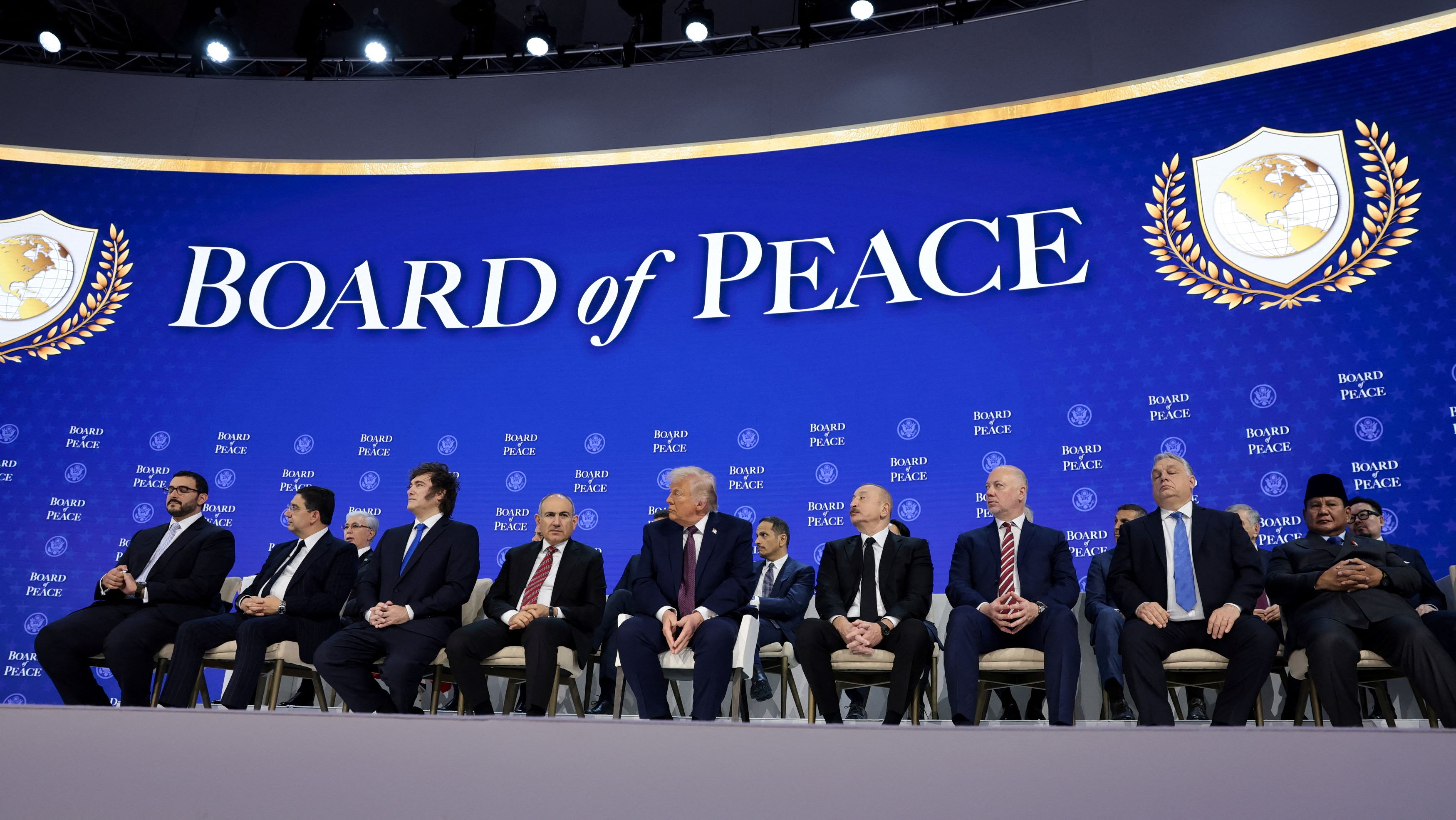
The Board of Peace (BoP) is an organization established by US President Donald Trump and referenced in United Nations Security Council Resolution 2803 (United Nations) in connection with the implementation of post-war arrangements in the Gaza Strip. The resolution welcomed the Board’s role in supporting reconstruction efforts and authorized it to assist with the deployment of a temporary peacekeeping force. Proposed in September 2025 and formally established in early 2026 (The White House, 2026), the BoP has since invited a broad range of states to participate, with varying levels of engagement and support, including limited uptake among several European countries. While aiming at expanding its agenda to the resolution of various international crises, acting as a counterweight to the UN, its emergence coincides with a broader period of geopolitical instability, raising practical questions about coordination, institutional overlap, and the evolving architecture of global governance.
A brief analysis of the BoP’s latest available version of its Charter (thetimesofisrael.com, 2026; gr.euronews.com, 2026; bbc, 2026) can provide significant insights into the nature and goals of the BoP, while also taking into consideration the current circumstances. Notably, it is particularly significant that the text employs broad, indeterminate terminology that remains open to multiple interpretations, thereby enabling the current dominant component to legitimize its mandate and justify the adoption of extraordinary measures. Even from the Preamble, it is mentioned that ‘durable peace requires pragmatic judgment, common-sense solutions, and the courage to depart from approaches and institutions that have too often failed’. The call to ‘depart’ from allegedly failed institutions implicitly constitutes an indirect pointed critique of the UN, mainly due to its liberal order, according to some analysts. A more coherent reformist stance, which would allow the UN to act more effectively under conditions of crisis, such as by eliminating the veto power of major powers, would be a more understandable approach. However, suggesting that counterweights would produce better results seems to allow for more multilateral contestation and fragmentation, rather than successful crisis management.
We also notice that one key difference between the UN and the BoP Charter is that the latter lacks the elements of a humanitarian declaration, and acts as a checks and (im)balances textbook. More specifically, the Board is characterized by a significant degree of centralized authority in the role/face of the Chairman (thetimesofisrael.com, 2026), who will be the current President of the US and who will designate his successor (Art. 3.2.a.-3.3.). In the context of the current Charter, the Chairman’s authority is extensive and executive. He is designated to select the BoP members or to terminate their membership (Art. 2.1.; Art. 2.3). He can choose the members of the Executive Board and when to renew or terminate their term (Art. 4.1.a-b.). He can approve the agenda and set the timing of deliberations (Art. 3.1.c.). Most notably, he can act on his personal judgment to resolve any internal disputes (Art. 7) or to implement executive resolutions (Art. 9), as only he is the ‘final authority regarding the meaning, interpretation, and application of this Charter’ (Art. 7).
Even if analysts debate the BoP’s effectiveness or longevity, two considerations are crucial. First, this initiative emerges in a context of prolonged and entangled crisis. Even in the short-term, the institutionalization of a body positioned de facto as a counterweight to UN legitimacy could complicate coordination and undermine efforts for successful collective crisis management. Secondly, the UN should anticipate scenarios in which its legitimacy is contested and pursue strategic reforms to its decision-making and operational capacity. At this current stage, what is the position of the EU?
Undoubtedly, 2025 has been a difficult year for Europe and the European leadership. At the outset, European governments made a sincere effort to appease the hostile rhetoric of the 47th President of the United States towards his transatlantic allies. That effort, however, has proved futile, and the so-called policy of appeasement has dramatically failed.
Now, standing at the dawn of 2026, it appears that Europe has reached a moment of awakening and a critical juncture requiring major strategic decisions. The ongoing war on the European continent and the prospect of a “peaceful settlement” in Ukraine, negotiated at the expense of European interests, should be regarded as a clear warning sign. At the same time, the imposition of tariffs, the distinctive Trumpian strategy of fragmenting Europe through bilateral negotiations, the openly expressed sympathy for regimes promoting a peculiar form of illiberal democracy, as well as territorial claims over Greenland, constitute serious risks and signal the end of transatlantic unity.
Furthermore, the rhetorical escalation, the threats, and the actions of the Trump administration directed at Europe are also reflected in public opinion surveys, such as those conducted by the European Council on Foreign Relations and the German newspaper Bild. Countries including Germany, the (traditionally pro-American) United Kingdom, Spain, Switzerland, Denmark, and even Orbán’s Hungary consider the rift (between EU and the US) to be definitive and view Trump’s return to the “throne” of the world’s leading power as a highly negative development 1. for their own country, 2. for the credibility of the United States, and 3. for global peace. Denmark, with 78%, followed by Spain at 66% and Germany at 65%, records the highest percentages among European respondents who believe that Trump’s presence is dangerous for their country (European Council on Foreign Relations, 2025).
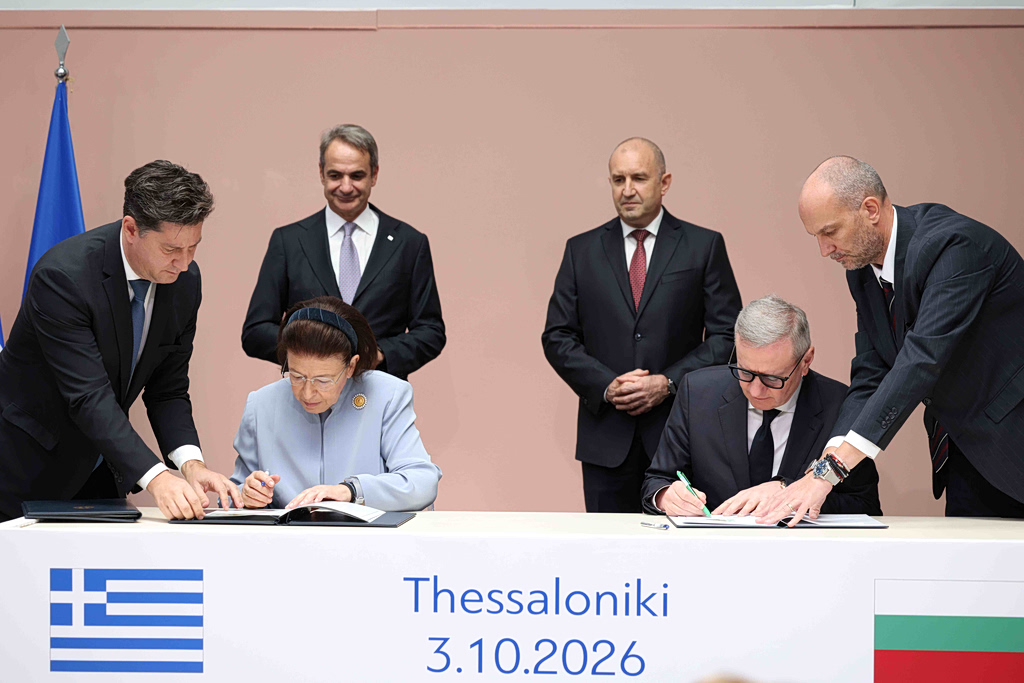
As of late January 2026, European Union countries have largely greeted invitations to Trump’s “Board of Peace” with caution or outright refusal, reflecting a broadly skeptical stance. Nearly all EU member states have either formally declined to participate or put any decision on hold pending further review, preferring to work through established multilateral frameworks. After a special EU meeting, officials, including European Council President António Costa, underscored “serious doubts” about the Board’s scope, governance, and compatibility with the UN Charter, even as they voiced willingness to cooperate with Washington on Gaza peace efforts if kept within a transitional, UN-mandated framework. In practice, Europe’s response has been largely united, with only Hungary and Bulgaria breaking ranks by signing on to Trump’s charter so far (POLITICO, 2026). This near-consensus of skepticism across Europe has highlighted a preference to coordinate EU foreign policy collectively, in line with multilateral norms.
Taken together, these parameters pose existential challenges to the future of Europe. Nevertheless, as has often been the case in European history, every crisis also conceals opportunities for greater cohesion, deeper integration, and more ambitious reforms. Beyond the urgent deployment of defense capabilities, which must be prioritized in the next Multiannual Financial Framework (2028-2034), emphasis should also be placed on strengthening European resilience by safeguarding citizens’ well-being and prosperity (European Council on Foreign Relations, 2025). Initiatives such as reflecting on the decision of the Council of the EU and advancing further discussions and agreements with India, Mexico, United Arab Emirates, the ASEAN and most recently with MERCOSUR countries, despite the agreement not yet being ratified by the European Parliament; the intention of a European delegation to visit Beijing for exploring opportunities of cooperation; and even the informal talks among the German Chancellor Friedrich Merz, the French President Emmanuel Macron, and the Italian Prime Minister Giorgia Meloni aimed at organizing a meeting with Vladimir Putin, all reaffirm in practice an active —rather than passive— role for the European Union in these challenging times. The US National Security Strategy, published in December 2025, illustrates how major actors are increasingly prioritizing policy autonomy in response to global uncertainty. As the British (who paradoxically may approach the EU) say, we may indeed be living in interesting times.
*Athina Fatsea is a PhD Candidate at the Ionian University (A.G. Leventis & ESDC Doctoral Fellow). She works as a Research Assistant to the Director General of ELIAMEP, and serves as a Research Fellow at the Laboratory for Geocultural Analyses (GeoLab). She holds an MA in International and European Governance and Politics (NKUA). She has participated in conferences in Europe and Africa, and authored publications in collective volumes and scientific journals.
Georgios Tsialas is a PhD Candidate in Politics (Research) at King’s College London. His research focuses on crisis politics, securitization, framing contests and the application of mixed methods in political analysis. He holds an MSc in Comparative Politics (LSE) and a BA in Political Science and History (Panteion University). He has served as Senior Political Analyst and Editor at the Association of International and European Affairs (ΟΔΕΘ) and as a Research Assistant and Research Administrator at the Hellenic Observatory Centre (LSE).
Dimitris Tsaknis works for the EPLO/ELGS Rome Office (Italy) as Responsible for Academic Affairs. He is a Political Scientist with a Master in International and European Governance. His academic interests spanning EU Security and Defense Policies, EU Enlargement, the relations between the EU and the US as well EU and Russia.