Μake us preferred on Google
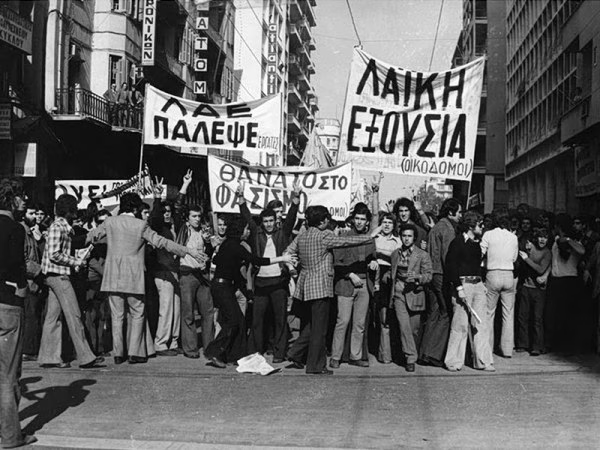
PASOK leader Nikos Androulakis accused the governing New Democracy party of tolerating attempts to rewrite the history of the 1973 Polytechnic uprising, following controversial remarks by Health Minister Adonis Georgiadis about the deaths associated with the revolt. In a Facebook post on Tuesday marking the 53rd anniversary of the student uprising against Greece’s military dictatorship, Androulakis accused elements of the far right and New Democracy of seeking to distort the historical record and diminish the sacrifice of those who resisted the junta.
His comments followed statements by Georgiadis, who is also a New Democracy vice president, in which the minister invoked the findings of the 1974 Tsevas investigation while discussing whether protesters had been killed inside the Polytechnic campus. “From ‘there were no deaths’ to ‘there were no deaths inside the Polytechnic,’ the objective remains the same,” Androulakis wrote. “They want to diminish the sacrifice, whitewash the dictatorship and justify their own political past.”
Androulakis Accuses Government of Tolerating Revisionism
The opposition leader accused the government of failing to challenge such statements when made by senior members of the governing party. “It is a disgrace for the New Democracy government that such extreme views are expressed by its senior members without being repudiated,” he wrote. Androulakis argued that the absence of a public condemnation amounted to political protection and tacit acceptance of what he described as dangerous views. He also criticized what he called a systematic campaign, conducted through social media and public statements, to misrepresent the events of November 1973.
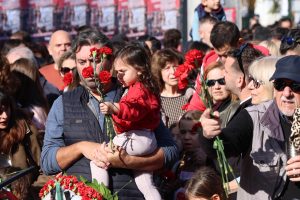
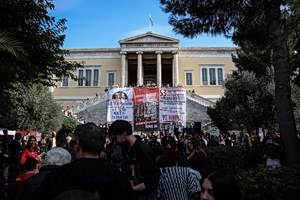
Beyond his criticism of New Democracy, Androulakis emphasized the continuing relevance of the uprising and its central slogan, “Bread, Education, Freedom.” “Fifty-three years later, the Polytechnic uprising continues to move and inspire us,” he wrote.
He said the protesters’ demands remained relevant at a time when economic insecurity and inequality were undermining public trust in democratic institutions. Androulakis linked those demands to the need for decent living standards, access to education and opportunities for young people, as well as democratic institutions that listen to citizens and remain accountable to them.
He also warned against attempts to rehabilitate the military dictatorship, which ruled Greece from 1967 to 1974. “No political deadlock justifies a return to darkness. No public anger can absolve the dictatorship that imprisoned, tortured, murdered and led to the tragedy of Cyprus,” he wrote.
Democracy, Accountability and Cyprus
Androulakis paid tribute to those who confronted the junta’s tanks and resisted the violent suppression of the uprising, describing them as heroes who helped lay the foundations of Greece’s modern democratic system. He said preserving the memory of the Polytechnic meant resisting the distortion of history, the erosion of democratic values and the tolerance of contemporary authoritarianism, which he linked to corruption.
The PASOK leader also called for continued efforts toward a reunited Cyprus without occupying troops. Concluding his statement, Androulakis argued that contemporary political and social challenges required stronger democratic institutions, greater accountability and broader public participation. “Faced with today’s deadlocks, our answer is more democracy, justice and participation,” he wrote, adding that young people should have the opportunity to build the future they envision. “That is how we honor the Polytechnic: by keeping its memory alive and taking responsibility for turning hope into reality.”