 Μake us preferred on Google
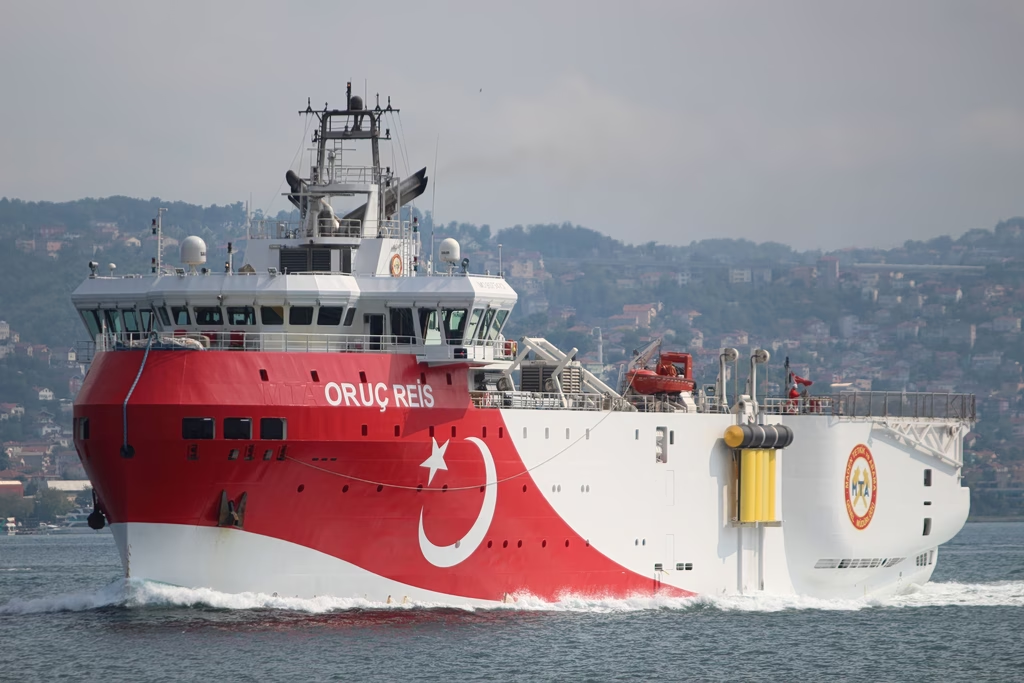
 In a clearly symbolic move, Turkey chose July 20, the anniversary of its 1974 invasion of Cyprus, to announce that the survey vessel Oruc Reis had left port in Silifke, across from the island, ahead of its next mission.
The timing puts a spotlight on Ankara’s pattern of using maritime research vessels as political tools, and underscores how Turkey often ties historical anniversaries to shows of strength in the Eastern Mediterranean. July 20 remains the most painful date in modern Greek and Cypriot history, marking the 1974 Turkish invasion of Cyprus. Fifty-two years later, the wounds from that period are still raw.
After completing a mission off Somalia in 2025, the Oruc Reis had been docked in a Black Sea port for maintenance. In what appears to have been a deliberate scheduling choice, Ankara then sent it to Silifke, opposite Cyprus, and made the move public on the anniversary of the invasion.
Athens is weighing its response across several possible scenarios for the ship’s next mission, whether that’s an area near Cyprus, the so-called “Blue Homeland” zone, or waters south of Crete near Libya. The best-case outcome for Athens would be for the vessel to head back to Somalia or to replace the Barbaros in the Black Sea instead.
Messages sent on all sides
At the same time, Athens has been signaling its position both diplomatically and on the ground. Greek fighter jets stationed in Cyprus continued training flights over Larnaca and Paphos, and Greece’s defense minister marked the anniversary by stressing that Cyprus lies close to the heart of the Greek armed forces, especially given recent developments.
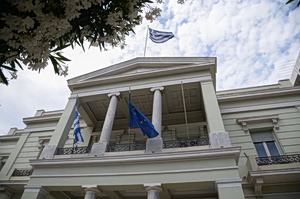
Greece’s foreign ministry took an even firmer tone, describing the Cyprus issue as an ongoing international matter involving the illegal invasion and occupation of an EU and UN member state. Athens reiterated that resolving the issue remains a top national priority, calling for a solution based on a bizonal, bicommunal federation.
Greece and Cyprus weren’t alone in marking the anniversary this way. Israel’s foreign ministry issued a pointed statement, a sign of worsening ties between Jerusalem and Ankara, reaffirming its support for Cyprus’s sovereignty, independence, and territorial integrity, and criticizing the continued Turkish military presence in the island’s north as well as Ankara’s efforts to alter the status quo through unilateral action.
Turkish and Turkish Cypriot officials marked the day very differently. Official Turkish rhetoric continues to describe the 1974 military intervention as a legitimate “peace operation,” based on intervention rights under the treaty that established the Republic of Cyprus. Turkey’s president added weight to that framing, stating that Turkey, as the “motherland” and guarantor power, would never abandon Turkish Cypriots in what it calls their just struggle.
Turkey didn’t limit its rhetoric to Cyprus. It also criticized Athens over the closure of minority schools in Thrace, using the term “Turkish schools,” a phrasing Greek officials say breaches the Treaty of Lausanne. Foreign ministry sources told Ta Nea that these closures reflect a broader nationwide trend driven by falling student numbers, not discrimination against the region.