 Μake us preferred on Google
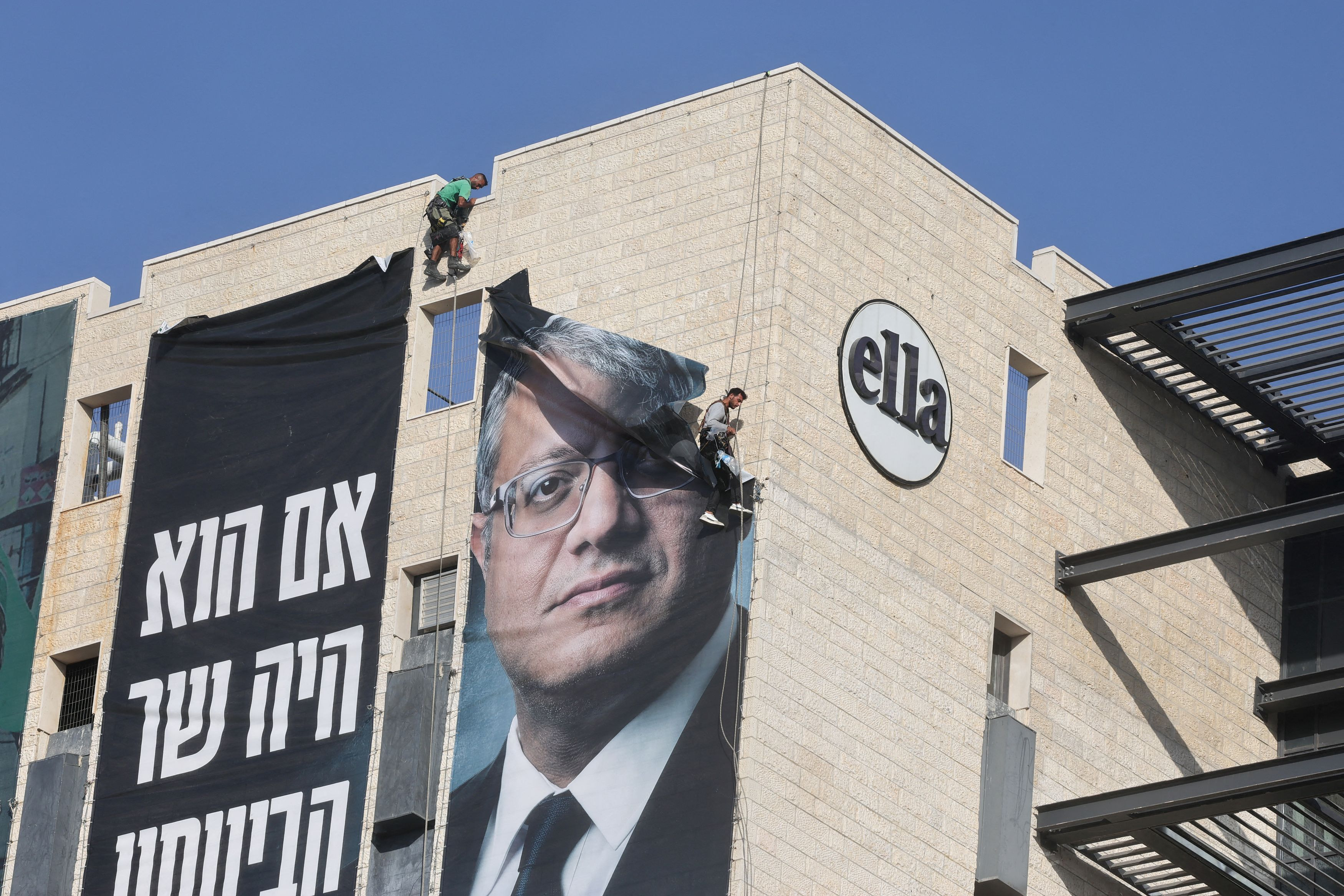
Israel’s next parliamentary election could mark a breakthrough for Itamar Ben-Gvir, whose far-right Jewish Power party is attracting a younger generation of voters and expanding its reach beyond its traditional stronghold among West Bank settlers.
Ben-Gvir, who serves as national security minister in Prime Minister Benjamin Netanyahu’s government, has built his political profile around an uncompromising approach to Palestinian issues, Jewish national identity and personal security. His positions have long placed him on the margins of Israeli politics in the eyes of many, but recent polling points to a growing constituency willing to support his agenda.
Research by Agam Labs at the Hebrew University of Jerusalem found that Jewish Power voters tend to be younger than the Israeli electorate overall. Up to one-third of the party’s supporters are expected to cast their ballots for the first time.
As reported in Reuters, for 18-year-old Gavriel Marmon, a student from Beit Shemesh near Jerusalem, the change came after he reconsidered his initial view of the politician.
“I used to think he was a bit crazy, but then I actually looked at what he was saying, and it all made sense,” Marmon said.
One policy that won his support was legislation passed in March establishing hanging as the default sentence for Palestinians convicted of attacks on Israelis. Ben-Gvir celebrated the measure with a noose-themed birthday cake and a matching lapel pin. The legislation faces a likely challenge in the Israeli courts, partly because its provisions do not impose an equivalent punishment on Jewish offenders.
The minister’s appeal has also reached Tel Aviv, traditionally a center of liberal politics. Odelia Kedmi, 41, said Ben-Gvir’s push to make it easier for Israelis to obtain gun permits had given her a greater sense of security.
Kedmi’s sister survived the Hamas attack on the Nova music festival on October 7, 2023, which triggered the Gaza war. She compared Ben-Gvir’s approach to U.S. President Donald Trump’s emphasis on strength as a means of securing peace, describing the Israeli minister’s version as “peace through Jewish strength.”
Election outlook shifts as Netanyahu faces losses
The October 27 vote will be Israel’s first national election since the Hamas-led assault in 2023. Netanyahu’s Likud party is projected to lose roughly a third of its 32 seats in the 120-member Knesset, amid public anger over the government’s failures surrounding the attacks.
Yet the prime minister’s difficulties have not translated into a clear path to power for the opposition. Polls show neither Netanyahu’s bloc nor the principal Jewish-led opposition parties, headed by former military chief Gadi Eisenkot’s party, on course to secure a majority.
Jewish Power, meanwhile, is forecast to capture eight or more seats without relying on an electoral alliance. In 2022, Ben-Gvir had joined forces with two other far-right groups to ensure the joint list cleared the threshold required to enter parliament.
Such a result would place his party at roughly the same level as the Democrats, the political successor to Israel’s former Labour Party. The Democrats stand apart from other major Jewish-led parties in continuing to advocate a two-state solution to the Israeli-Palestinian conflict.
The outlook highlights the difficulty facing Netanyahu’s opponents: dissatisfaction with the government has not prevented some voters, particularly younger Israelis, from moving further to the right.
A record of extremism and confrontation
Ben-Gvir’s political rise has taken place despite a long history of inflammatory statements and actions that have drawn condemnation at home and abroad.
In 2007, an Israeli court convicted him of racist incitement and support for a banned terrorist organization after he displayed a sign endorsing Meir Kahane. The rabbi had been imprisoned in Israel and the United States for plotting and carrying out violent attacks.
Ben-Gvir also kept a photograph of Baruch Goldstein, who murdered 29 Palestinian worshippers at a mosque in Hebron in 1994. He announced in 2020 that he would remove the image, saying he wanted to deny a rival on the right a pretext for excluding his supporters from a political alliance.
His role in overseeing prisons has brought further controversy. Ben-Gvir has promoted restrictions on Palestinian prisoners’ living conditions, including reducing their food to the bare minimum. Many detainees have since emerged from prison severely emaciated.
Another incident involved a video he released showing foreign activists detained during an attempt to deliver aid to Gaza. After their boat was intercepted in international waters, the activists were shown kneeling with their hands tied. Ben-Gvir mocked them in the footage, prompting condemnation.
Britain, Australia, Canada, New Zealand and Norway placed Ben-Gvir and Finance Minister Bezalel Smotrich on their sanctions lists last year over incitement to violence in the occupied West Bank. The European Union has considered similar action but has not reached agreement.
Smotrich, the other prominent far-right member of Netanyahu’s government, has faced criticism from nationalists over his shifting position on exemptions from military service for religious students. Ben-Gvir, who occupies an even more hard-line position, has encountered no comparable erosion of support, according to the Reuters report.