 Μake us preferred on Google
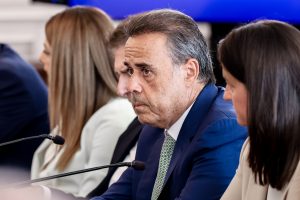
Greece has secured €12.89 billion in funding for municipalities and local communities since 2020, supporting projects across a wide range of sectors, including education, health care, transport, energy and civil protection, according to Deputy Minister to the Prime Minister Thanasis Kontogeorgis.
In his weekly review of government activity, Kontogeorgis highlighted ongoing investments aimed at strengthening local government and improving infrastructure across the country. He said the funding was intended to address the everyday needs of communities, from schools and sports facilities to health centers, hospitals, roads and essential public infrastructure.
“When we talk about the development of regional Greece, we are talking in practice about the everyday life of every local community,” he said. “About the school and the sports field, the health center and the hospital. About a road that needs to become safer, about infrastructure that needs upgrading.”
According to the figures presented in the review, €2.2 billion has been allocated to schools and educational infrastructure, with another €2.2 billion directed toward environmental projects.
A further €1.6 billion has gone to health care and social welfare, €1.4 billion to water supply, irrigation and efforts to address water shortages, and €1.2 billion to urban regeneration projects.
Around €800 million has been allocated to road infrastructure, €471 million to sports facilities, €243 million to the digital transformation of local government organizations, €353 million to cultural projects, and €470 million to flood protection and civil protection measures.
Funding for rural road construction and improvements totals €397.3 million. Of that amount, €114.6 million comes from the Rural Development Program, €41 million from the National Development Program and €241.7 million from approved funding under the Common Agricultural Policy’s Strategic Plan.
Another €3 billion has been allocated through the Antonis Tritsis program, which finances local government projects, while €793 million has gone toward restoring damage caused by natural disasters.
Annual funding for municipalities has risen from less than €1.8 billion in 2019 to €3 billion in 2026, an increase of approximately 67%. Around 20,000 new hires have also been made during the same period, according to the review.
Sports facilities and energy investments
Kontogeorgis said the increased funding was translating into projects across Greece, including upgrades to sports and energy infrastructure.
In Serres, northern Greece, the renovated facilities at the Lailias Ski Center have been handed over following an investment of approximately €10 million from the Recovery and Resilience Facility. The improvements allow the center to host training throughout the year.
A further €12 million is being directed toward upgrading the Serres Motor Circuit, strengthening the area’s sports and tourism infrastructure.
In Thessaly, a €3.73 million funding call is being advanced for new sports facilities and the maintenance of existing fields. In Patras, a €1.49 million project has been approved to build a new running track and upgrade equipment at the Pampeloponnisiako Stadium.
On the island of Paros, €800,000 has been allocated to build a full-size soccer field in Agrokipio, Naousa. In Larissa, work is moving forward on an air-supported dome at the Alkazar sports complex, with a budget of €768,800.
Other projects include €739,436 for upgrading the G. Roumeliotis stadium in Elefsina, €1.488 million for the Municipal Stadium of Nafplio, and €500,000 for energy improvements at the indoor gymnasium in Livadeia. New projects are also being advanced at the Municipal Stadium of Karlovasi and the Kontakaiika sports field on western Samos.
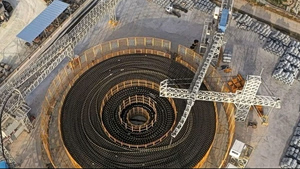
In the energy sector, a €1.48 billion contract has been signed for the Corinth-Kos electricity interconnection, a project intended to strengthen energy adequacy in the Dodecanese islands.
In northern Greece, the Karperi-Komotini natural gas pipeline is progressing under an overall investment plan worth €321.5 million. It is expected to become fully integrated into the National Natural Gas System by 2028.
Construction has also begun in Domokos on a hybrid renewable energy project combining a 251.9-megawatt solar power plant with an energy storage system expected to have a capacity of 375 megawatt-hours.
In Kilkis, an investment worth €75.6 million by Sunlight Group has been completed.
The government has also approved investments totaling €135.4 million to improve the energy efficiency of public buildings, hospitals, educational facilities and military installations.
Of that amount, €40 million will go toward 14 buildings at nine hospitals, with planned interventions including geothermal heat pumps and solar photovoltaic systems. Another €64.71 million has been allocated to the education sector.
Under the “100% Green Schools” program, 20 schools are due to undergo major renovations, with at least one selected in each of Greece’s administrative regions. The aim is to reduce energy consumption by approximately 60% and emissions by 89%.
A further €30.7 million has been earmarked for modernizing the energy infrastructure of military facilities.
New educational facilities and university achievements
In Neapoli Voion, the new Merchant Marine Academy of Laconia has been inaugurated. The building project received €1.24 million from the Recovery and Resilience Facility, with an additional €1.65 million allocated for equipment and simulators.
In Messolonghi, the establishment of an arts-focused lower secondary school has been approved, with a budget of €8.95 million. In Serres, a contract has been signed for the maintenance and upgrading of nine schools.
Greek universities have also recorded international and technological achievements. The University of Crete has joined Stanford University’s SPARK Global international network, while the University of the Aegean received a silver award for developing autonomous delivery robots in Chios.
Expanding health care services outside major cities
Several projects are also underway to improve access to health and social care services across regional Greece.
In Thessaly, €4.2 million has been allocated to establish and operate three Comprehensive Day Care Centers for two years. One will provide services for people with dementia and Alzheimer’s disease in Magnesia, while the other two will focus on autism and neurodevelopmental disorders in Larissa and Trikala.
In Florina, a €2.1 million project is moving forward to establish a Comprehensive Mental Health Day Care Center for people with dementia and Alzheimer’s disease.
On Alonnisos, a new health center is being established by upgrading the island’s multipurpose regional medical clinic and creating 17 new permanent staff positions.
In Rhodes, construction is progressing on the new Dodecanese Radiotherapy Center at the island’s General Hospital, with a budget of €13.5 million. Maintenance work has also been completed at five rural medical clinics on the island, and two LUCAS 3 mechanical chest compression systems have been delivered to the National Center for Emergency Care (EKAB).
At Samos Hospital, 15 new diagnostic monitors have been installed, while the Karlovasi Health Center has received new digital X-ray equipment.
In the Epirus region, the hospitals in Ioannina and Arta are being equipped with new medical technology, under projects with a combined budget of €805,000.
A round-the-clock telecare program is also being advanced for 1,500 older people and people with disabilities. It will use devices capable of issuing emergency alerts, detecting falls and locating users.
In Ioannina, a new space is being created for maternity services, breastfeeding and infant care. In Trikala, the renovated premises of the Ardani medical clinic have been inaugurated.
Transport, flood protection and water management
In ferry transport, the government has decided to invite bids for two routes serving Chios: Piraeus-Mesta and Lavrio or Rafina-Mesta. The routes could also serve Chios’ main port and be extended to Mytilene. Three weekly sailings are planned for the Piraeus-Mesta connection.
Crete’s firefighting capacity is also being strengthened. A second Rafnar-type firefighting vessel has arrived on the western side of the island, while another is planned for the Lasithi area. The Fire Service on Crete is also expected to receive 60 additional fixed-term firefighters by the end of the year.
In Arcadia, the funding process is beginning for two projects worth a combined €2.51 million. They concern flood protection in Tyros, in the municipality of South Kynouria, and completion of the irrigation network in Valtetsiniko, in the municipality of Gortynia.
In Florina, €500,000 has been approved to repair damage to roads and school buildings caused by natural disasters.
Another development for agricultural production is the selection of a final contractor for the irrigation networks around Lake Taka in Arcadia. The project, with a budget of €24.5 million, is expected to serve approximately 3,000 farmers in the areas of Tegea and Tripoli.
Cultural projects, environmental works and digital services
Several cultural heritage and public infrastructure projects are also moving forward.
In Pyrgos, plans have been approved to redevelop the historic Sosipolis building. In Parga, a temporary contractor has been selected for the reuse of the Vasilas building, while a Center for the Documentation of History and Culture is being developed on Thirasia and a new cultural center is planned for Amorgos.
In the municipality of Kymi-Aliveri, a contract worth approximately €685,000 has been signed to digitally transform municipal services.
In Ioannina, the new alignment of the lakeside zone along Lake Pamvotida in the Matsikas area has been published. The plan provides for a publicly accessible lakeside section measuring between 25 and 31 meters wide.
A new wastewater treatment plant, together with the settlement’s sewage networks, has also been inaugurated in Agios Mamas. The project had a budget of €6 million and was financed through the Recovery and Resilience Facility.
“These interventions concern different places and different needs. But they are all parts of the same picture,” Kontogeorgis said.
Ultimately, he added, regional development should be measured by whether municipalities can respond more effectively to residents’ needs, essential infrastructure functions properly, access to health care and education improves, communities become better protected, and more opportunities are created for employment, production and quality of life.