 Μake us preferred on Google
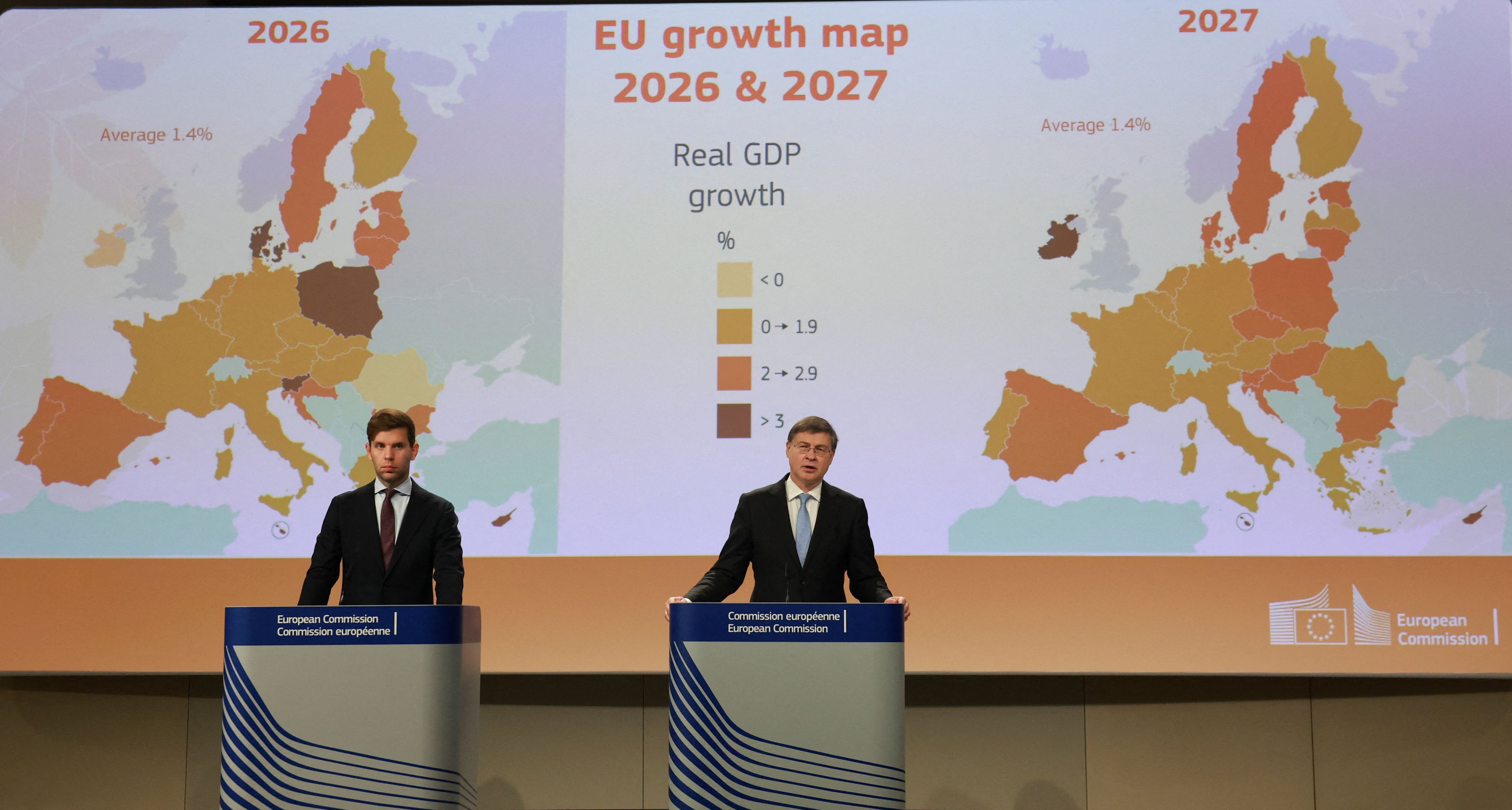
Greece is expected to lose its position as the European Union member with the highest public debt relative to economic output as early as 2026, European Commissioner for Economy Valdis Dombrovskis said Tuesday, presenting the European Commission’s autumn economic forecasts.
Dombrovskis said Greece’s public debt was declining rapidly, supported by sustained high budget surpluses. He stressed, however, that the country still has a high debt burden and must maintain its current fiscal course.
“Greece continues to be a country with high public debt, so it is important to continue in the same direction,” he said, adding that the country had recorded very strong fiscal performance in recent years, which is expected to continue.
The commissioner described Greece’s economic outlook as positive, noting that the country is expected to continue growing faster than the eurozone average.
Greece’s growth and fiscal outlook
According to the Commission’s autumn forecasts, the Greek economy is expected to expand by 1.8% in 2026 and by 1.5% in both 2027 and 2028.
Greece is also projected to maintain budget surpluses throughout the period, although they are expected to narrow gradually:
- 2026: 0.9% of GDP
- 2027: 0.7% of GDP
- 2028: 0.2% of GDP
Public debt is forecast to continue falling, reaching 126.6% of GDP in 2028, compared with 140.8% in June 2026.
EU funding after the recovery fund
Asked how Greece would sustain public investment after the completion of the European Union’s Recovery and Resilience Facility (RRF), Dombrovskis said the Commission expects cohesion policy resources and structural funds to play a greater role in 2026 and in the following years.
He also noted that some RRF funding would remain available to the economy through financial instruments, helping limit the impact of the gradual conclusion of the recovery mechanism.
The commissioner also referred to the EU’s next Multiannual Financial Framework, which is due to take effect in 2028. The European Commission has proposed establishing national funding allocations based on national and regional partnership plans.