 Μake us preferred on Google
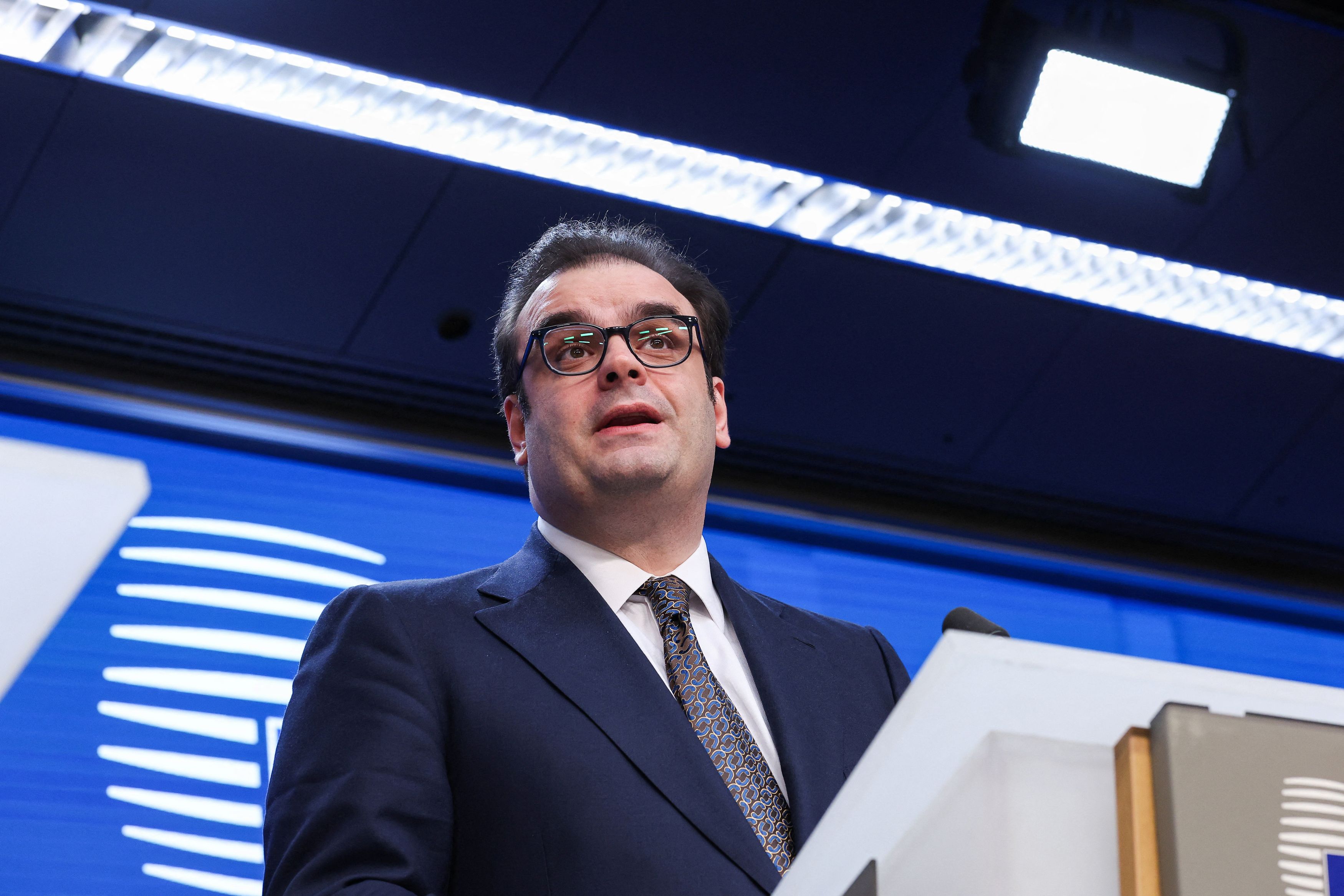
Artificial intelligence could reshape Greece’s economic and production model, boost productivity and help smaller businesses compete with larger companies, Economy and Finance Minister Kyriakos Pierrakakis said on Tuesday. However, he stressed that the country must first complete the digital transformation of the state to make the most of the technology.
Speaking at the fifth GenAI Summit Southeast Europe 2026, in a discussion with EY Greece partner Christos Tarantilis, Pierrakakis said Greece had made significant progress in changing its economic model since 2019, shifting from consumption toward investment.
The investment-to-GDP ratio has risen from 11% and is expected to reach 17.7% next year, closing more than 70% of the gap with the European average of 21%. Exports as a share of GDP have also doubled, while the country has made progress in fiscal consolidation.
Pierrakakis argued that artificial intelligence could accelerate this transformation, particularly by helping address the structural problem of Greece’s small average business size. AI tools could allow smaller companies to operate with capabilities previously available mainly to larger enterprises.
More than 2,000 government services have already been digitized through Gov.gr. Pierrakakis said he expected Greece to become one of Europe’s strongest digital performers within the next four years.
But completing the transformation requires more than putting public services online. It also means connecting government data systems, improving interoperability and simplifying public services from beginning to end. Developing digital skills and training people to use new technologies will also be essential.
Europe must turn its resources into investment
Turning to Europe’s position in the global technology race, Pierrakakis said the continent has substantial savings, research capabilities and innovative potential but has struggled to convert these advantages into investment and commercial results.
European startups frequently relocate to the United States, while fragmented capital markets, banking systems, telecommunications networks and research structures make it harder for companies to scale.
He called for closer connections between these sectors and a broader European technology strategy that goes beyond artificial intelligence. Europe must also reduce its dependence on external providers in strategically important areas.
As an example of the fragmentation holding the bloc back, he pointed to the existence of 27 separate spectrum regimes. At the same time, he cautioned against assuming that Europe’s response should simply be to create a European equivalent of Google.
Instead, he highlighted projects such as Airbus and Galileo as examples of strategic initiatives that have strengthened Europe’s technological capabilities and independence.
The issue also has implications for defense. Pierrakakis pointed to the growing importance of dual-use technologies and military innovation, as well as the need for joint European procurement. He said the Eurogroup had recently invited NATO Secretary-General Mark Rutte to discuss cooperation.
Competition for capital and cybersecurity risks
The minister also warned that governments face competing demands for financing, including higher defense spending and rising social costs linked to aging populations.
At the same time, governments and technology companies are seeking capital to invest in artificial intelligence infrastructure. Competition with large cloud providers for the same funding could put upward pressure on government borrowing costs, he said, arguing that every euro must be used efficiently.
Cybersecurity is another major challenge. Pierrakakis referred to Anthropic’s Mythos model as an example of how advanced AI could identify vulnerabilities in digital systems. This could increase cybersecurity costs, although artificial intelligence could also provide tools to detect and counter threats.
He warned that institutions must adapt more quickly to technological change. While AI is developing at an exponential pace, many institutions continue to operate with outdated structures.
Physical AI could create opportunities for Greece
Pierrakakis also highlighted the potential of what is known as physical AI, including autonomous systems, robotics and smart infrastructure.
He pointed to Greece’s shipping and port sectors as areas where these technologies could create opportunities. The government’s role, he said, should be to remove obstacles and provide the digital foundations businesses need, while companies should lead the development of commercial applications.
That will require reliable digital infrastructure, interoperable systems and access to data.
Pierrakakis also said Greece’s borrowing costs had fallen below those of four G7 countries, presenting this as evidence of the country’s economic progress.
He cited recent movement toward a Capital Markets Union as an example of progress at the European level. The initiative had been a priority during the Dutch Council presidency in 2016, but implementation only began in 2026. He said the progress made over the past 10 months exceeded that of the previous decade.
Ultimately, he argued, Europe already has the capital, research and innovation needed to compete. Its challenge is to turn those resources into tangible results while ensuring that its institutions and economies can keep pace with technological change.