
 Μake us preferred on Google
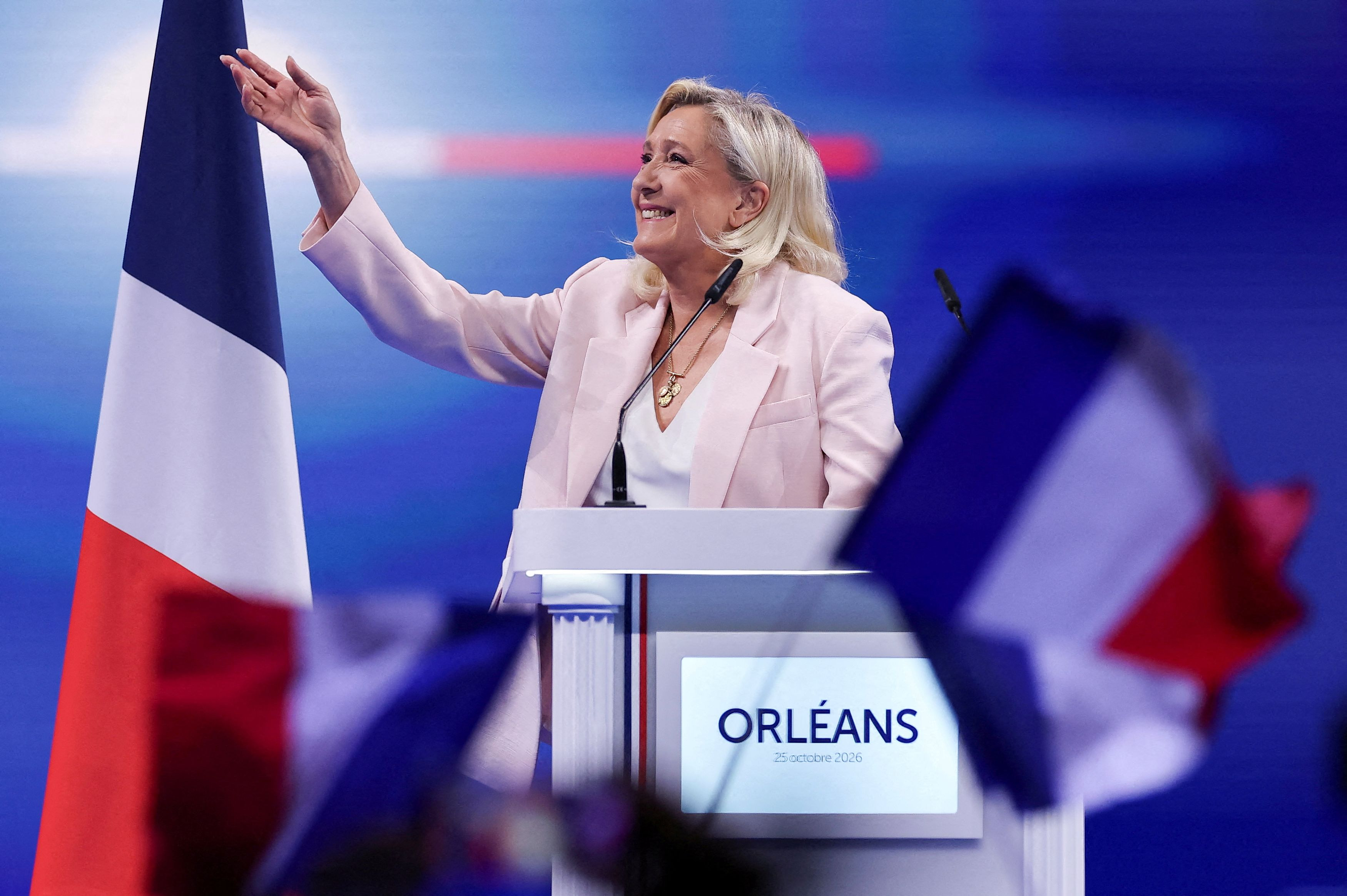
Far-right leader Marine Le Pen ’s lead in the French presidential race is already beginning to shake the European Union, setting off a race to fill vital gaps in the bloc’s finances.
If Le Pen wins the election next year she has vowed to push for sweeping budget cuts for EU institutions as part of efforts to sharply reduce what France, a founding member of the bloc, pays into the EU budget. She has also said France can no longer afford to give financial aid to Ukraine, including its contribution to future EU loans to Kyiv.
With Le Pen maintaining a double-digit lead in opinion polls, the EU is trying to get ahead of the election, which starts in April. European leaders have set a year-end deadline to agree on a budget of up to €2 trillion, equivalent to $2.2 trillion, to fund the bloc from 2028 through the following seven years. They also want an agreement by the end of the year to fund Ukraine with up to €70 billion in 2027.
Le Pen has lambasted the EU and Paris for trying to race through an agreement on the budget, calling it “an attempt to pre-empt and stifle democratic choices.”
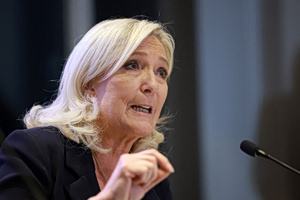
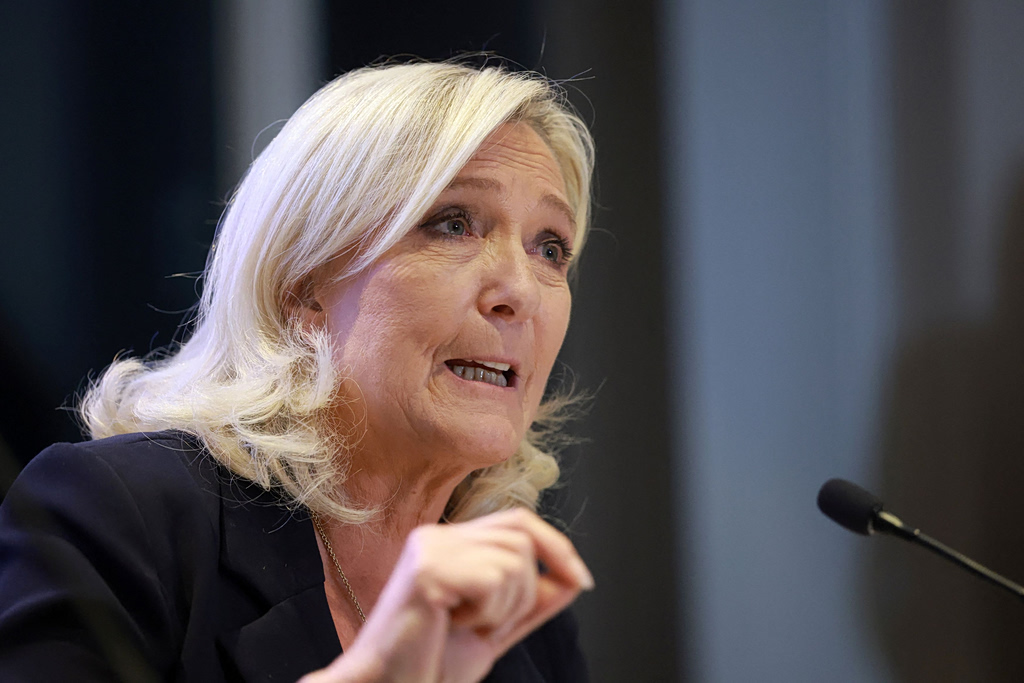
“I’m not fooled by what the European Commission wants to do. The European Commission wants to turn itself into a state. We do not. And so we will stand in its way,” Le Pen told a recent news conference.
Her demands would cause a major crisis in Brussels and Kyiv. France is the second-biggest net contributor to the EU budget. Slashing its contribution would not only drain EU coffers, it would likely spark a major confrontation with other countries like Germany, the Netherlands and Sweden, which contribute far more to EU funding than they directly receive.
The stakes are even higher for Kyiv. Ukraine is counting on the additional €70 billion from Brussels next year to buy weapons and pay government employees. Now that Europe is Ukraine’s main benefactor, Kyiv would struggle to keep resisting Russia without the funds.
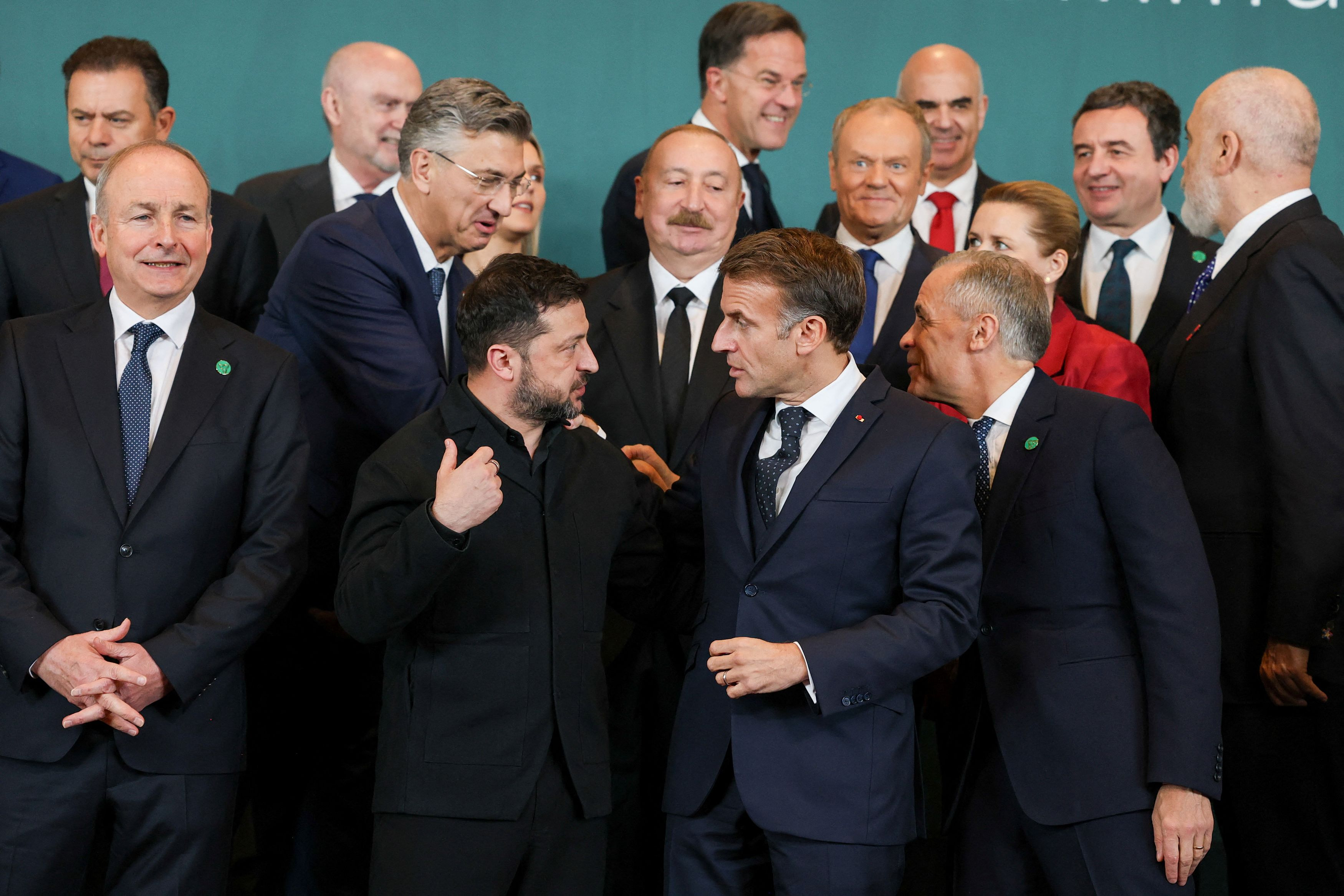
Irish Prime Minister (Taoiseach) Micheál Martin, Ukrainian President Volodymyr Zelenskiy and French President Emmanuel Macron and others pose for a family photo as they attend the European Political Community summit in Dublin, Ireland, November 12, 2026. REUTERS/Cathal McNaughton
At last month’s EU summit, French President Emmanuel Macron said funding must be agreed by mid-January at the latest, three months before the French people go to the polls in the first round of the presidential election.
The European Commission’s ability to shape and release funding for specific programs is one of the EU’s executive’s most potent power levers over national governments. Every EU capital has a veto on the budget deal.
The EU budget is supposed to set out long-term spending plans on everything from agricultural subsidies to EU investments in quantum computers, space and defense. It would also include fresh assistance to Ukraine from 2028 of up to €100 billion.
There are already fights over how much the bloc’s poorer regions should get from EU funding, so-called cohesion money, and over whether the EU should be part-financed by new or existing national taxes, like a digital tax. Some leaders want cuts in traditional programs like agricultural subsidies and cohesion, with extra money spent on investments in strategic industries such as AI, satellite infrastructure and tech.
Divisions over the budget have narrowed in recent weeks but remain sharp. Ireland proposed cutting around €140 billion from the commission’s €2 trillion target, but Germany, the Netherlands and other leading contributors have demanded deeper cuts. The last time the EU negotiated a seven-year budget, leaders spent four days and nights locked up in Brussels to seal an agreement.
The shadow of Le Pen means negotiators have every incentive to try to strike a compromise deal in the next few weeks, said Zsolt Darvas , a senior fellow at Bruegel, a Brussels-based think tank.
“If Marine Le Pen becomes president, that will make things very, very difficult,” he said.
There is a potential landing zone, but it’s unclear if leaders will be able to reach it in time, said Fabian Zuleeg of the European Policy Centre, a Brussels-based think tank. He said the main fear in Brussels, shared by senior EU diplomats, is that if no deal is reached soon, a victorious Le Pen would exercise the nuclear option—vetoing a multiyear budget and forcing Brussels to operate with the 2027 budget, rolled over from year to year.
“It would be extremely messy. It would paralyze the European Union system in many areas,” he said.
A French government led by Le Pen, meanwhile, would have more leverage to demand concessions from Brussels than previous euroskeptic governments like Hungary, Zuleeg said. Former Hungarian Prime Minister Viktor Orban shied away from blocking the budget because Hungary was a big recipient of EU cohesion funding.
“But it’s a different story for France,” he said. “It could be something which is used by Le Pen as standing up for French interests against Brussels.”
Earlier this week, Le Pen met with the Ukrainian ambassador to France and afterward said that Paris could continue to provide Kyiv with some military equipment but would provide no additional funding.
German Chancellor Friedrich Merz threatened to block a budget that gives large-scale cohesion payments to poorer nations if countries like Hungary, Slovakia and the Czech Republic insist on not financing Kyiv. The three countries opted out of the €90 billion agreed to in early 2026.
EU officials say the commission has the money to raise most of the funding needed. But Germany wants to see the burden shared among all members. That has sparked sharp pushback from Eastern Europe. Hungary’s Prime Minister Peter Magyar used a press conference last week with Merz to make clear that his government won’t back Ukraine funding.
Robert Fico, the prime minister of Slovakia who has cordial ties with the Kremlin and opposed EU sanctions on Russia, said he would wield his budget veto if Berlin insisted on his government contributing to a Ukraine loan.
“We must respond to blackmail,” he said. “We have the same veto as the German Federal Chancellor.”
Write to Laurence Norman at laurence.norman@wsj.com