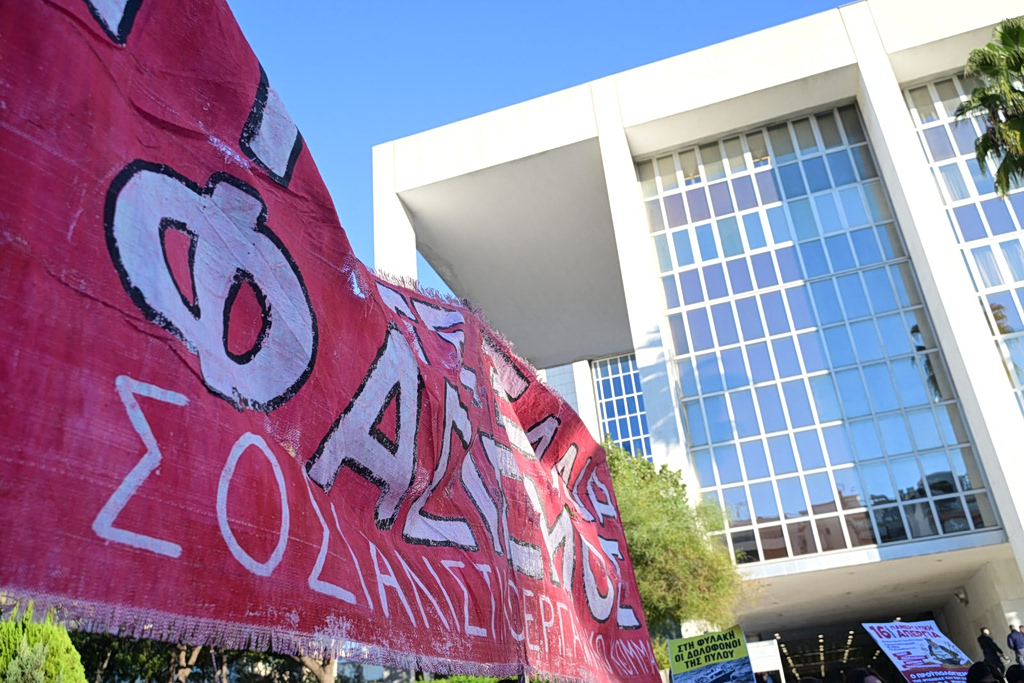

More than 12 years after the killing of anti-fascist rapper Pavlos Fyssas, a Greek appeals court has upheld a landmark ruling that the far-right Golden Dawn operated as a criminal organization behind the façade of a political party.
The decision confirms an earlier verdict that found the group responsible for orchestrating violent attacks targeting migrants, political opponents and other vulnerable groups. The court concluded that Golden Dawn functioned as a structured criminal organization inspired by Nazi ideology and carried out coordinated acts of violence.
The ruling marks the final judicial confirmation in one of the most significant trials in modern Greek political history.
Leadership Found Guilty of Running Criminal Organization
The appeals court found Golden Dawn founder and leader Nikolaos Michaloliakos guilty of directing a criminal organization, along with several senior figures who once represented the party in the Greek parliament.
Those convicted of leading the organization include Michaloliakos, Ilias Kasidiaris, Ioannis Lagos, Christos Pappas, Ilias Panagiotaros, Giorgos Germenis and Artemis Matthaiopoulos.
Eleven former members of parliament were also found guilty of participating in the criminal organization.
Murder of Pavlos Fyssas Central to Case
The case was triggered by the 2013 killing of Pavlos Fyssas, a rapper known for his anti-fascist activism, in the port-area suburb of Keratsini near Athens.
The court confirmed the guilt of Giorgos Roupakias, who carried out the fatal stabbing. He was also convicted of membership in the criminal organization.
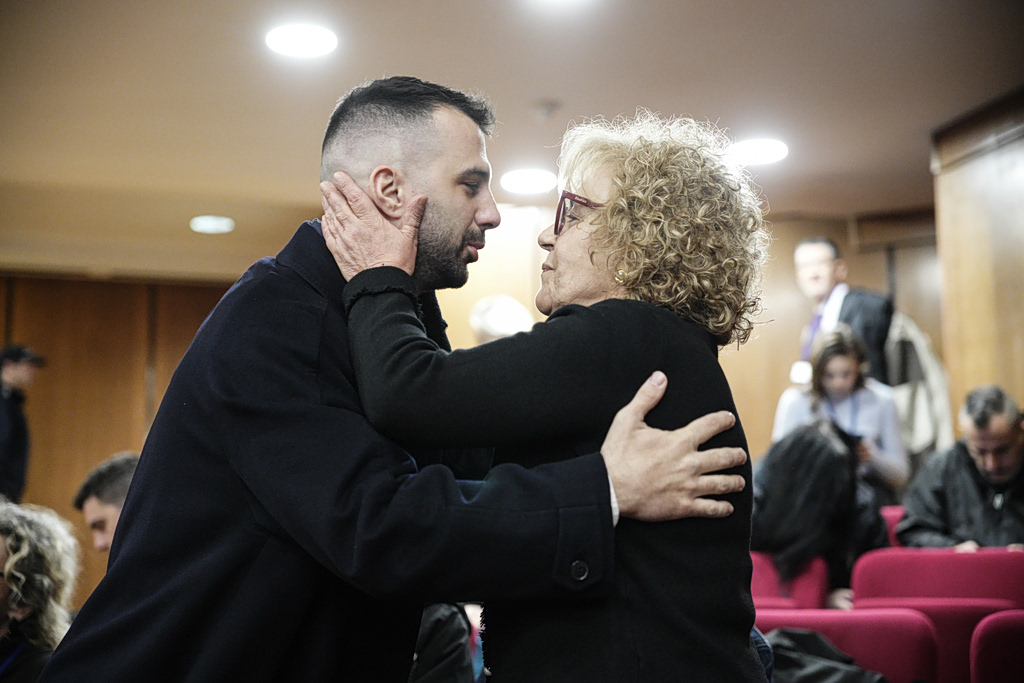
Magda Fyssa at the announcement of the verdict by the Court of Appeal for Felonies regarding the guilt of the 42 defendants in the trial of the “criminal organization Golden Dawn,” at the Court of Appeal, Athens, on March 3, 2026 (SOOC)
Fifteen additional defendants were found guilty of involvement in the killing.
The murder became a turning point in Greece, sparking widespread outrage and prompting authorities to investigate Golden Dawn’s activities more closely. The investigation eventually led to the arrest of the party’s leadership and a sweeping prosecution.
Other Violent Attacks Examined
The trial also examined a series of attacks attributed to Golden Dawn members.
In one case, five defendants were found guilty of attempted murder for their role in an assault on migrant fishermen in Keratsini.
Prosecutors argued that such incidents formed part of a broader pattern of organized violence carried out by the group’s so-called “assault battalions.”
Prosecutor: Golden Dawn Driven by Nazi Ideology
During the appeals proceedings, prosecutor Kyriaki Stefanatou argued that the organization’s actions were motivated by Nazi ideology and a deliberate strategy of targeting minorities and political opponents.
She described Golden Dawn as a “front party” that used its political presence as cover for coordinated violent activity.
“The Nazi ideology is the motive behind their actions,” she said during her closing argument, emphasizing that the organization’s activities aimed to stigmatize and eliminate perceived enemies.
Sentences and Current Status of Defendants
In the original trial, senior Golden Dawn figures received lengthy prison sentences, while Roupakias was sentenced to life imprisonment plus additional years for the murder of Fyssas.

Giannis Lagos, one of the criminal defendants in the Golden Dawn trial, reacts during the announcement of the verdict by the Athens Court of Appeal for Felonies on the guilt of 42 defendants in the case concerning the “criminal organization Golden Dawn,” in Athens, March 3, 2026. (SOOC)
Some defendants have remained in prison since the first ruling, including Kasidiaris and Lagos, while others such as Golden Dawn leader Nikolaos Michaloliakos have been released under restrictive conditions.