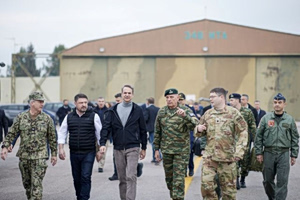
The Greek National Security Council, known by its Greek acronym KYSEA, is expected to give the green light on Thursday July 23, to Achilles’ Shield, the country’s new integrated air defense system, according to sources who spoke with To Vima.
If Thursday’s meeting goes as planned, the formal agreement will in all likelihood be signed in Athens in early August, To Vima understands. Officials from Shibat, Israel’s counterpart to Greece’s General Directorate for Defense Investments and Armaments, and from MAFAT, the Israeli defense ministry’s research and development arm, are expected to travel to the Greek capital at that point so that implementation can begin.
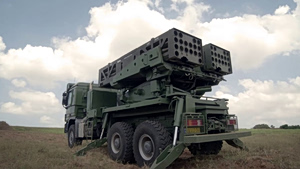
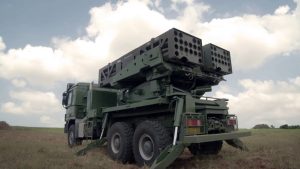
The system draws on technology from Israel’s major defense contractors, IAI and Elbit, with Elbit subsidiary ELTA responsible for the radar component. According to reliable information, Greek companies will manufacture the system’s canisters and missiles, while the command and control (C2) system will also be of Greek origin.
The Greek Defense Ministry’s official policy requires domestic industry participation of at least 25% in every armaments program. Military sources told To Vima that Greek industry’s share will end up well above that threshold within three to four years, as the initial agreement will be followed by further memoranda of understanding with Israel.
A 5 billion euro package
At around 3 billion euros, Achilles’ Shield accounts for the bulk of the spending KYSEA will weigh on Thursday, but it is far from the only program on the table. The council is also expected to approve Hellfire missiles for the army’s Apache helicopters, C-390 transport aircraft, an Israeli upgrade of Greece’s counter-drone dome, another Israeli-made Heron drone, Victa underwater vehicles from the United Kingdom and V-BAT drones.
The navy’s MEKO frigates are due for an anti-submarine upgrade ahead of their wider modernization. There are also plans for SAR (synthetic aperture radar) microsatellites, a program run jointly with Poland under SAFE, the EU’s defense financing instrument.
Taken together, the programs up for approval are likely to cost 5 billion euros or more, matching a sum KYSEA signed off on earlier this year for other urgent priorities.