 Μake us preferred on Google
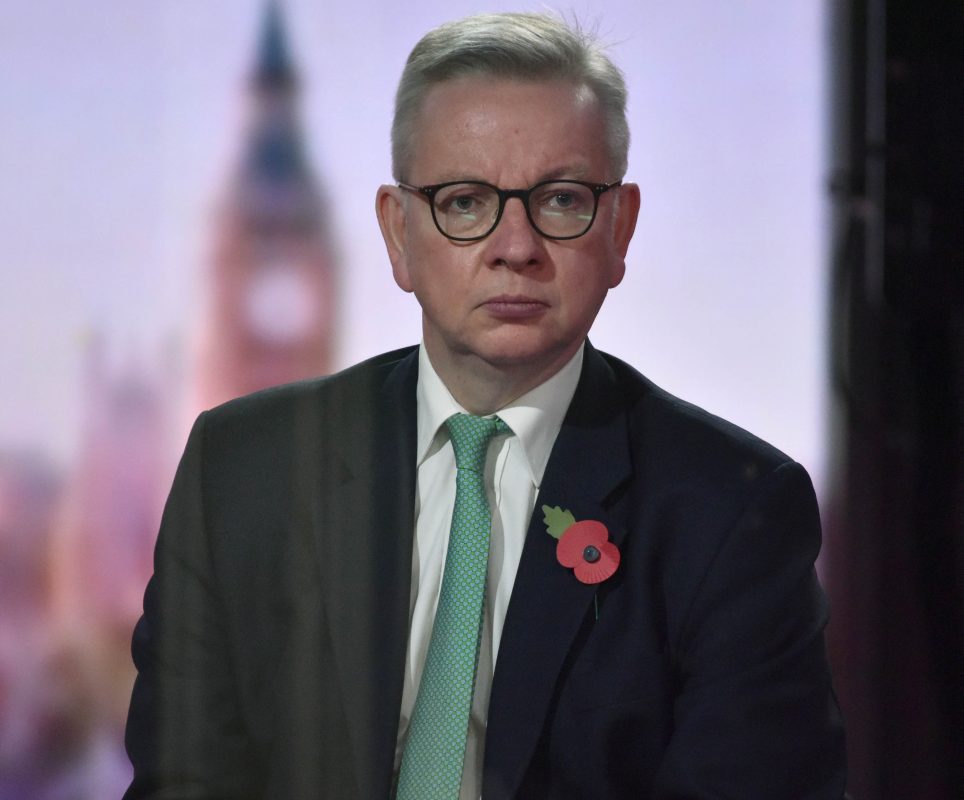
Inside the historic Smith Square Hall in the heart of Westminster, just a short distance from the corridors of British political power, Michael Gove returned to familiar territory on Monday evening, 19 October. This time, however, he was not speaking as a government minister defending a new policy or announcing another reform, but as a former Cabinet heavyweight reflecting on the economic and political challenges confronting the United Kingdom.
The former Conservative minister, now Editor of The Spectator and a member of the House of Lords, appeared at an Intelligence Squared Economic Outlook event, where he was interviewed by BBC journalist Jonny Dymond before an audience keen to hear his assessment of Britain’s future.
Few politicians have occupied as many influential positions in modern British government as Gove. During nearly two decades as a Conservative MP and more than a decade in senior government positions, he served under four prime ministers – David Cameron, Theresa May, Boris Johnson and Rishi Sunak – becoming a central figure in some of the country’s most consequential and contentious political decisions.
His ministerial career began in 2010, when Cameron appointed him Secretary of State for Education. Over four years, Gove pursued sweeping changes to England’s education system, expanding the academies and free schools programmes, reforming the national curriculum and introducing more demanding examination standards. His policies attracted strong support from advocates of higher academic standards, but also provoked fierce opposition from teaching unions and education professionals, making him one of the most divisive figures in the coalition government.
After a period as Conservative Chief Whip, he became Justice Secretary and Lord Chancellor in 2015, overseeing efforts to reform prisons, strengthen rehabilitation and improve the justice system. His tenure marked another attempt to challenge established institutional practices, an approach that would become a defining characteristic of his political career.
Gove also played a prominent role in the 2016 Brexit referendum, becoming one of the leading Conservative voices advocating Britain’s departure from the European Union. His support for Vote Leave placed him at the centre of a political upheaval that fundamentally transformed Britain’s relationship with Europe and reshaped the Conservative Party.
Under Theresa May, he returned to the Cabinet as Environment Secretary in 2017, championing reforms to agricultural policy, environmental protection and animal welfare. His time in the department included initiatives targeting plastic pollution and changes to the way farming subsidies would operate after Brexit.
He subsequently became Chancellor of the Duchy of Lancaster and Minister for the Cabinet Office under Boris Johnson, taking on responsibilities for Brexit preparations and playing a significant role in coordinating government activity during the Covid-19 pandemic.
His final major Cabinet portfolio was Levelling Up, Housing and Communities, a position he held under Johnson and later Rishi Sunak. There, he was tasked with addressing some of Britain’s deepest structural inequalities, including regional economic disparities, housing shortages, local government reform and building safety following the Grenfell Tower disaster.
It is this extensive ministerial experience that gives particular weight – and invites particular scrutiny – to his present criticism of Britain’s economic performance. Having helped shape government policy in education, infrastructure-related regulation, housing and regional development, Gove is now examining many of the same structural problems that successive Conservative administrations, including those in which he served, struggled to resolve.
At Smith Square Hall, he offered a wide-ranging assessment of an economy weighed down by weak productivity, rising public debt, expensive energy and an increasingly complicated regulatory environment.
“The British economy has great latent strengths and there is a fundamental resilience,” he told the audience. “But it is the case that that resilience has taken a battering over time.”
His conclusion was sobering: “While we’re not at a crisis point, we’re at a very difficult moment.”
With the forthcoming Budget approaching, Gove argued that Britain’s central challenge was not simply balancing the public finances, but creating the conditions for investment, innovation and sustained economic growth.
‘We’re not at a crisis point, we’re at a very difficult moment’
Gove began by acknowledging the underlying resilience of the British economy, while warning that its strengths had been progressively weakened by years of poor productivity and insufficient investment.
“The British economy has great latent strengths and there is a fundamental resilience,” he told the audience. “But it is the case that that resilience has taken a battering over time.”
The country’s fiscal position, he argued, leaves little room for manoeuvre. With public debt approaching the equivalent of annual economic output, the cost of servicing that debt is placing substantial pressure on taxpayers and limiting the government’s ability to invest.
For Gove, however, the most serious structural weakness is productivity.
“If I were to locate a single concern, it would be productivity, and if I were to locate a single element in that, it would be the delivery of infrastructure.”
He criticised the complex regulatory and legal obstacles that delay major projects, arguing that well-intentioned environmental protections and planning requirements have collectively created a system that struggles to deliver essential infrastructure.
Using examples ranging from HS2 to nuclear energy projects, Gove suggested that Britain had developed a culture in which preventing development had become easier than enabling it.
‘The Fish Disco’: How 1970s music became a symbol of Britain’s infrastructure problems
One of the evening’s more amusing moments came when Gove described what he called the “Fish Disco”, an unusual environmental measure associated with the construction of a nuclear power station in Somerset.
Explaining the challenges facing major infrastructure projects, Gove told the audience that environmental requirements had led to proposals for underwater speakers designed to deter fish from entering the cooling systems of the nuclear facility.
“And they’ve discovered that the most effective music to scare the fish away is 70s disco,” he remarked.
“So, if you play, you know, Sister Sledge or Boney M at the right volume, then the tench, the perch, the cod, whatever in the Severn are scared away.”
Gove claimed that the measure had cost the developer, EDF, tens of millions of pounds and contributed to lengthy delays.
For the former minister, the example illustrated a wider problem in British infrastructure policy: environmental safeguards that, although introduced with legitimate intentions, can collectively impose substantial costs and delays on projects considered essential to economic growth.
As he put it, the episode demonstrated how “the path paved with good intentions leads to accumulated cost and delay”.
‘The key test is reviving the animal spirits of the British economy’
Turning to the forthcoming Budget, Gove expressed scepticism that the government’s proposals would deliver the fundamental economic change Britain requires.
“For me, the key test overall is, to what extent do each of the measures contribute to reviving the animal spirits of the British economy, orienting us towards growth and encouraging investment?”
He warned that the Treasury might instead produce a Budget focused primarily on maintaining fiscal stability, accompanied by limited measures designed to ease the immediate political pressures of inflation.
His concern was that such an approach would fail to transform Britain’s attractiveness to international investors.
Gove pointed to Canada under Prime Minister Mark Carney as an example of a government seeking to signal a more explicitly pro-growth economic direction.
He also questioned the belief that tax reductions automatically generate sufficient growth to compensate for lost revenue.
“Tax cutting in and of itself will pay for itself. It won’t,” he said, cautioning that any Chancellor must balance economic incentives against the need to maintain financial market confidence.
‘I think that the state does too much’
Despite spending much of his political career advocating public-sector reform, Gove offered a more nuanced account of the state’s role than a straightforward argument for smaller government.
“I’d like to see the state perform its core functions in a more energetic and effective fashion,” he explained.
While criticising excessive regulation and government intervention, he insisted that public authorities have essential responsibilities in education, defence, infrastructure, policing and justice.
He was particularly critical of the condition of Britain’s prisons, courts and defence capabilities, arguing that successive governments had failed to prioritise functions that only the state can effectively perform.
His comments also extended to proposals for a National Care Service. Gove questioned whether protecting the housing wealth of older generations at public expense represented a fair allocation of resources.
He nevertheless welcomed the proposed relaxation of the pensions triple lock, describing the willingness to challenge a politically sensitive commitment as an important development.
‘We could only last for 14 days’
Perhaps the evening’s starkest warning concerned Britain’s national security.
Reflecting on his participation in a televised military crisis simulation, Gove described what he regarded as alarming weaknesses in the country’s ability to defend itself against a sustained attack.
He recalled being told that Britain’s available air-defence capabilities were severely constrained and that its armed forces could sustain a major conflict for only a limited period.
“When we asked Richard Barrons, you know, in the event of a conflict, how long could the UK armed forces last for? He said 14 days.”
Contrasting this with Ukraine’s prolonged resistance to Russia’s invasion, Gove suggested that Britain had underestimated the scale of investment required to maintain credible military capabilities.
He also questioned previous defence spending priorities, including the decision to invest in two aircraft carriers, arguing that their symbolic value as instruments of global power might have come at the expense of more immediate defence requirements.
‘It is not a betrayal of Brexit to look at areas where there can be improvement’
On Britain’s relationship with the European Union, Gove defended his longstanding support for Brexit while acknowledging that closer economic cooperation could offer benefits.
He argued that proposals to reduce trade friction should be assessed individually, rather than treated as either an automatic economic advantage or a political retreat.
“It is not a betrayal of Brexit to look at areas where there can be improvement over time in our relationship with the EU,” he said.
Nevertheless, he warned that closer regulatory alignment could undermine Britain’s ability to pursue independent policies in areas including biotechnology, artificial intelligence and financial services.
For Gove, the central argument for Brexit remained democratic accountability and regulatory autonomy.
He rejected the idea of reopening the referendum debate, suggesting that doing so would consume considerable political energy without guaranteeing substantial economic benefits.
‘Farage is also a very successful political communicator’
The discussion subsequently turned to the fragmentation of British politics and the rise of Reform UK.
Gove attributed the party’s growth partly to Conservative failures, particularly over immigration, and partly to deeper economic and cultural grievances.
He described Nigel Farage as a highly effective political communicator who had managed to retain the image of an outsider despite decades of involvement in British politics.
More broadly, Gove argued that prolonged economic stagnation had intensified generational inequality and weakened confidence in established political institutions.
He also warned against rhetoric suggesting that Britain was inevitably heading towards civil conflict, rejecting the idea that demographic and cultural tensions must lead to widespread violence.
“I do not believe that’s the case,” he said.
‘You need to have a strategy’
Asked about political leadership, Gove argued that charisma and optimism were insufficient without a coherent programme for government.
He praised former Labour Prime Minister Tony Blair’s ability to combine political communication with detailed policy analysis, despite disagreeing with many of his decisions.
Effective leadership, he suggested, requires an understanding of institutional weaknesses and the determination to pursue reform beyond the announcement of ambitious objectives.
His criticism of the current government’s economic direction centred on what he regarded as an absence of clarity about investment, energy, taxation and technological change.
For Gove, the fundamental challenge is not simply managing Britain’s immediate fiscal difficulties, but restoring the conditions for sustained economic growth.
As the discussion concluded, the message emerging from Smith Square Hall was that Britain’s problems are neither temporary nor easily resolved.
Gove’s prescription was a combination of greater economic ambition, institutional reform and a willingness to confront politically uncomfortable choices.
Whether the government can deliver such a programme remains an open question. But with the Budget approaching, the former Cabinet minister made clear that merely keeping Britain’s economy afloat would not be enough.