 Μake us preferred on Google
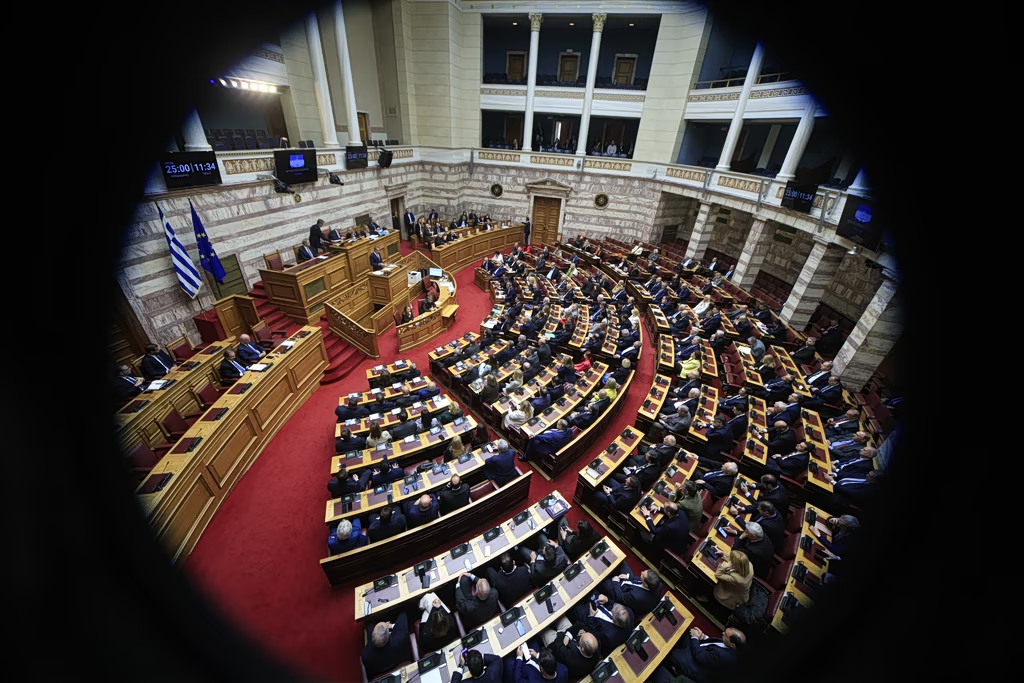
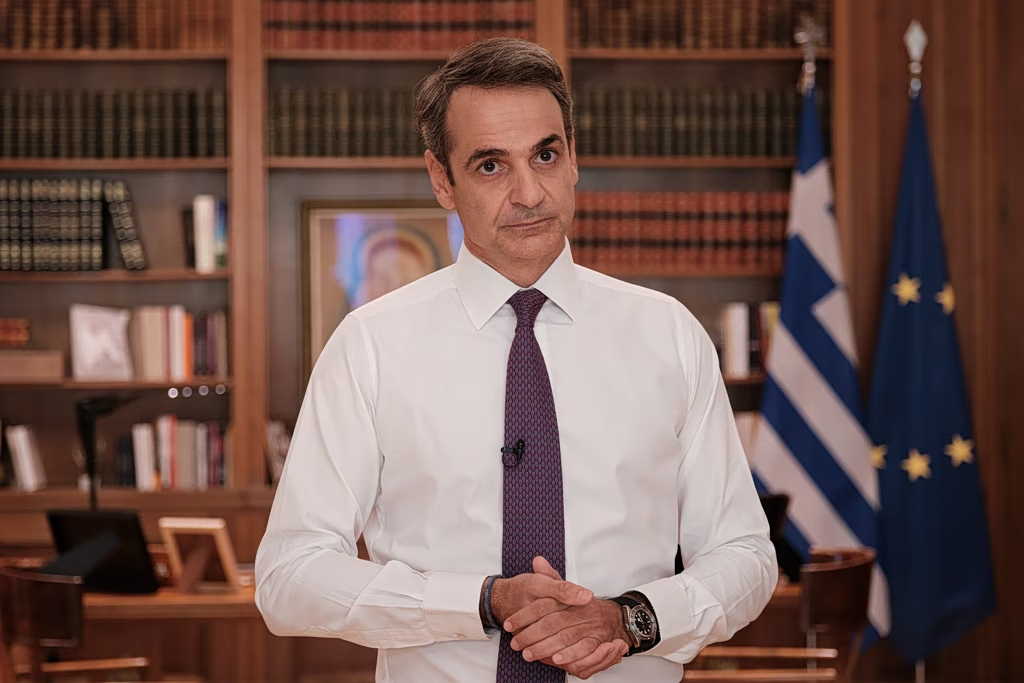
 Today’s political landscape in Greece resembles two sides of the same coin. While parliament prepares to debate the lifting of immunity for 13 New Democracy (ND) MPs implicated in the OPEKEPE case—Greece’s agricultural payments authority currently under investigation by the European Public Prosecutor’s Office—Prime Minister Kyriakos Mitsotakis is set to announce a new package of support measures in a televised address.
Tensions are expected to run high inside parliament, not only during the debate itself but also in the stance ND lawmakers will take during the vote on their colleagues’ immunity. A wave of accumulated dissatisfaction has been building within the ruling party. The way ND presents itself in parliament will be seen as a key test of party cohesion, although there have been signs of some de-escalation in the past 24 hours. Many MPs—having been officially informed that there will be no party-line voting discipline—had initially leaned toward either voting against lifting immunity or abstaining altogether.
Behind this stance lies growing frustration among MPs over how the government handled the OPEKEPE case, as well as broader strategic decisions—such as the move to open a discussion on incompatibility between holding a parliamentary seat and a ministerial post, and proposals to reduce the number of seats in parliament. These developments have contributed to unease within the ruling bloc.
Against this backdrop, Mitsotakis appears to be attempting a reset. Recognizing that recent developments have created an explosive atmosphere within his parliamentary group, he has opted—taking advantage of favorable timing—to announce a major new support package today. The aim is twofold: to shift the political agenda and to offset any negative impression created by parliamentary tensions.
Timing is central to the government’s argument. The announcement coincides with the release of new data by Eurostat showing a surplus in Greece’s economic performance. The prime minister can point out that last year, on the same date—April 22—he announced permanent support measures for low-income pensioners (€250 annually each November) and a housing subsidy equivalent to one month’s rent for low-wage earners. This, government sources suggest, counters criticism that new benefits are being used to soften the political cost of ongoing scandals.
Still, within ND ranks, the announcement has sparked speculation. Some MPs interpret the move as the beginning of a pre-election trajectory that could culminate in national elections in the autumn. They believe that, combined with the government’s emphasis on economic stability and additional measures expected at the Thessaloniki International Fair, the conditions may be shaping up for a renewed public mandate.
According to information obtained by To Vima, most of the measures expected to be announced will be permanent, alongside some temporary interventions—particularly related to fuel subsidies. The package is expected to include increased support for low-income pensioners beyond the current €250, potentially rising to €300 or €350, enhanced rent subsidies and broader access to housing support—possibly covering up to two months’ rent annually—and expanded eligibility criteria aimed at benefiting small and medium-sized households. These adjustments may include tiered thresholds to widen the pool of beneficiaries, especially as many continue to feel the strain of inflation linked to the ongoing war-driven cost-of-living crisis.