 Μake us preferred on Google
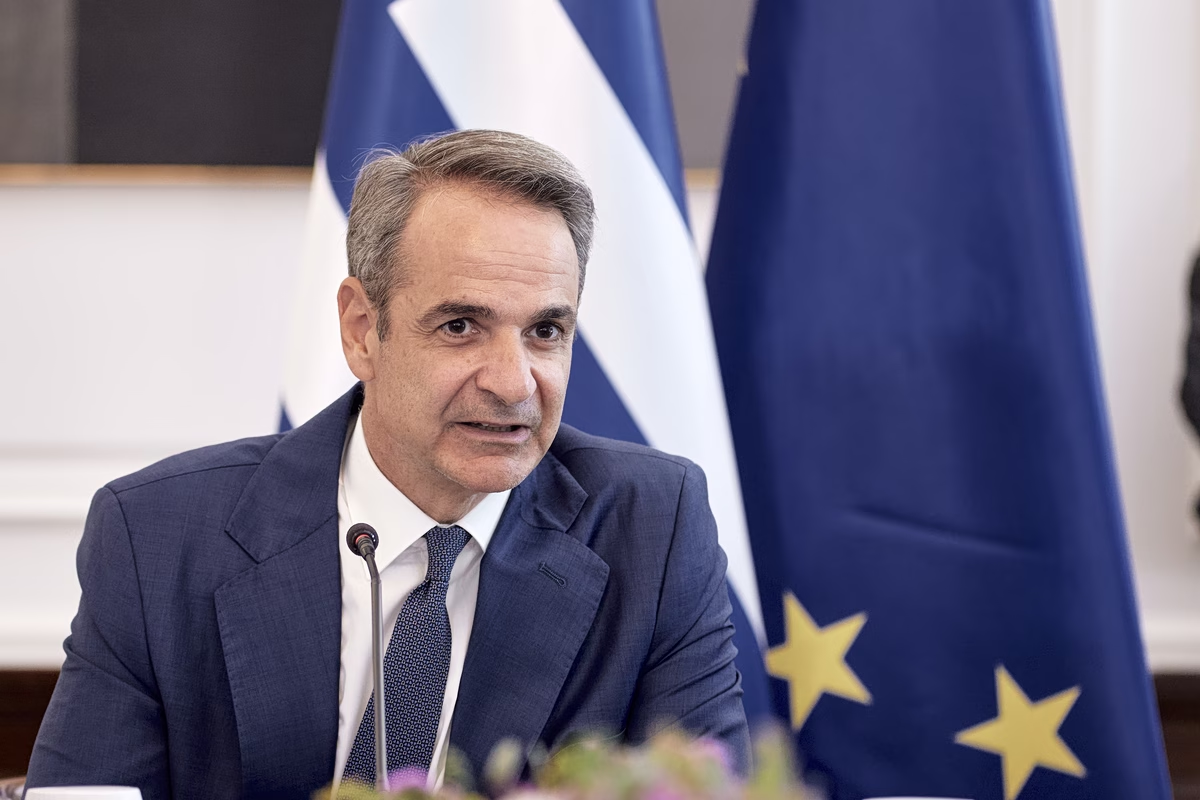
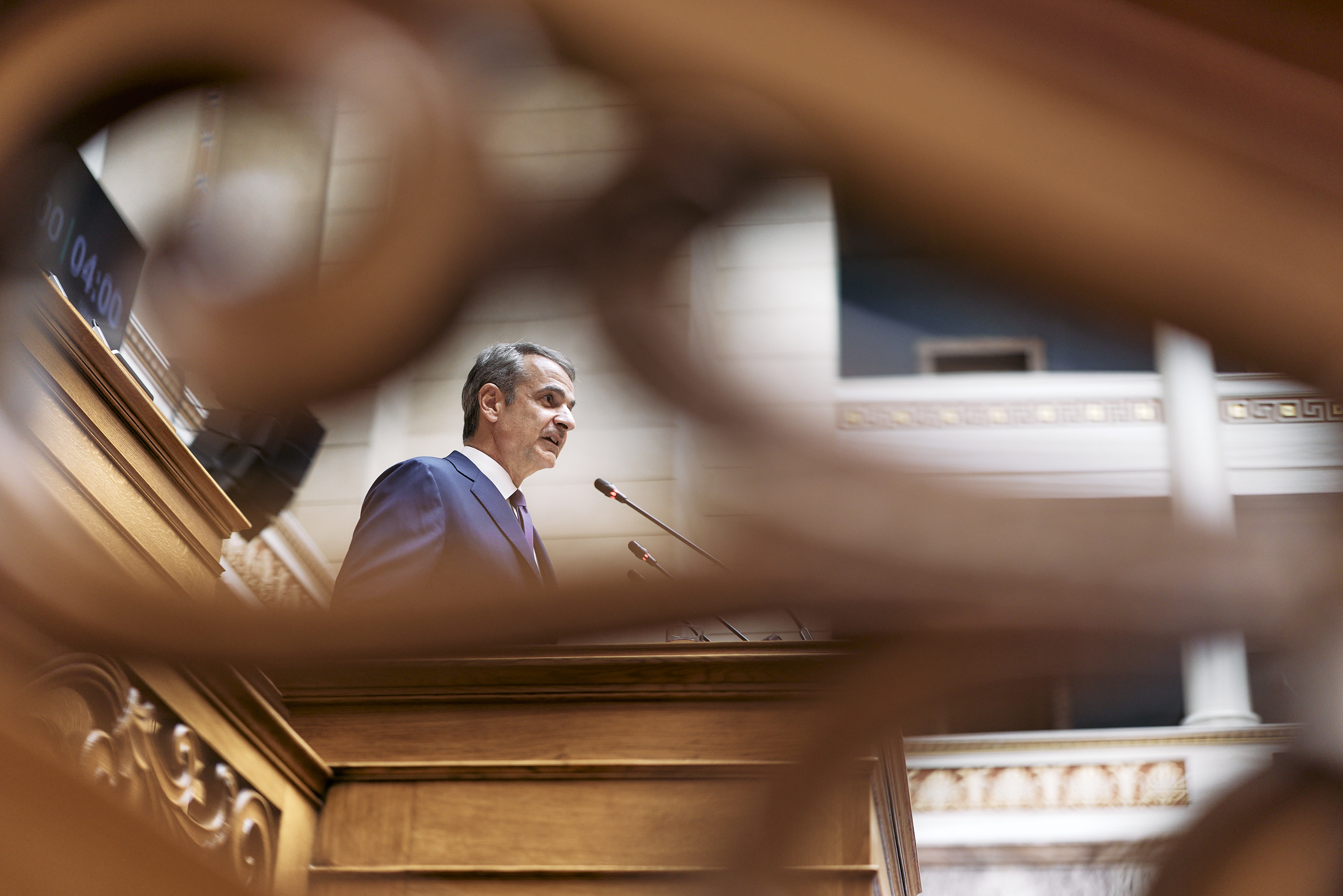
 Prime Minister Kyriakos Mitsotakis faces an awkward scenario that has begun to circulate lately within the ruling party. That of his center-right New Democracy party one day sharing power with a still pending party Antonis Samaras is planning to form, but with someone else at the helm as prime minister.
These scenarios have started to become part of the public debate in recent days. Georgios Vlachos, a New Democracy lawmaker representing Eastern Attica and who is seen as someone with close ties to former Prime Minister Kostas Karamanlis, said in a radio interview that he would rule nothing out after the next election and that the result would settle it. “Everything is on the table and everything is ruled out,” he told Parapolitika radio. Days earlier, the outspoken Minister of Health Adonis Georgiadis, had talked of the possibility of exploring a coalition with Samaras, on the condition that Mitsotakis’ leadership not be questioned.
Samaras led New Democracy and was prime minister from 2012 to 2015, running a coalition government during the worst of Greece’s debt crisis. He fell out with Mitsotakis and was expelled from the party in 2024. He is now preparing a new party of his own, and told parliament recently that he was the first prime minister to lead a real coalition, one that was neither a special-purpose nor a national-unity government.
The problem for the government is that polls show an outright majority, its stated goal, is out of reach at the moment. Mitsotakis has tried before to quiet speculation about a change of leadership, a subject that has lingered inside the party for some time. His argument is that voters do not just elect a government, they choose a prime minister.
In public, the party continues to insist on its goal of an outright majority. It names the center-left PASOK as the only potential partner, and does so largely to portray PASOK unfavorably in the eyes of undecided voters.
The government pushed back on the speculation Vlachos had set off. Spokesman Pavlos Marinakis dismissed the coalition talk, saying he could not imagine discussing a hypothetical alliance with people who call the country’s foreign policy a sellout. Politics, he said, is not about making deals but a matter of policies. Marinakis was also trying to head off a related scenario: that if New Democracy falls short and finds no partner, the party’s internal questions about Mitsotakis’ leadership resurface. He went on to defend the government’s foreign policy track record, crediting it with successes he said Greece had not achieved in the decades since the fall of the military junta in 1974. The party, he said, would not change its core positions to reach an understanding over cabinet positions. New Democracy respects the popular verdict, Marinakis added: prime ministers are chosen by citizens, not in backroom deals.
Deputy prime minister Kostis Hatzidakis, made the same case for stable, single-party government. He noted that PASOK has passed a resolution against cooperating with New Democracy, and that Alexis Tsipras, the former leftist prime minister, could not be a partner either. The opposition parties, he said, want to work neither with New Democracy nor with each other. With New Democracy leading in the polls, he argued, the sensible outcome is a New Democracy majority, a matter of logic rather than arrogance.
Source: Ta Nea