
 Μake us preferred on Google
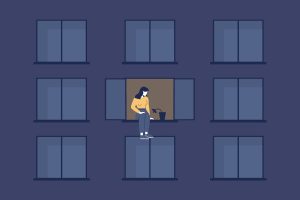
These should be the best years of their lives. In their twenties, they have made it into university, their years of hard work finally paying off. Yet many end up withdrawing into themselves, shut away in student dorms and overwhelmed by emotions they find unbearable.
Thousands of students at Greece’s universities are now turning to the psychological support services their own institutions provide. At the University of Patras alone, the number has reached nearly 1,000 this academic year, Rector Christos Bouras told tanea.gr.
“We found that quite a few young people, both women and men, need psychological and counseling support,” he said. “They book appointments and attend sessions with social workers or psychologists. The severe cases, and there are some, are referred to the psychiatric clinic of our university hospital. Right now we have a thousand students out of 25,000, and those are only the ones who admit it. Most of them don’t speak up.”
The warning signs for faculty, Bouras explained, are mainly depression, isolation and struggling with coursework. The university’s Center for Psychological and Counseling Support, founded in 2023 to offer free and confidential care, has also handled more serious situations. “We have had severe cases, very few, fortunately, including suicide attempts that we were able to prevent. But we have to identify them, because in our country these problems still carry a stigma. Families don’t talk about them. Cases come to light through professors, through students who confide in us, or through their friends. Even so, reaching them is difficult.”
The university tries to draw students out by organizing workshops and running a 24-hour hotline staffed overnight by a social worker, which has helped in some cases. All of these programs are funded through the EU’s NSRF (ESPA) program, the regional authority and the Ministry of Education.
Similar centers operate at the National Technical University of Athens, the National and Kapodistrian University of Athens, the University of Piraeus, Panteion University, the Athens University of Economics and Business, and Aristotle University of Thessaloniki, as well as at the universities of Crete, Ioannina and Thrace. Every day, students walk through their doors hoping to find themselves and the sense of purpose they are missing.
Many look for the same thing in the office of psychologist, child psychologist and author Alexandra Kappatou. “Young people who leave home face many challenges,” she said. “They have to cope with separation from their parents and face the unknown. They lose their friends, their family environment and their safety net. Data from other countries show that most students face some kind of psycho-emotional difficulty, and about 15% report psychological problems during their studies, mostly anxiety disorders. They feel depressed. They experience intense loneliness. They struggle to adjust to an unfamiliar city.”
This, she said, inevitably disrupts daily life. Students may neglect even their basic needs. They skip sleep, since many, especially freshmen, feel afraid at night. They eat poorly, don’t make social connections and stop going to class. Quite often, the result is destructive “self-medication.”
“Alcohol abuse is one. Students often binge drink, deliberately consuming large amounts to get drunk so they can feel more relaxed. There is also substance use, which is rising sharply worldwide, including prescription drugs such as anti-anxiety medication,” Kappatou said.
The problem knows no borders. According to the 2024 National Survey on Drug Use and Health, as cited by the US National Institute on Alcohol Abuse and Alcoholism (NIAAA), 25% of college students aged 18 to 25 reported binge drinking in the past month, and 46.6% had consumed alcohol over the same period.
So what lies behind the gray routine so many students are living? The hard truth in most cases, Kappatou says, comes down to parental overprotection.
“When we act as ‘helicopter parents’ and try to meet our children’s every need before they even express it, they end up struggling. They haven’t learned to take initiative, and they can’t handle disappointment or setbacks. They don’t know how to manage simple practical tasks like cooking or cleaning the house.” Still, she noted, these are usually young people whose anxiety was already there and may simply have gone undiagnosed or unnoticed.