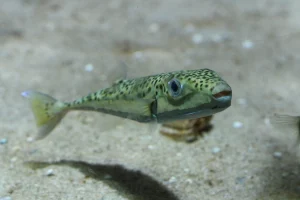
The Greek Red Cross has issued a public warning over the growing presence of the silver-cheeked toadfish, commonly known in Greece as the lagokefalos (Lagocephalus sceleratus), in waters around the country, urging caution over both its highly toxic flesh and the risk of serious injury from its powerful bite.
In a statement, the Red Cross said the invasive species contains tetrodotoxin, a potent neurotoxin that makes it extremely dangerous for human consumption. Because toxin concentrations vary throughout the fish’s body, no part of the species is considered safe to eat.
While the fish’s bite is not itself venomous, the Red Cross warned that its powerful beak-like jaws can inflict severe wounds and significant bleeding.
The organization advised anyone bitten by a lagokefalos to immediately clean the wound thoroughly with running water and soap, avoid using topical antiseptics unless instructed by a physician, and apply firm pressure with a clean cloth or sterile gauze to control bleeding. If bleeding is severe, the injured limb should be elevated while continuous pressure is maintained.
The Red Cross stressed that medical attention should always be sought following a bite, noting that treatment may require specialized care, tetanus prophylaxis and, in cases of deep wounds, stitches.
In remote areas or where heavy bleeding occurs, citizens should immediately contact Greece’s National Emergency Aid Center (EKAV) at 166 or the European emergency number 112 while administering first aid until professional assistance arrives.
The silver-cheeked toadfish is among the most prominent invasive species to have entered the eastern Mediterranean through the Suez Canal. Marine scientists and fisheries authorities have repeatedly warned that its population has expanded significantly in recent years, particularly in the southeastern Aegean and around Crete, the Dodecanese and other islands of the eastern Mediterranean. The species poses a dual threat because of its highly toxic flesh and its impact on local fisheries, where it damages nets, lines and catches.