 Μake us preferred on Google
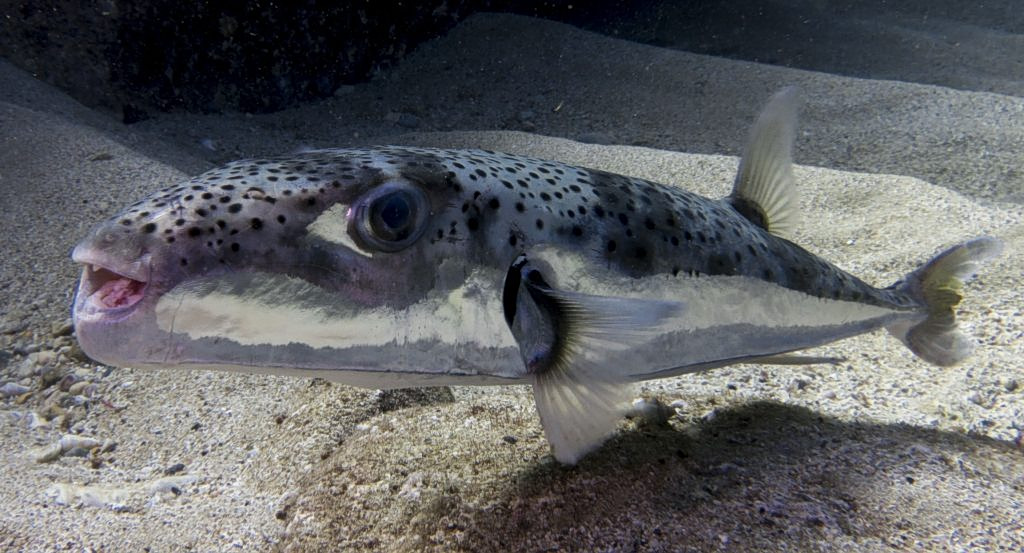
 The presence of the pufferfish, known in Greece as lagokefalos, in Greek waters has sparked concern among the public, especially after videos and photos of the species spread on social media. However, marine experts say there is no reason for panic and that the fish does not pose a direct threat to swimmers.
Archipelagos Institute of Marine Conservation Director Thodoris Tsimpidis said the attention surrounding the species has often been exaggerated and does not reflect the actual level of risk.
Speaking to ERTnews, Tsimpidis explained that the pufferfish itself is not dangerous to people in the water. Its bite is not venomous, and the toxins associated with the fish are found in its internal organs rather than on its body.
“There is no danger from touching it or from an accidental bite,” he said, adding that the real risk comes only from consuming the fish if it has not been properly cleaned.
Experts link bites to feeding by swimmers
Addressing reports of pufferfish bites near beaches, Tsimpidis said that in cases examined by experts, the incidents were linked to people feeding the fish.
According to him, throwing food into the sea attracts fish closer to the shore and increases the likelihood of contact with swimmers. He advised the public not to feed fish at beaches and to remain calm if they encounter the species.
The expert also noted that even in cases of minor injury, treatment is straightforward.
Why the species is spreading in the Mediterranean
Although the pufferfish is not considered a danger to swimmers, its expansion in Greek waters has raised concerns among fishermen and marine scientists because of its impact on ecosystems and fishing activity.
The species is considered invasive and can damage fishing equipment and consume commercially valuable fish, creating competition with native species.
Tsimpidis attributed the spread of the pufferfish in the Mediterranean mainly to the expansion of the Suez Canal, which created a pathway for species from the Red Sea and Indian Ocean to enter Mediterranean waters.
He also highlighted overfishing as a major factor, explaining that the decline of natural predators has disrupted marine ecosystems and allowed invasive species to expand more easily.
“The fish that should be predators have been greatly reduced,” he said, warning that the problem could become greater in the future if pressure on marine ecosystems continues.
More than 1,000 new species in the Mediterranean
According to Tsimpidis, more than 1,000 species have become established in the Mediterranean in recent years, with the most adaptable and aggressive species managing to survive.
The pufferfish is one example of this changing marine environment, which experts say is also influenced by rising sea temperatures linked to climate change.