 Μake us preferred on Google
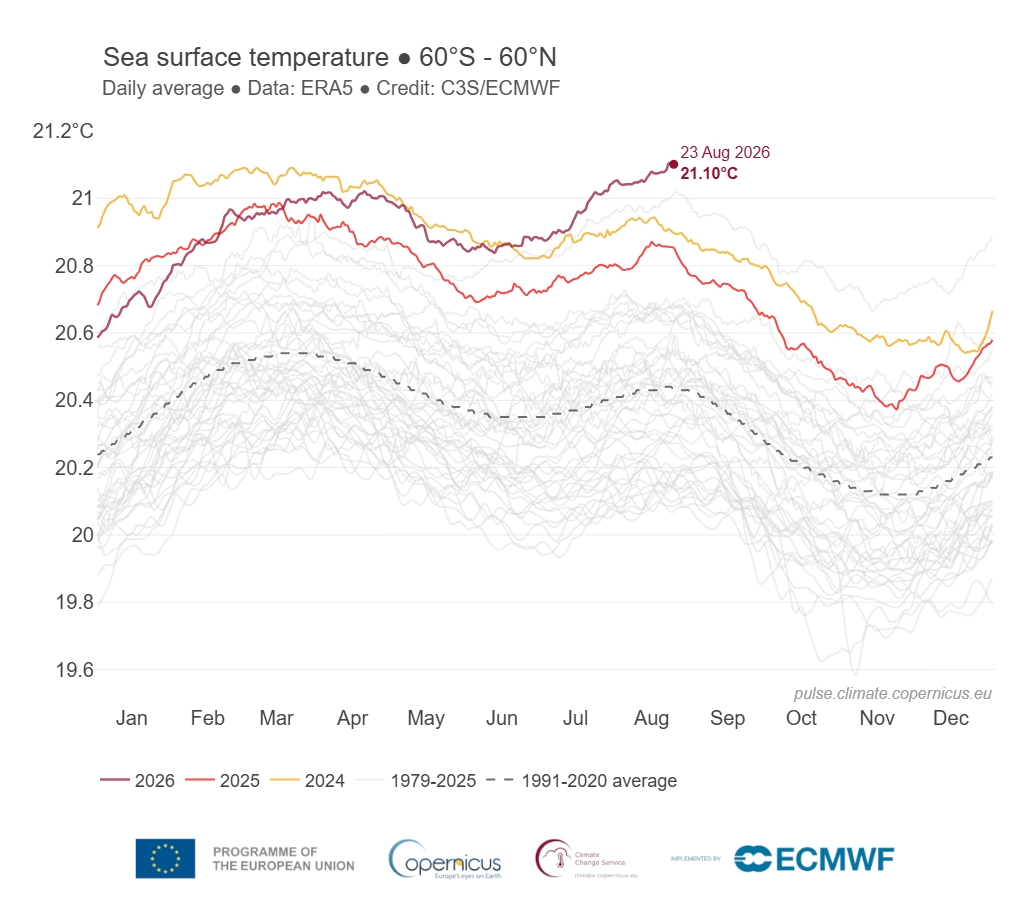
 With El Niño building in the Pacific on top of decades of climate change, average sea surface temperatures broke the 2024 record, climbing to 21.1 degrees Celsius on August 22, according to Europe’s Copernicus Earth observation service.
What’s especially concerning is that the record came at the end of summer, while average ocean temperatures usually peak between March and April, when summer ends in the Southern Hemisphere, home to larger ocean expanses. That means temperatures could keep rising in the coming months.
This year’s temperature spike is being intensified by El Niño, which forms when a large mass of warm water appears in the eastern Pacific and tends to raise temperatures worldwide. This year’s El Niño is expected to be the strongest in at least several decades.
August’s surface temperature record may even turn out to be the highest in the past 125,000 years, according to a post on X by Ryan Katz-Rosene, a professor at the University of Ottawa. He said it should be front-page news.
Although calculations of average global temperature always carry some uncertainty, the UN and the U.S. National Oceanic and Atmospheric Administration (NOAA) estimate that today’s climate is likely indeed the warmest in 125,000 years.
August’s record is another clear sign that the oceans are under growing strain, said Samantha Burgess, strategic lead for climate at the European Centre for Medium-Range Weather Forecasts (ECMWF).
She noted that El Niño is adding heat to the system, but that this comes on top of decades of human-caused warming. As ocean temperatures keep rising, so do the risks to marine ecosystems and coastal communities. The effects are already visible: the number of days with marine heatwaves worldwide has more than tripled since the early 1990s, putting growing pressure on marine ecosystems and the communities that depend on them.
Beyond marine heatwaves, rising ocean temperatures cause water to expand, accelerating sea level rise, an existential threat to coastal communities.
Warmer water also speeds up the transfer of heat and moisture into the air, favoring extreme weather events such as cyclones.