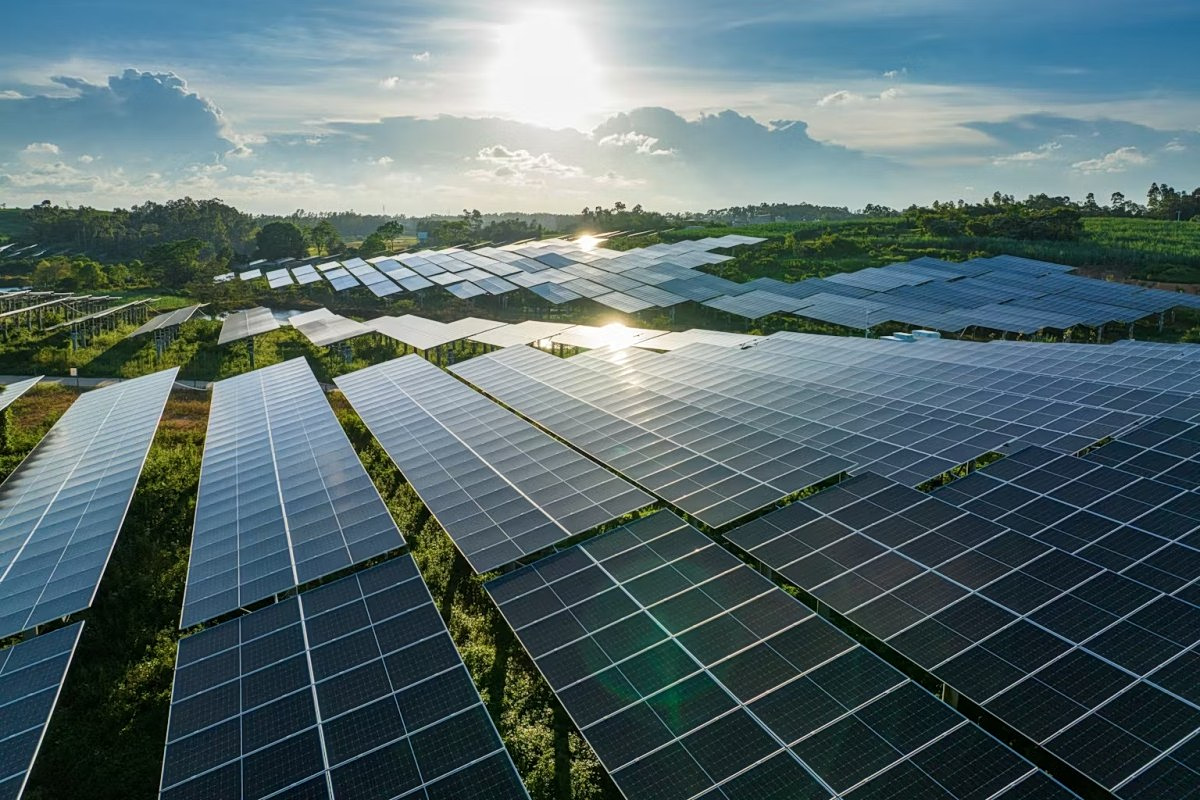
Humanity has always relied on the sun. Even fossil fuels—the cornerstone of the Industrial Revolution—originate from prehistoric plants that captured solar energy through photosynthesis or from animals that consumed them. Today, we harness the sun’s energy directly, not just through solar panels but also via wind farms, since sunlight drives the wind itself.
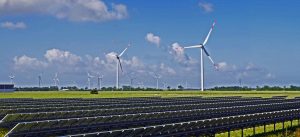
The rise of renewable energy has been named the most significant scientific development of 2025 by Science magazine. For the first time, renewables surpassed coal in electricity production. Solar and wind energy alone met all the year’s increased demand for power during the first half of 2025, according to Ember estimates.
Although global carbon emissions continue to rise, fuelling climate change, the stabilization—and eventual reduction—of emissions is finally on the horizon thanks to renewable energy. While limiting global warming to 1.5°C by 2100 now seems unlikely, the renewable surge offers hope of mitigating the worst impacts.
In September, Chinese President Xi Jinping pledged at the United Nations to cut China’s carbon emissions by 10% over the next decade—a critical step, as China remains the world’s largest greenhouse gas emitter.
China is also driving the global green transition: aggressive subsidies have made it responsible for 80% of global solar panel production, 70% of wind turbines, and 70% of lithium batteries. The renewable energy sector now accounts for 10% of China’s economy, with its solar and wind capacity alone theoretically able to meet all U.S. electricity demand. Solar energy production in China has increased tenfold in the last decade.
As solar power becomes the cheapest form of energy worldwide, economic incentives now support the green transition. In Pakistan, for example, the energy crisis spurred by the Ukraine war drove a fivefold increase in Chinese solar imports between 2022 and 2024. Rooftop solar panels are now in high demand across the Global South, bringing electricity for the first time to millions living off-grid.
The pace of progress is striking: in 2004, installing one gigawatt of solar power took nearly a year. Today, two gigawatts are added to grids daily. Technological advances could accelerate this further. Traditional silicon photovoltaics may soon be enhanced with perovskite crystals, which capture a broader spectrum of visible light.
When sunlight fades and winds calm, giant batteries can store excess energy. Sodium, vanadium, and zinc-air batteries promise cheaper, higher-capacity storage solutions than today’s lithium-based systems.
Nine Other Groundbreaking Scientific Developments
- Personalized Therapies for Rare Genetic Mutations
Little K.J. became the first baby cured of a rare mutation using CRISPR, the revolutionary gene-editing technology that won the 2020 Nobel Prize in Chemistry. In just six months, U.S. researchers corrected a mutation causing toxic ammonia buildup, saving the infant’s life before a liver transplant could be arranged. Clinical trials for other personalized gene therapies are now underway. - New Weapons Against Drug-Resistant Gonorrhea
For the first time in decades, two new antibiotics—gepotidacin and zoliflodacin—offer hope against gonorrhea, a bacterial infection affecting over 80 million people annually. Both drugs target bacterial DNA replication, countering strains resistant to nearly all existing treatments. - How Nerves Fuel Cancer Growth
Research published in Nature revealed that tumors coax nerve cells into supplying extra mitochondria, accelerating tumor growth and metastasis. Drugs that block this mitochondrial transfer could become vital cancer therapies. - The World’s Largest Digital Camera Observes the Universe
The Vera Rubin Observatory in Chile, equipped with a 3.2-gigapixel camera the size of a car, offers astronomers unprecedented views of the night sky. Capable of detecting a golf ball from 24 kilometers away, it will map the southern hemisphere every few days, track 37 billion stars, and gather 15 terabytes of data nightly—shedding light on dark matter, dark energy, and small Solar System objects. - The Mysterious Denisovans Take Shape
A 146,000-year-old fossil skull from Harbin, China, revealed that Denisovans—enigmatic relatives of Neanderthals—had brains the size of ours, prominent brow ridges, wide noses, and large eyes. Genetic analysis shows they diverged from Neanderthals 400,000 years ago and interbred with Homo sapiens, leaving traces of their DNA in modern populations across the Pacific region. - AI Enters the Scientific Arena
Large language models like ChatGPT are transforming research. In 2025, AI models from Google DeepMind and OpenAI won gold-level performance at the International Mathematical Olympiad. Earlier, Google introduced an AI “co-scientist” to help researchers analyze literature and design experiments, demonstrating AI’s growing role in advancing science. - Animal-to-Human Transplants Move Forward
Decades of experimentation in xenotransplantation paid off this year, as genetically modified pigs provided organs for human patients. In China, a pig liver transplant patient survived 171 days, and a genetically engineered pig kidney was successfully transplanted in Massachusetts, offering hope for future widespread applications. - Climate-Resilient Rice
Rising temperatures threaten rice crops, a staple for billions. Chinese researchers identified the QT12 gene, which, when modified, increases heat tolerance. New varieties of rice yielded 78% more under heat stress, offering a potential blueprint for strengthening other essential crops without genetic modification. - New Antibiotics and Therapies for Global Health
Beyond gonorrhea, the year saw breakthroughs in treatments for rare mutations and infectious diseases, illustrating a shift toward precision medicine and public health interventions that could reshape global healthcare.
2025 emerges as a year where humanity leveraged science to tackle climate change, health crises, and cosmic mysteries. From the ground beneath our feet to the stars above, these innovations promise to reshape life on Earth—and beyond.