

 Μake us preferred on Google
 Two higher education institutions based outside of Greece have received new licenses to establish and operate non-state university branches in the country, days after the Council of State (CoS), the highest administrative court in the land, annulled their previous licenses over legal issues identified in the licensing process.
The education ministry launched a new administrative procedure to comply with the CoS decisions, with licenses re-issued for the University of Keele and the University of York to operate in Greece as legal entity branches of foreign universities.
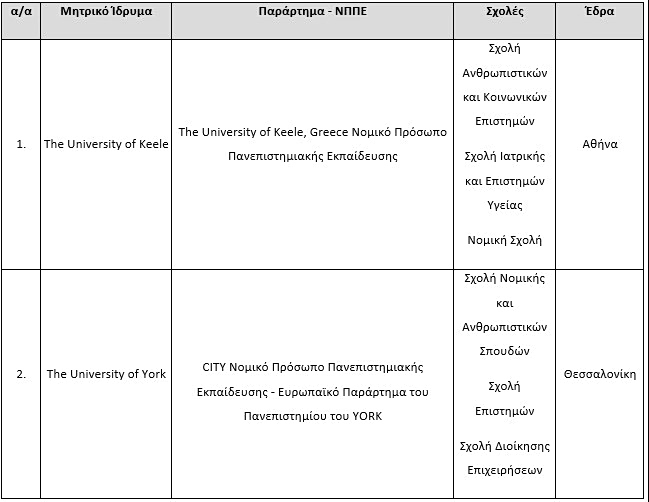
The licenses were signed by Deputy Education Minister Nikos Papaioannou.
The development follows two CoS rulings earlier this month, which annulled the previous licenses of three non-state university branches by citing legal issues in the licensing process.
The ministry said the new licenses were issued after the prescribed administrative procedure was conducted again, in compliance with the court’s rulings.
The Aug. 13 rulings concerned CITY College – University of York, Keele University and Anatolia College. The legal challenge was brought by Athens Law School professor Panayiotis Lazaratos.
Reassessment Possible
At the time, the high court’s annulment of the licenses did not necessarily mean that the affected institutions would permanently cease operating.
The latest decisions involving Keele and York demonstrate that process in practice, with the ministry repeating the administrative procedure and issuing new licenses after taking the Council of State’s findings into account.
The current Mitsotakis government has pledged to overcome all obstacles to the operation of fully recognized non-state university branches in the country. The first group of institutions received operating licenses this year, marking the initial implementation of the new system after decades in which Greece’s higher-education landscape was a state monopoly.
The licensing process has remained subject to scrutiny, however, with the CoS examining challenges concerning the legality of individual approvals as well as aspects of the regulatory framework governing the new institutions.