 Μake us preferred on Google
 Public hospitals across Greece are facing disruption as doctors and nurses stage a two-day strike on March 18–19, 2026, demanding fair wages, timely allowances, and solutions to widespread staff shortages. The protests are organized by the Panhellenic Federation of Hospital Doctors (OENGE) and the Federation of Public Hospital Employees (POEDHN).
The strike highlights long-standing grievances in the Greek health system. According to OENGE, salaries for senior doctors have fallen by up to €238 compared with 2012 levels, while increases for younger trainees remain minimal at €140 gross. The removal of the 13th and 14th salaries over the past decade has further eroded earnings, leaving doctors and nurses with effectively stagnant pay for years.
Staff shortages compound the crisis. POEDHN reports that 8,000 healthcare workers have left public hospitals recently, creating a “black hole” of 20,000 unfilled positions. Public spending on healthcare remains at just 5.5% of GDP, below the European average of over 7.5%, exacerbating working conditions and fueling resignations.
The two-day strike will see hospital operations scaled back:
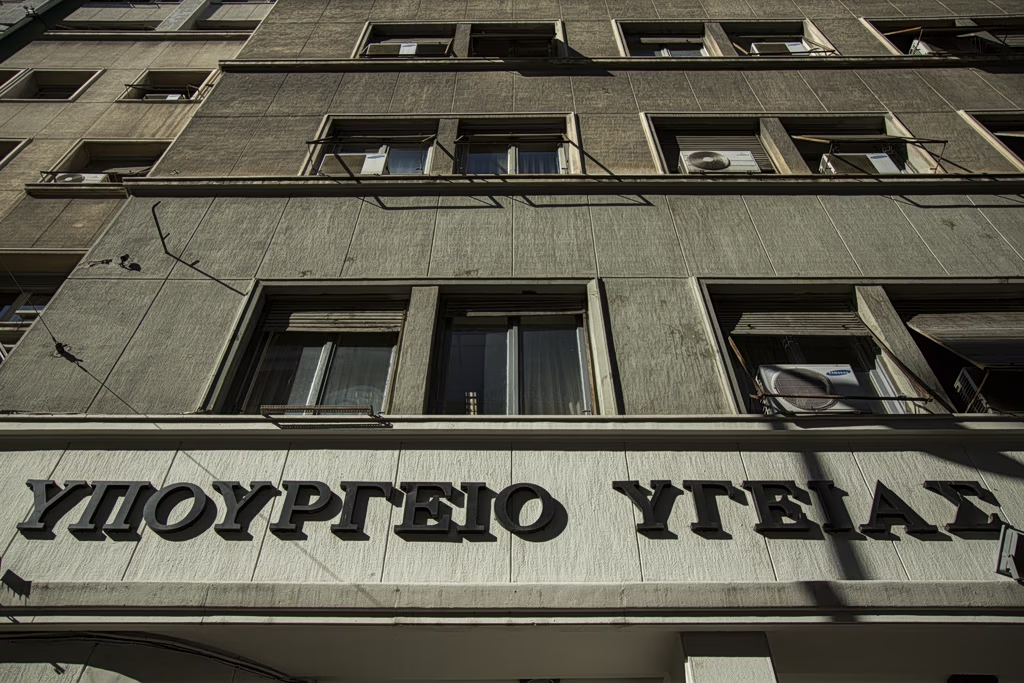
- March 18: Nationwide 24-hour strike by OENGE, with a demonstration at the Ministry of Health at 12:00.
- March 19: POEDHN leads a 24-hour strike outside Athens, with a work stoppage from 08:00 to 15:00 and a 09:00 rally at the Ministry of Health. Regional hospitals will also hold full-day strikes.
Adding to tensions is a delay in approval for additional 2026 allowances. Workers are awaiting legislation from the Ministry of Finance, expected by the end of March, which may alter how these payments are issued, increasing uncertainty among staff.
Hospital unions warn that unless the government addresses salaries, staffing, and pending allowances, Greece’s public health system could face prolonged disruptions, risking patient care nationwide.