The Greek government’s plan to deploy 1,000 artificial intelligence cameras to catch traffic violations has hit its second procurement obstacle in as many months, after the country’s independent procurement authority ordered the tender suspended pending the review of legal challenges.
The Single Public Procurement Authority, agreed to halt the process temporarily after two prospective bidders, MAYCON and the construction group AKTOR, filed appeals seeking to annul the latest call for tenders. The decision, taken on July 6, means the July 27 bid opening is expected to be postponed until a final ruling is issued.”
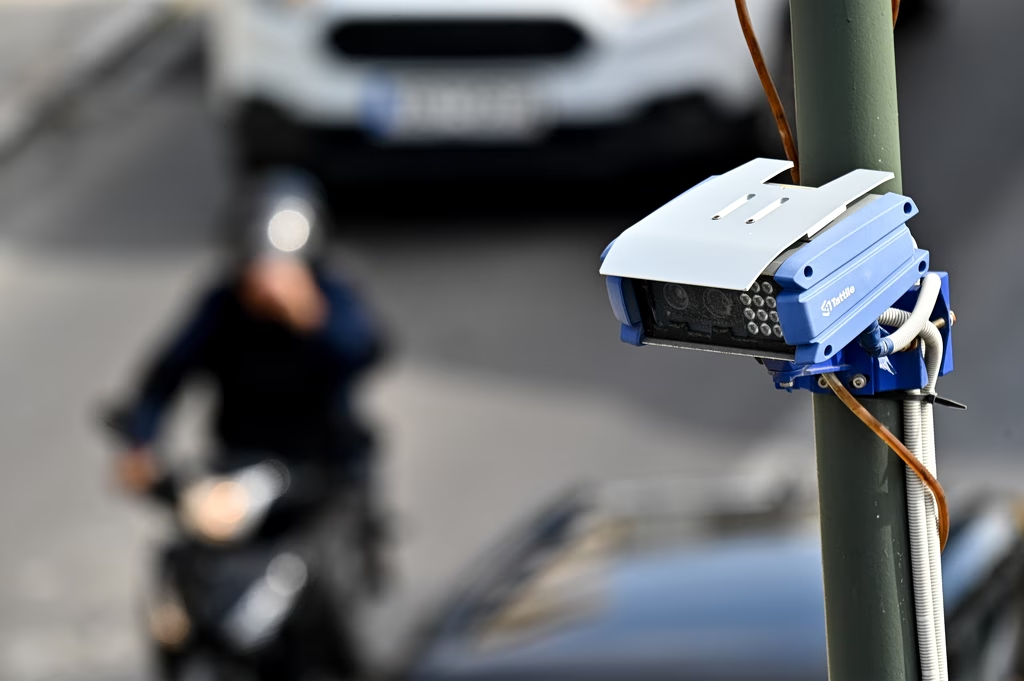
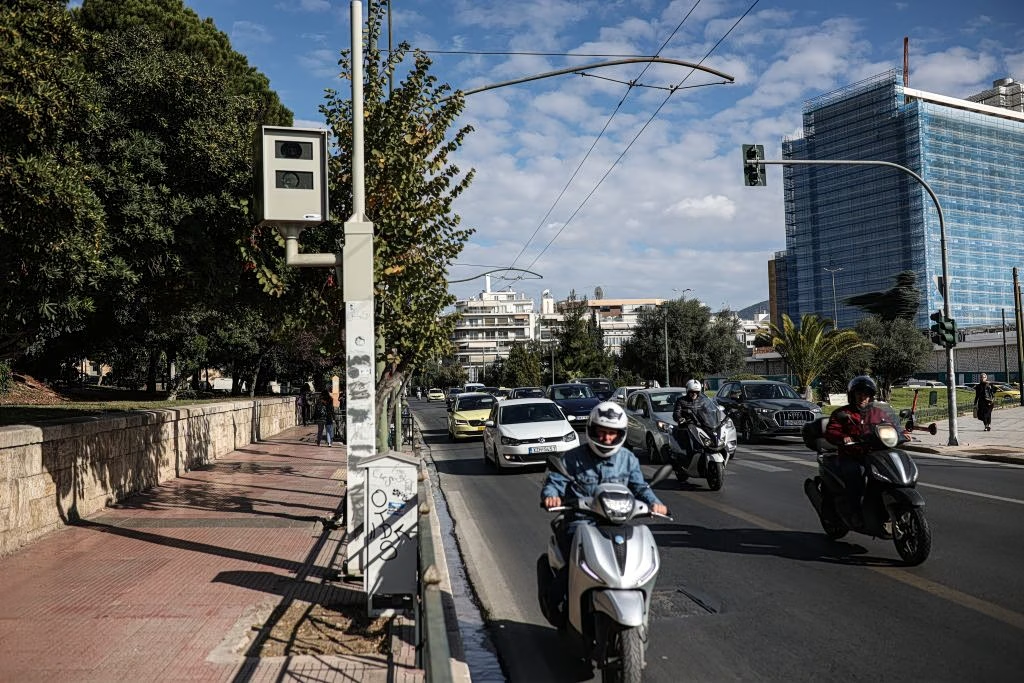
The project, run by the Ministry of Digital Governance, envisions installing 1,000 fixed cameras across Attica, along with Thessaloniki and Crete, with the option of extending the network to other parts of the country. The cameras would automatically record traffic code breaches, from speeding and running red lights to using a mobile phone at the wheel, failing to wear a seatbelt or helmet, and driving illegally in bus lanes or the emergency lane.
A second attempt, the same result
It is the second time the scheme has run aground. The initial tender, launched in late April for a project officially titled the Unified National System for Digital Recording and Management of Traffic Checks and Fines, collapsed after three appeals from interested consortia. The companies argued at the time that key terms left both the technical specifications and the financial scope unclear, making it hard to price bids and, they said, limiting competition.
The ministry withdrew the process at the end of May and relaunched it days later with revised documents meant to address the main complaints. The new version did not head off a fresh round of challenges.
In its July 6 decision, EADISY said the grounds raised by MAYCON and AKTOR could not be dismissed as clearly unfounded, and that pressing ahead before a final judgment could harm the companies. The authority stressed that it was not prejudging the outcome, noting only that the appeals were not plainly inadmissible and that the firms’ claims warranted closer examination.
The objections
Among the sticking points carried over from the first round was the tender’s failure to specify exactly where the cameras would go, which bidders said made it impossible to estimate reliably the cost of installing, connecting, and maintaining the equipment. Under the revised terms, the winning contractor would map out the locations in an implementation study, and the ministry would make the final call on where cameras go, based on traffic police operational needs.
Bidders had two further complaints. One was that the tender lumped cameras with different technical specifications into a single purchase. The other was the financing model itself, which envisions the contractor getting paid for its work from the money coming in from the fines.
A self-financing model
The revised tender is worth 35.53 million euros before value-added tax, or about 44.06 million euros with it, roughly the same as the first call. What changed is that the ministry dropped an option to extend the contract, which had pushed the original’s potential value as high as 88.1 million euros.
The contract runs six years and, according to the tender, pays for itself. Rather than drawing on the state’s public investment budget, the contractor would be repaid out of the fines the new system collects. The tender’s own projections assume each camera catches fewer than two violations a day on average, which would bring in about 96.4 million euros over the first five years. Even the gloomiest scenario in the documents points to around 47 million euros. And they build in an expectation that better driving will shrink the number of recorded violations by about 10% a year.
Under the plans, a Hellenic Police officer would sign off on every recorded violation before a fine goes out. The system reads the license plate, checks it against state registries, and opens an electronic file. Drivers get notified through the state’s online services, where they can see the evidence, pay on the spot, or file an objection.
Source: TA NEA