 Μake us preferred on Google
The alleged manipulation of basketball games in Greece has left young athletes questioning the values they have spent years learning through sport, with parents describing the psychological toll of a school championship semifinal in Cyprus that they believe was decided by hostile and unfair refereeing.
The game between a school team from Patras and the Hellenic College of Thessaloniki, played in Paphos, Cyprus last March, has come under scrutiny as part of a broader investigation into alleged match-fixing in Greek basketball. Parents claim that refereeing decisions dramatically altered the course of the semifinal, leaving the Thessaloniki players convinced that their efforts could not change the outcome.
The allegations have emerged amid an investigation into suspected manipulation of approximately 50 basketball games at various levels between 2016 and 2026. The wider case reportedly involves alleged payments, communications concerning refereeing decisions and suspected efforts to influence match outcomes. Those implicated in the investigation have denied wrongdoing, according to previous reports.
In the school semifinal, the Patras team won 64-60 after trailing 58-45 with four minutes remaining in the third quarter. According to the account published by the Athens daily Ta Nea, the Patras players were subsequently awarded numerous free throws, while the Thessaloniki team failed to score in the final quarter. Technical fouls against the Thessaloniki school’s bench also reportedly contributed to the shift in momentum.
The allegations are under investigation and do not, by themselves, establish that the match was fixed.
The school administration reportedly emailed the Hellenic Basketball Federation (EOK) after the game, requesting an investigation into the circumstances surrounding the semifinal. However, the school received no information about the progress of the matter, according to the report. Video footage of the game, particularly the action after the two-hour-and-21-minute mark, is now being examined.
Parents describe lasting psychological impact
A father whose son played in the semifinal told Ta Nea that the defeat had profoundly affected the young athletes, many of whom were also preparing for Greece’s national university entrance examinations.
The players had begun practicing basketball at the age of four or five and had devoted approximately 12 years to training, often sacrificing leisure time and holidays to balance their academic responsibilities with competitive sport.
“They were and remain excellent athletes,” the father said, describing how the players had lost their motivation to study after the game. He called the experience their first major confrontation with what he regarded as injustice in life.
He said he had tried to reassure his son that sport inevitably involves both victories and defeats, emphasizing that the game was only one of many challenges he would face. He urged the players to preserve their values and team spirit, adding that children should be kept out of the wider controversy because they were not responsible for the allegations.
Parents of players from the Hellenic College of Thessaloniki, in a statement signed by 17 families, similarly described the game as a devastating experience for athletes who had spent years adhering to demanding training and dietary programs.
They alleged that the referees’ conduct was exceptionally hostile and that decisions repeatedly went against their team.
“When the players left the court, they said clearly: ‘Whatever we did was futile,’” the parents said in their statement, arguing that the officiating was inconsistent with the rules of basketball.
The families said they had complained both inside and outside the arena, but believed their concerns had been ignored, including by a representative of Greece’s education ministry who was present. The school subsequently lodged a formal complaint with the ministry but received no meaningful response, according to the parents.
They called for the restoration of the ethical principles they believe were undermined and requested that the relevant authorities ensure fair treatment of students whose academic prospects may have been affected by the outcome.
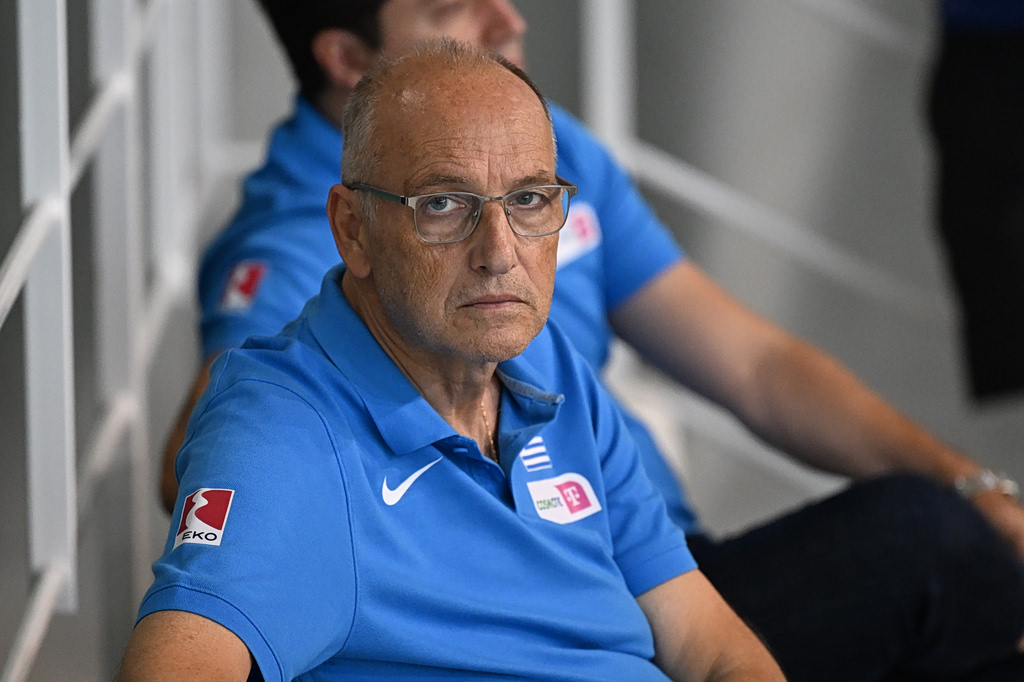
Hellenic Basketball Federation President Vangelis Liolios during a media day for the Greek men’s national basketball team ahead of the 2027 FIBA World Cup qualifiers. (Klodian Lato/Eurokinissi)
Wider allegations involving school sports
The case has also prompted questions about whether school basketball competitions are being exploited to secure advantages in university admissions.
Giorgos Christopoulos, president of the Federation of Private School Teachers of Greece (OIELE), said allegations brought to his attention pointed to problems extending beyond the Paphos semifinal.
Christopoulos alleged that four private schools had been linked to cases of so-called fictitious attendance, in which student-athletes allegedly received grades and graduation certificates despite rarely attending classes. He also alleged that certain school teams had benefited from networks that helped them win championships, potentially allowing their players to secure additional points in university entrance examinations through sporting distinctions.
These claims have not been established as facts and require investigation by the competent authorities.
Christopoulos also cited a separate allegation by parents that two EOK members had requested payment to secure places for their children on Greece’s junior national basketball teams. International distinctions at that level can provide additional points in university admissions, potentially creating incentives for improper influence, he argued.
He said similar concerns had been raised in less popular sports and announced plans to submit proposals to the Education Ministry and raise broader questions about possible irregularities in university admissions.
Calls for accountability
The parents’ accounts have added a human dimension to a scandal that has raised broader questions about transparency and accountability in Greek basketball.
The wider investigation reportedly examines suspected manipulation across youth, school, lower-division and professional competitions. Previous reporting has cited communications, witness testimony and alleged payments as elements of the case, while authorities continue to examine the evidence.
For the families involved in the Paphos semifinal, however, the immediate concern is the effect on young athletes who had invested much of their childhood in sport. They say the experience undermined their faith in fair competition and left them struggling to reconcile the principles they had been taught with what they believe happened on the court.