

 Μake us preferred on Google
 When my grandmother was diagnosed with dementia, I believed the hardest part would be the gradual loss of her memory. In reality, it was the accumulation of small, everyday changes that proved most painful: the repeated questions about the time, about my name, the confusion in her gaze, the moments when she no longer recognized familiar faces or places she had known all her life. Through our experience, I came to understand that dementia is not only about memory loss—it reshapes an entire life, as well as the lives of those who love and care for the person affected.
Dementia, an umbrella term encompassing hundreds of conditions, leads to a progressive decline in memory, judgment, thinking, and the ability to perform daily activities. According to the World Health Organization, more than 55 million people worldwide are living with some form of dementia. The most common type is Alzheimer’s disease, accounting for roughly 60% to 70% of cases. With numbers expected to rise significantly in the coming decades, efforts to support patients and families are becoming increasingly urgent.
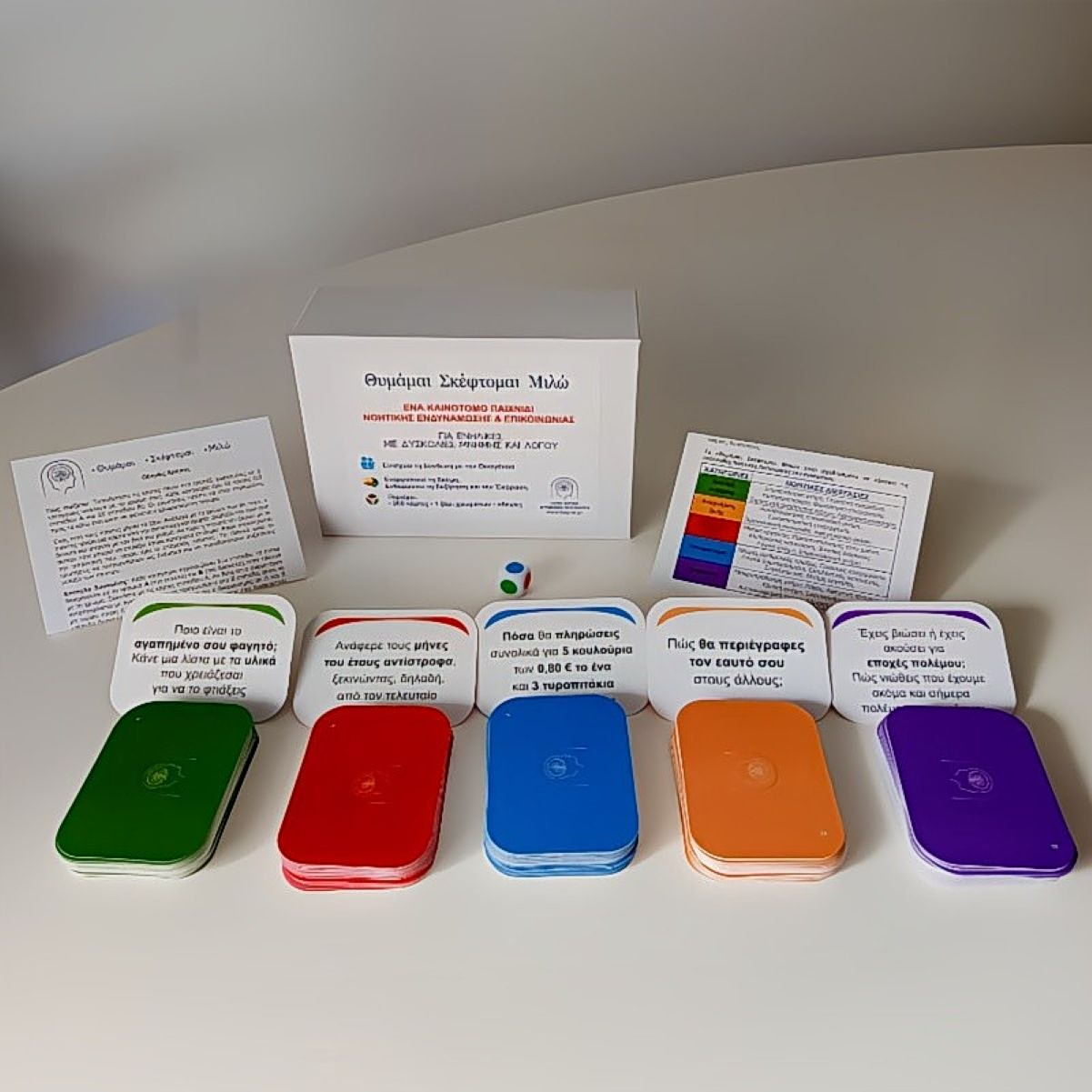
Against this backdrop, the creation of the first board game designed for people with dementia and their families offers a message of hope. The game, titled “I Remember, I Think, I Speak”, was developed by Stella Papadopoulou following her return to Greece. After 17 years of studies and professional experience in France as a neuropsychologist and speech therapist for adults, she sought to design a practical tool that would help families preserve communication, participation, and human connection through structured, enjoyable activity.
As she explains, caregivers of people with dementia are often asked to manage an overwhelming emotional and practical burden. Between work, family responsibilities, and care duties, many struggle to find both the time and appropriate tools for cognitive stimulation at home. At the same time, as the disease progresses, individuals gradually withdraw from social interaction and even from their own families. Conversation becomes increasingly difficult, interest fades, and meaningful engagement diminishes. In many households, couples may sit at the same table in silence, while children search in vain for ways to connect with a parent who feels increasingly distant.

Many families, she notes, experience the distressing sense of losing contact long before physical absence occurs. The game was designed as a bridge—a way to restore moments of interaction and shared presence. Through structured activities based on cognitive stimulation and reminiscence therapy, it encourages conversation, memory recall, and emotional expression, strengthening not only thinking and memory but, above all, human connection.
Papadopoulou also emphasizes that concerns about heredity are often misunderstood. Purely genetic forms of dementia account for only a small percentage of cases, around 1% to 5%. In most instances, the condition arises from a combination of factors, including age, cardiovascular health, physical activity, diet, social engagement, stress management, and lifestyle habits.
This perspective is reinforced by the 2024 Lancet Commission report, which suggests that addressing 14 modifiable risk factors could prevent or delay up to 45% of dementia cases. While genetics cannot be changed, brain health can be significantly influenced through everyday choices, offering a message that remains fundamentally optimistic.
Alzheimer’s disease itself progresses gradually through distinct stages. A preclinical phase may last 15 to 20 years, during which pathological changes accumulate in the brain without visible symptoms. This is followed by Mild Cognitive Impairment, a transitional stage marked by subtle difficulties in short-term memory, attention, or word-finding, while overall independence is largely preserved.
In the early stage of dementia, individuals begin to struggle with recent information, planning, organization, and problem-solving. Social withdrawal often begins here. In the middle stage, cognitive decline becomes more apparent: disorientation in familiar places, increased dependence on others, communication difficulties, and changes in mood and behavior.
In the late stage, full dependence on caregivers develops, alongside severe impairments in communication, mobility, and self-care. Although Mild Cognitive Impairment does not inevitably progress to dementia, neurodegenerative dementia itself is currently considered irreversible once established.
It is also important to recognize that not all cognitive decline is caused by neurodegenerative disease. Conditions such as vitamin B12 deficiency, thyroid disorders, medication side effects, or depression can produce dementia-like symptoms that are often reversible when properly diagnosed and treated. For this reason, timely and comprehensive evaluation is essential.
The idea for “I Remember, I Think, I Speak” emerged directly from clinical practice. Papadopoulou recalls hearing caregivers repeatedly express uncertainty about how to engage their loved ones at home. At the same time, she observed relationships gradually weakening, as dementia reduces initiative, fosters apathy, and makes interaction increasingly rare. Caregivers themselves often experience anxiety, emotional exhaustion, loneliness, and guilt.
Her response was to create a scientifically grounded tool that does not feel like an exercise, but rather like an experience—something enjoyable, accessible, and ready to use. For her, the most meaningful outcome is simple yet profound: the creation of renewed moments of connection.
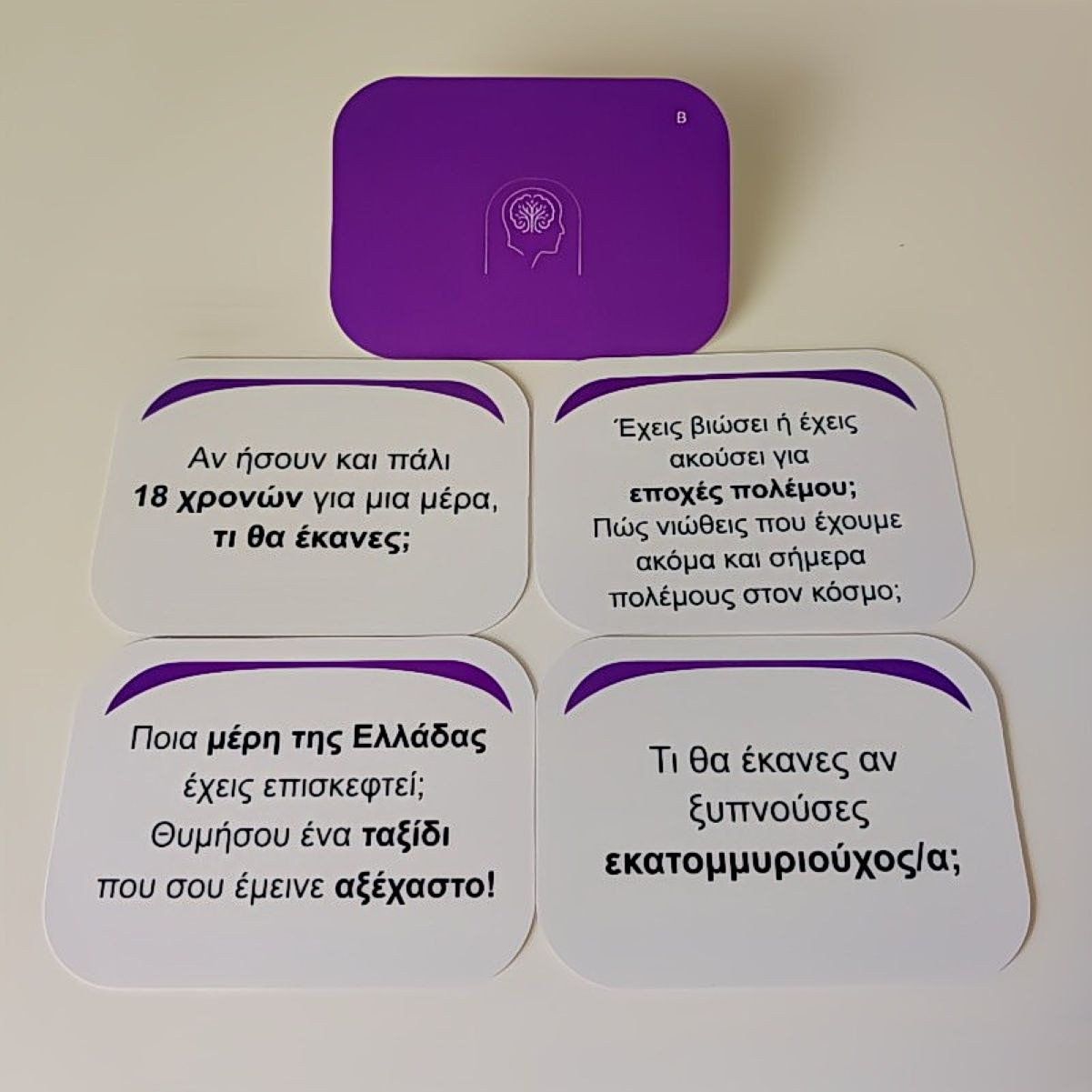
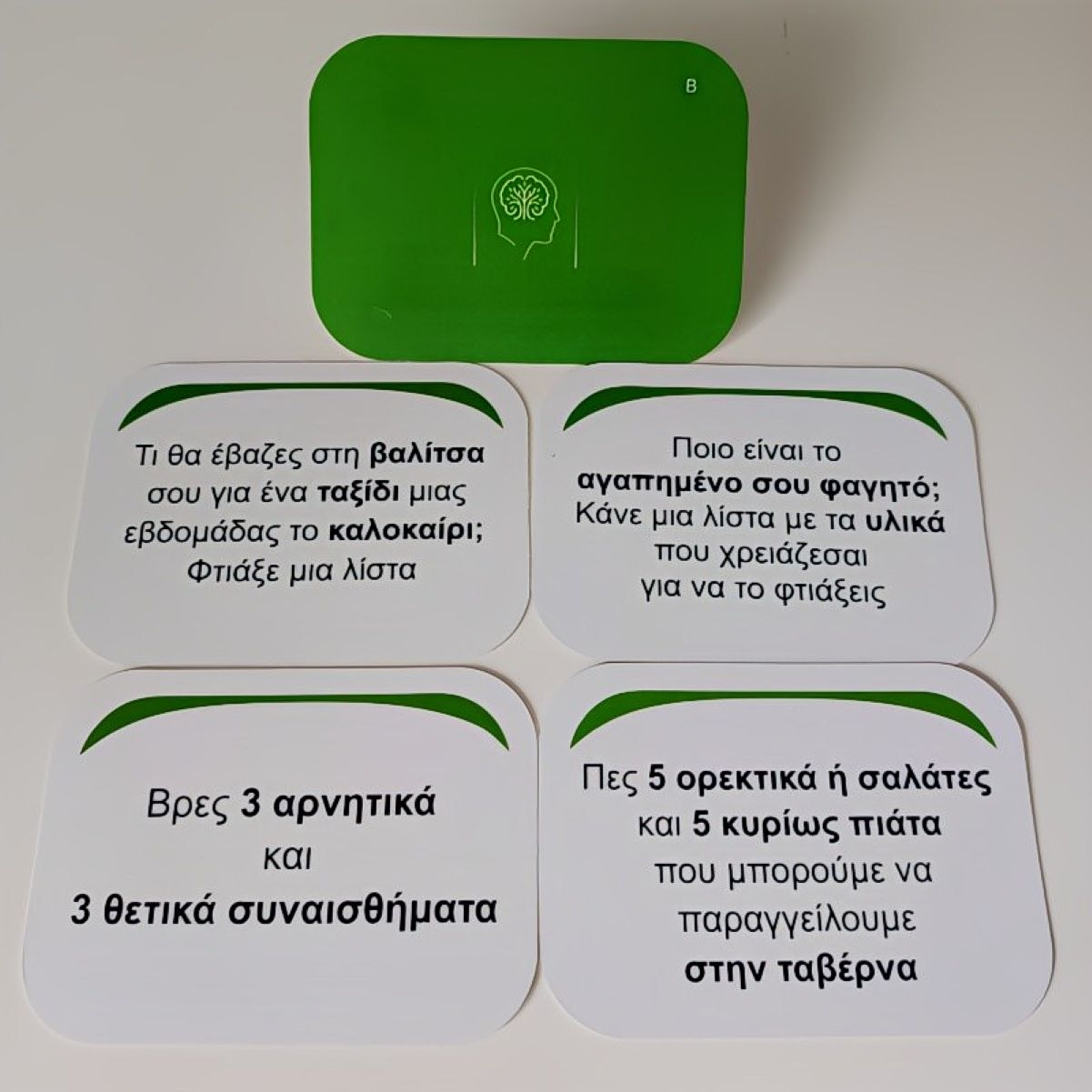
The game is built around cards with questions at two levels of difficulty, organized into five thematic categories: verbal fluency, life memories, time and celebrations, numerical reasoning, and expression. Each prompt becomes an invitation—sometimes to recall a story from youth, other times to spark a conversation between parents, children, and grandchildren. In this way, it activates memory, attention, language, and thought in a natural and engaging manner.
Its value extends beyond cognitive stimulation. Because dementia often reduces initiative and leads to social withdrawal, the game also helps rebuild a shared space for communication within the family. In doing so, it offers something that cannot be measured in clinical terms alone: the return, however briefly, of meaningful human presence.