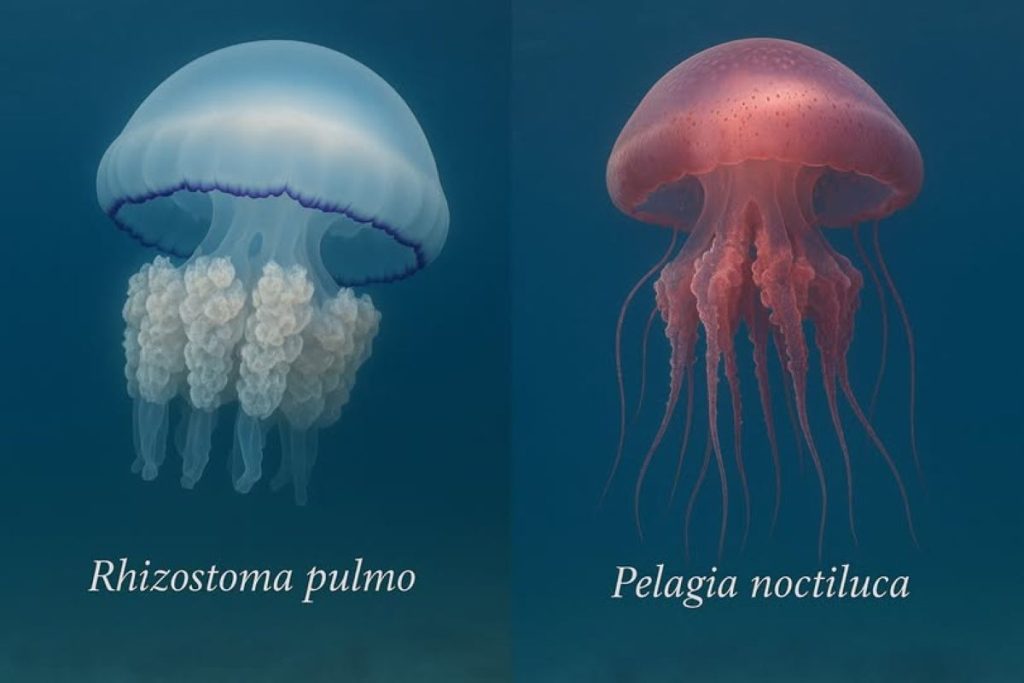
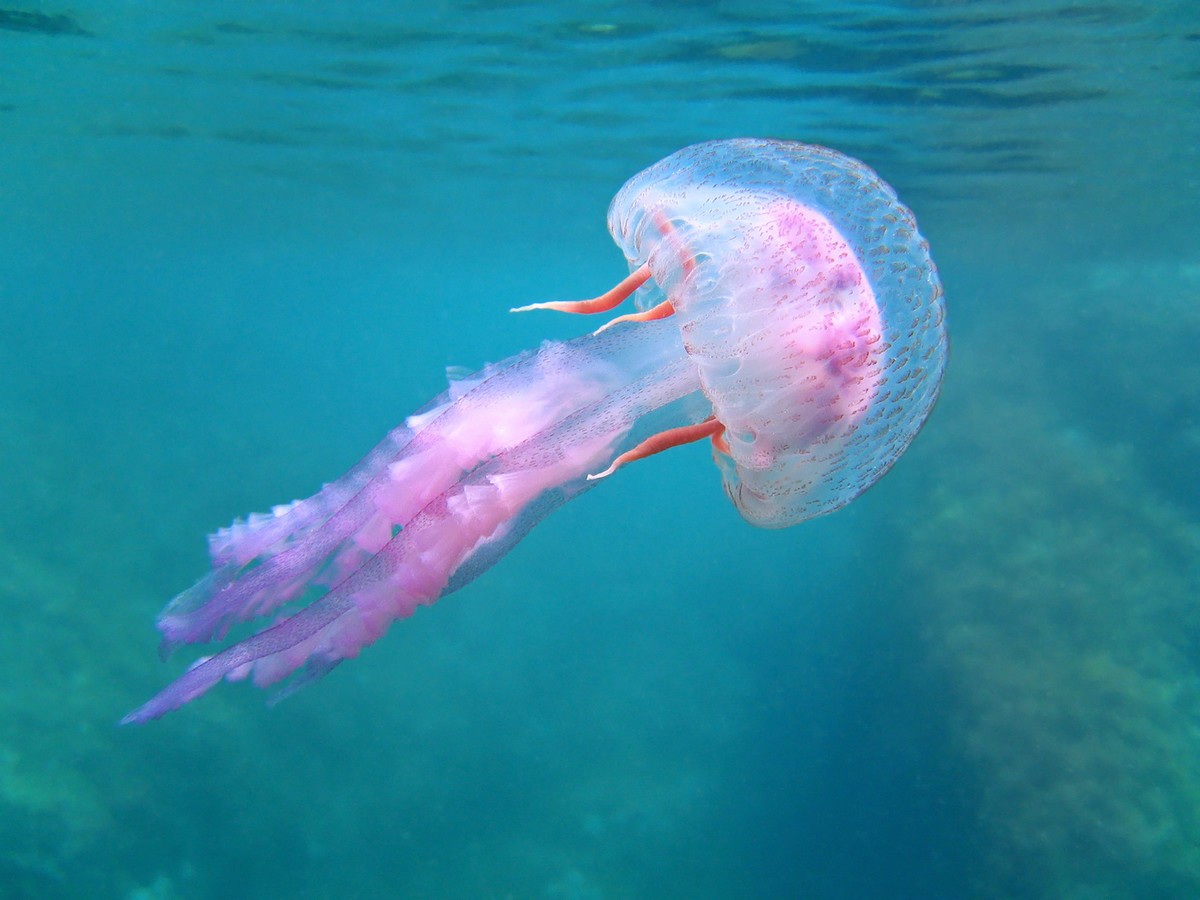
As summer reaches its peak in Greece, concerns are growing over the rapid spread of the purple jellyfish (Pelagia noctiluca), a species known for its painful sting. Tourists and locals alike are being warned to exercise caution when swimming in affected areas, especially along the eastern coastlines and island beaches.
Rising Numbers in Popular Swimming Spots
Recent sightings confirm that purple jellyfish populations are increasing in several popular destinations, including:
- Chalkida and the northern part of the Evia Gulf
- Northern Evia, acting as a natural outlet from the Pagasetic Gulf
- Pagasetic Gulf, particularly along the eastern shores
- Northern Sporades, with verified appearances around Skiathos and Skopelos
Experts from the Hellenic Biodiversity Monitoring Centre now admit that their initial projections underestimated the extent and speed of this year’s jellyfish surge. Reports indicate the phenomenon is spreading faster than expected.
What Makes the Purple Jellyfish Dangerous?
Despite its striking appearance, Pelagia noctiluca poses real health risks due to the potency of its sting. Found in warm and temperate seas around the world—including the Mediterranean—this jellyfish is covered with stinging cells, both on its tentacles and dome.
NEWSLETTER TABLE TALK
Never miss a story.
Subscribe now.
The most important news & topics every week in your inbox.
Although not typically life-threatening, stings can be extremely painful, causing symptoms such as:
- Burning sensation
- Redness and swelling
- Skin rashes or visible sting marks
- Nausea, vomiting, dizziness
- Drop in blood pressure, rapid heartbeat
- In rare cases: breathing difficulty or even anaphylactic reactions in sensitive individuals
Outbreaks of Pelagia noctiluca have, in the past, wiped out entire fish farms, prompting marine biologists to study the species extensively.
Echoes of Past Mediterranean Outbreaks
The current increase in sightings resembles the major jellyfish outbreaks from 2020 to 2023 that affected multiple regions across the Mediterranean. While Gibraltar is reportedly facing the worst of the current season, similar spikes are now being recorded in Spain, France, Italy, and parts of the Adriatic Sea—making this a widespread phenomenon, not isolated to Greece.
How to Protect Yourself
Greece’s National Public Health Organization (EODY) offers the following five recommendations in case of a jellyfish sting:
- Remove tentacles carefully – Never with bare hands; use a cloth, gloves, or even sand to avoid spreading the sting to your hands.
- Rinse with seawater – Avoid freshwater as it may trigger any remaining stingers on the skin.
- Apply cold compresses – Ice or a cold cloth can help reduce swelling and soothe the skin.
- Use a corticosteroid cream – This helps reduce inflammation and relieves itching or burning.
- Take an antihistamine – To manage widespread itching or skin reactions.
If symptoms persist or become severe—especially signs of allergic reaction such as swelling, difficulty breathing, or fainting—immediate medical attention is required.