 Μake us preferred on Google
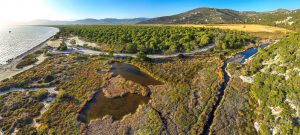
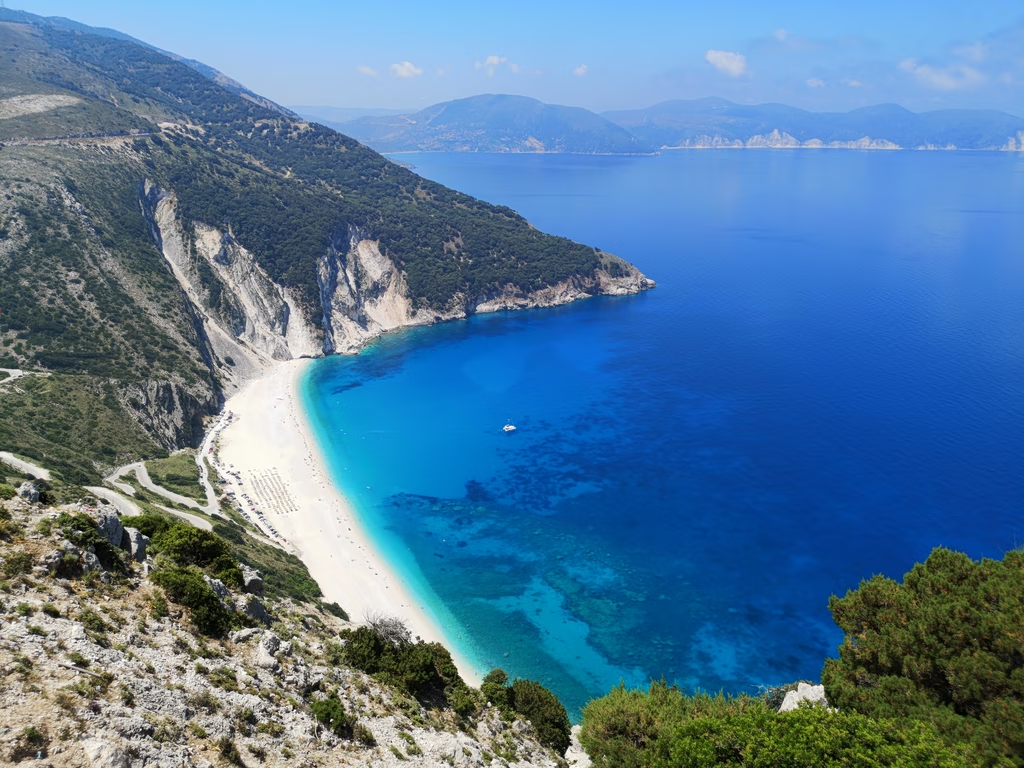
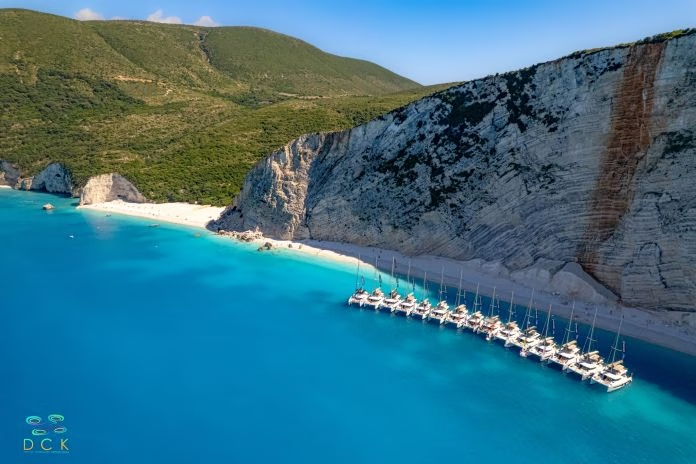
 Fteri, a beach on western Kefalonia, has become a magnet for international attention after being ranked the second most beautiful beach in the world for 2026, trailing only Entalula Beach in the Philippines. That recognition has changed daily life at the cove: water taxis, rental boats, speedboats, and sailboats now arrive in numbers that were unthinkable when the spot was still relatively unknown. The surge in popularity is now creating environmental and management strain that local authorities can no longer put off.
An analysis by KefaloniaPress, based on MarineTraffic vessel-tracking data, shows a dense cluster of boats inside the cove and along the shoreline. That snapshot illustrates how much pressure the area is under, though it doesn’t confirm whether boats are anchoring illegally or keeping proper distance from swimmers. MarineTraffic only tracks vessels broadcasting an active AIS signal, meaning many of the small rental boats and speedboats that visit Fteri each day don’t show up on the map at all, so actual boat traffic is likely higher than the data suggests.
KefaloniaPress researchers also flagged a key scientific detail: the official “Seagrass Meadows in the Greek Seas” dataset, built using data from the Hellenic Centre for Marine Research (HCMR) and hosted on EMODnet, maps a seagrass meadow within Fteri’s zone.
What the Map Shows, and What It Doesn’t Prove
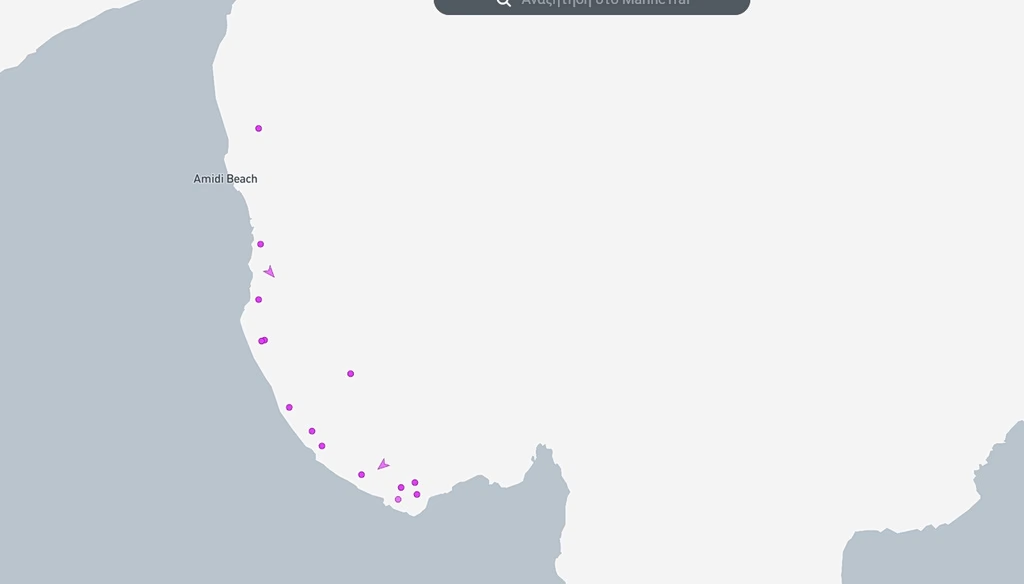
https://www.marinetraffic.com 27/07/2026
The Importance of Sea Meadows and the Need for their Conservation
The scientific dataset doesn’t identify which species grows in that specific patch, but it notes that Posidonia oceanica is the dominant seagrass across Greek waters. Aerial footage of the area, filmed early in the tourist season, shows large dark patches of underwater vegetation mixed with sandy stretches, giving a clear sense of where the meadow sits and how far it extends. That footage doesn’t show anchoring or prove any environmental damage on its own, but it functions as a kind of x-ray of the seabed.
Diver and researcher Makis Sotiropoulos confirms Posidonia is present at Fteri and is calling for eco-friendly mooring buoys to be installed without delay. He describes Fteri as a recognized, protected Posidonia meadow, and says the fix is one that’s already been discussed: green moorings that need to go in now.
Rules on the Books, and Proposals Still Waiting
Posidonia oceanica meadows fall under European habitat type 1120 (“Posidonia beds”), a priority habitat under the EU Habitats Directive. Authorities have yet to clarify the area’s exact protection status, including which agency is responsible and what process should follow.
A plan for eco-moorings was actually pitched back in April 2026, according to KefaloniaPress. Sotiropoulos, who has installed similar systems elsewhere in Greece and Europe, has pointed out that smaller boats venturing into the shallow water where Posidonia grows tend to cause the most damage to coastal meadows. His proposal called for free installation of eco-moorings, an electronic booking system for mooring spots, a controlled usage fee for boats, and limits on random, uncontrolled anchoring. But he says local authorities in Kefalonia never responded to the proposal.
Eco-moorings are fixed, purpose-built attachment points that let boats tie up without dropping their own anchor, protecting seagrass in the process. They also make mooring safer, allow for limits on how long boats stay, and give a realistic read on how much boat traffic the cove can actually handle. Rolling the system out properly would require detailed underwater mapping, a technical study, an environmental review, and choosing the right mooring type for each spot.
Open Questions for the Authorities
Greece’s General Port Regulation requires boat captains to follow Port Authority rules on anchoring and vessel movement, and bans motorized recreational boats from anchoring in swimming zones marked off with buoys. There’s already a precedent: in 2025, the Central Port Authority of Rhodes banned anchoring at Agios Pavlos bay in Lindos because of overcrowding by swimmers and boats. A similar rule could be considered for Fteri.
The Kefalonia Port Authority, the Municipality of Argostoli, the Region of the Ionian Islands, environmental agencies, and the relevant Port Fund are all being asked to answer basic questions: Is there a specific traffic and anchoring rule for Fteri? Has an underwater inspection been done recently? What is the area’s exact protection status? Was the eco-mooring proposal ever evaluated? Is there a management plan now that Fteri has this global ranking?
Protecting Fteri doesn’t mean keeping visitors out or targeting the businesses that operate on the water. It’s about organizing access using scientific data, clear rules, and the right infrastructure to keep the natural resource intact. The need for action is becoming urgent, since every delay raises the risk of damage that can’t be undone.