 Μake us preferred on Google
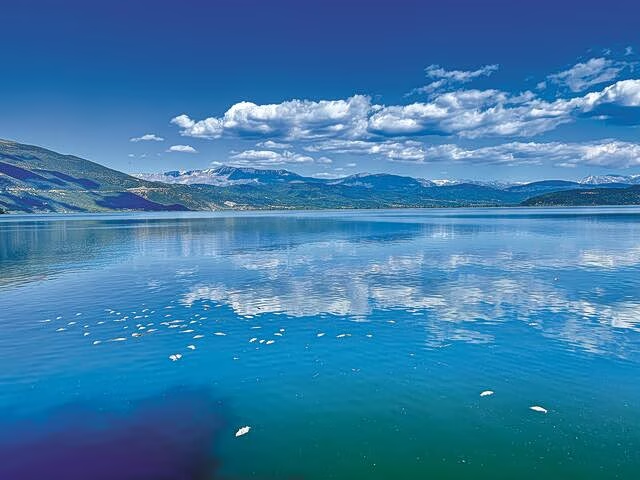
 Authorities and scientists in northern Greece are investigating the mass death of fish in Lake Pamvotida, a popular lake near the city of Ioannina, after dozens of dead fish were found along its waterfront walking paths in recent weeks.
The species mainly affected is Carassius gibelio, commonly known as Prussian carp or silver crucian carp, an introduced species that has become widespread in the lake’s ecosystem.
The phenomenon was first observed during routine environmental patrols in early April, when dead fish were recorded in several areas around the lake. In the following days, particularly over the Easter period, the number of dead fish increased significantly, with the largest concentration found near a busy lakeside harbour area. The situation prompted concern among residents and visitors, as well as closer scientific monitoring.
Ongoing scientific investigation
The situation is being examined by a coordinated group of institutions, including Greece’s environmental protection agencies, local authorities, the regional veterinary service, the University of Ioannina, and marine research specialists.
Initially, the deaths were thought to be part of a seasonal pattern linked to the reproductive cycle of the species. However, the unusually high number of dead fish compared to previous years led to a more detailed investigation.
Seasonal stress and “winter mortality” effect
According to scientists studying the case, the most likely explanation is a phenomenon known as “overwintering mortality”, which affects fish after prolonged cold periods.
Experts explain that fish are cold-blooded animals whose metabolism slows in winter. During this time, reduced feeding can deplete their energy reserves. When temperatures rise in spring, their metabolism increases again, but weakened fish may no longer have sufficient energy to survive, especially during the demanding reproductive period.
Fish aged two to three years appear to be the most affected group, as they are simultaneously investing energy in both growth and reproduction, making them more vulnerable to stress.
Laboratory examinations of affected fish showed extremely low fat reserves, developing ovaries consistent with reproductive activity, and no signs of wounds, parasites, or disease. Researchers also found no evidence that the deaths were caused by suffocation.
Oxygen levels and environmental conditions
Measurements of water quality showed slightly reduced oxygen levels during nighttime periods, a condition considered within normal seasonal variation but still potentially stressful for fish with higher oxygen demands.
Scientists note that while these conditions are not unusual, they may contribute to mortality when combined with biological stress and temperature fluctuations.
No sign of pollution, but further study continues
Based on current data, experts say there is no indication of sudden pollution in the lake. Instead, the deaths appear to result from a combination of natural stress factors linked to seasonal change, reproduction, and environmental variability.
At the same time, researchers stress that other causes are still being examined. The fact that the mortality appears to affect mainly one species has led to consideration of possible biological or pathological factors.
In similar cases in other European lakes, mass deaths of Carassius gibelio have been linked to viral infections, a possibility that remains under scientific review as part of ongoing analyses.