Purple jellyfish sightings are increasing across Greece, causing concern among tourists, holidaymakers and fishermen as the marine creatures continue to appear in coastal areas around the country.
According to recent data, the highest number of reports has been recorded in areas including Evia and Fthiotida, with sightings reported near Chalkida, Arkitsa, Drosia and parts of the Pagasetic Gulf.
A live tracking map from the iNaturalist platform shows that the phenomenon is affecting almost every part of Greece’s coastline, with reports continuing to increase nationwide. The data is collected through online observations and reports from the social media group “Jellyfish in Greece.”
What Purple Jellyfish Look Like
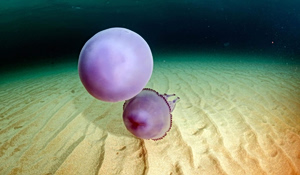
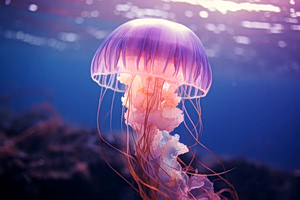
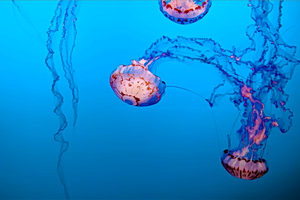
The purple jellyfish, scientifically known as Pelagia noctiluca, is easily identified by its distinctive appearance.
Its color can range from pink and purple to lilac, while its dome-shaped body is relatively thick and covered with small spots and raised areas. It has four long, visible oral arms and eight thin, elongated tentacles extending around its body.
Unlike some transparent jellyfish species, the purple jellyfish has a more colorful and spotted appearance. Its sting can be strong and painful, and experts advise people never to touch it.
What to Do After a Purple Jellyfish Sting
Health authorities advise avoiding direct contact with the tentacles if a sting occurs. Any remaining tentacles should be removed without using bare hands.
The affected area should be rinsed with plenty of seawater, not fresh water, as fresh water may activate any remaining stinging cells.
Applying ice or cold compresses can help reduce local symptoms. A cortisone cream may be used to relieve inflammation and itching, while an antihistamine may help with more widespread reactions.
If symptoms continue or become severe, medical attention may be required, including possible treatment at a hospital or health center.
A Species Found in Warm Seas Worldwide
Pelagia noctiluca belongs to the Pelagiidae family and is the only officially recognized species in its genus. Its name comes from Greek and Latin roots referring to the sea and “night light,” reflecting its ability to produce bioluminescence.
The species is found in tropical and warm temperate waters around the world, including the Mediterranean Sea, although some records in other regions may involve related but unidentified species.