 Μake us preferred on Google
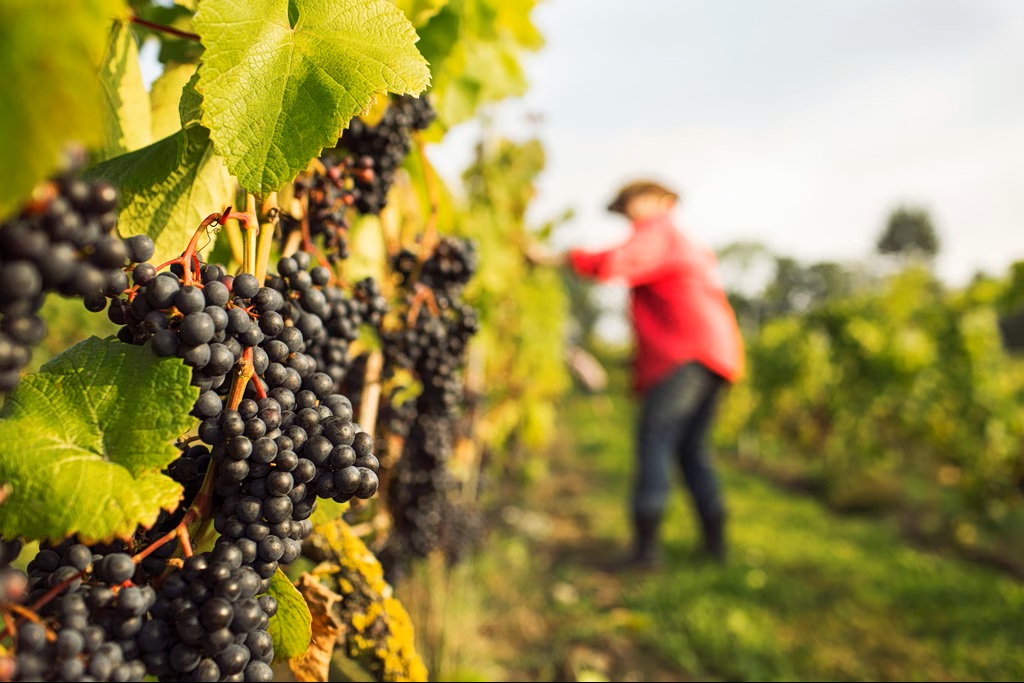
Local winemakers are facing mounting pressure from increasingly unpredictable weather, with late frosts, prolonged lower-than-average rainfall and summer heatwaves threatening vineyards on the mainland and islands.
The challenges extend across the Mediterranean, of course, where changes in climate, according to most scientists, is disrupting traditional growing cycles, accelerating harvests and reducing yields. Meanwhile, vineyards are expanding in countries such as Sweden and Britain, where warmer conditions are opening new opportunities for wine production.
Greece’s wine production is forecast to reach 1.67 million hectoliters in the 2026-27 wine year, up 1.31% from 1.65 million hectoliters in 2025-26. Despite the modest recovery, output remains 7.89% below the previous five-year average and is the third-lowest on record. The historic low was 1.38 million hectoliters in 2023-24.
Persistently low output reflects fickle weather, particularly spring frosts, as well as a contraction in cultivated vineyard acreage. Production remains far below the annual average of 3.58 million hectoliters recorded between 1993 and 2013. Grape prices have also fallen by 30% to 60%, despite limited production.

The iconic island of Santorini illustrates the scale of the challenge.
The island’s vineyards, renowned for producing Assyrtiko, have been battered by prolonged drought and rising temperatures. Wine output has fallen by approximately 80% in three years, with some old vines struggling to survive increasingly dry conditions. The 2026 harvest yielded about 350 tons, down 30% from the already low level of the previous year and far below the 2,500 tons recorded in 2022. Drought and downy mildew have further compounded the damage.
The problem is not limited to heat and water shortages. Sudden cold spells, late frosts, intense rainfall and flooding can also destroy crops, as demonstrated by frost damage in Mantinia, in this Peloponnese, this season.
Some climate projections suggest that grape harvesting in Greece could take place up to 40 days earlier during 2041-65, potentially affecting grape maturity, acidity, sugar levels and the resulting wines’ characteristics.
The head of the Greek Wine Federation, Theodoros Georgopoulos, is calling for emergency assistance for affected growers, including tax relief, access to easier financing and a dedicated mechanism to compensate growers for natural disasters.
Longer-term adaptation will also be necessary. Greece has more than 250 grape varieties, offering opportunities to experiment with varieties better suited to changing conditions. Assyrtiko and Moschofilero, for example, have been registered in official grape variety catalogs in France and Italy.
Georgopoulos also advocates applied research, training in sustainable cultivation, incentives for soil restoration and greater flexibility in the technical specifications governing Protected Designation of Origin wines. He has also called for measures to preserve vineyards after floods and wildfires.