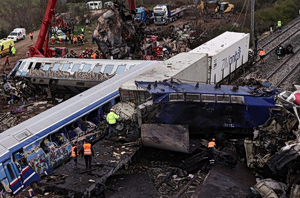
The Tempi rail disaster trial is continuing in Larissa on Tuesday, with 13 relatives of victims due to testify as the court also considers several requests that could affect the evidence presented in the case.
The court announced earlier Tuesday that it had granted a request for a digital forensic examination of the mobile phone used by Vasilis Samaras, the stationmaster charged in the case.
The examination will be carried out by the Hellenic Police forensic investigations division and is intended to establish what communications took place around the time of the crash. Investigators will examine incoming and outgoing calls, SMS and MMS messages, as well as communications through apps such as Viber and WhatsApp. They will also try to recover any deleted data found on the device.
The prosecutor had recommended that the examination go ahead, a position also supported by lawyers for the victims’ families and by Samaras’ defense attorney, Stefanos Pantzartzidis.
Court Weighs Request to Examine Nalbantis’ Phone
Lawyers for the family of Nikolaos Nalbantis, the assistant driver who was killed in the crash, have asked the court to order a similar examination of his work phone.
Police returned the device to his fiancée after the disaster. His family wants investigators to determine whether Nalbantis tried to contact the stationmaster or anyone else after the passenger train left Larissa on the night of Feb. 28.
Requests to call Georgiadis and Markopoulos
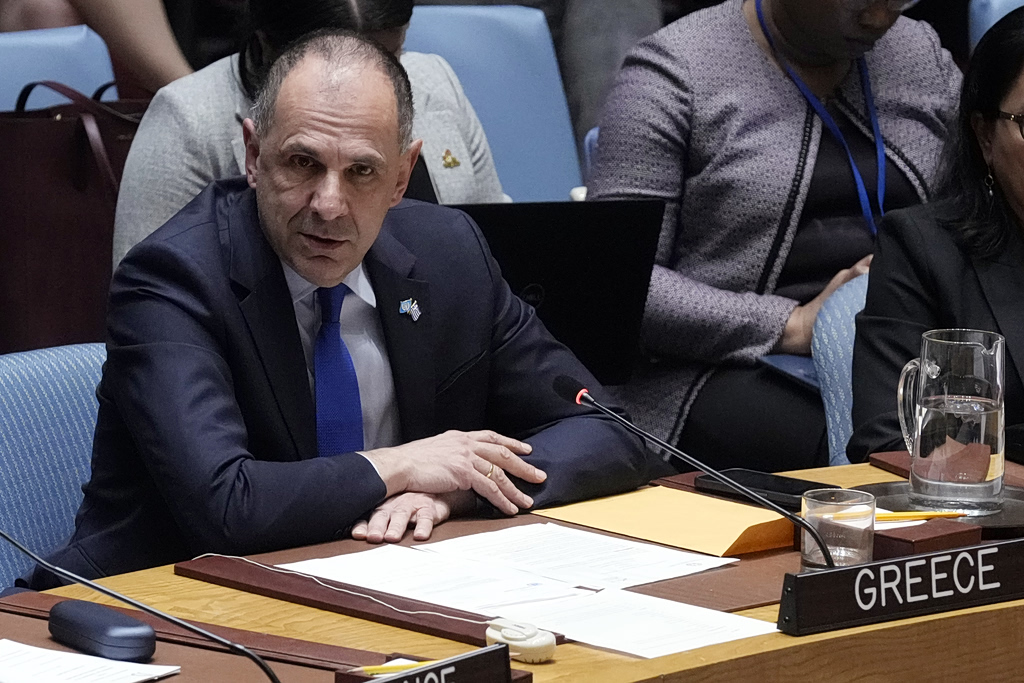
The court is also considering requests to call Health Minister Adonis Georgiadis and New Democracy lawmaker Dimitris Markopoulos as witnesses.
Othonas Papadopoulos, a lawyer representing the Nalbantis family, said the request involving Georgiadis relates to a public statement he made several days after the disaster. According to the request, Georgiadis said that if then Transport Minister Kostas Achilleas Karamanlis had publicly said there was a problem with railway safety, no one would have boarded the trains.
The request to call Markopoulos is linked to his role as chairman of the parliamentary committee that investigated the rail disaster.
The prosecutor is expected to give a recommendation before the court rules on those two requests.
36 defendants are standing trial
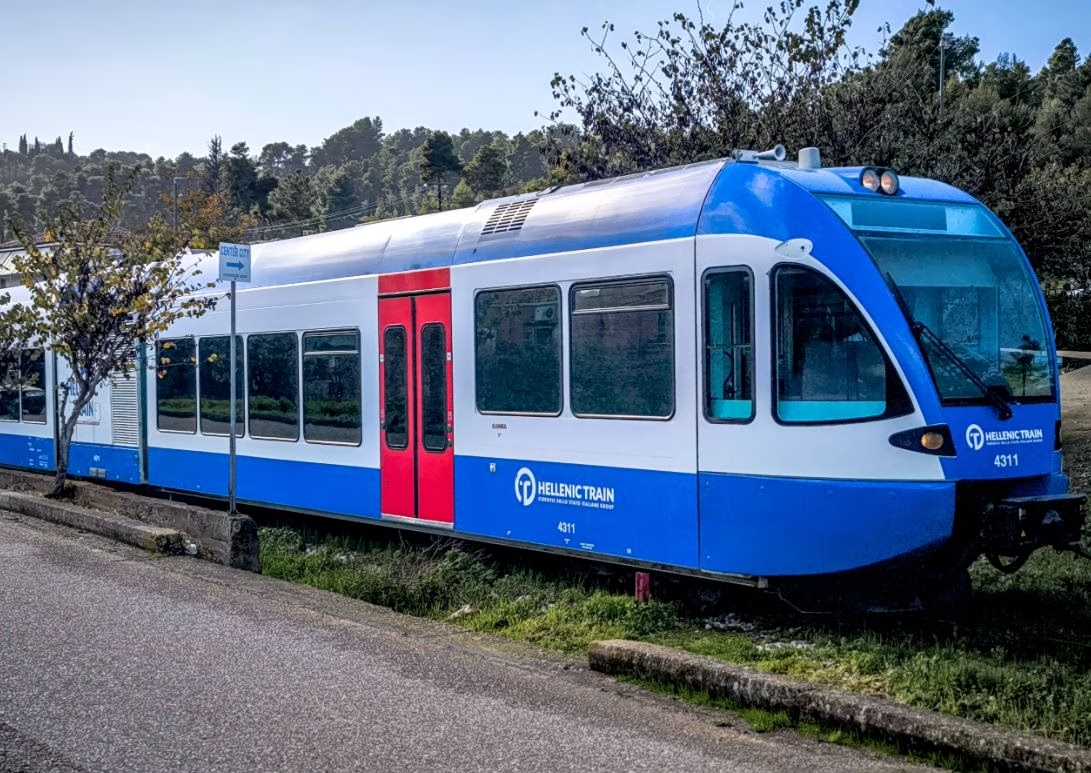
A total of 36 current and former officials from Greece’s railway system are defendants in the case. They include people who worked for OSE, the state railway infrastructure operator, and ERGOSE, the company responsible for railway construction and modernization projects, as well as Hellenic Train, the Railways Regulatory Authority and the Transport Ministry.
Thirty three defendants face a felony charge of endangering rail traffic, with prosecutors alleging that their actions or omissions created a risk to passengers and contributed to multiple deaths, serious injuries and major damage to public infrastructure.
If convicted on that charge, the defendants could face life imprisonment.
With information from TA NEA, TO BHMA