 Μake us preferred on Google
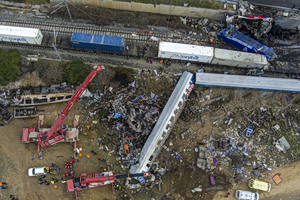
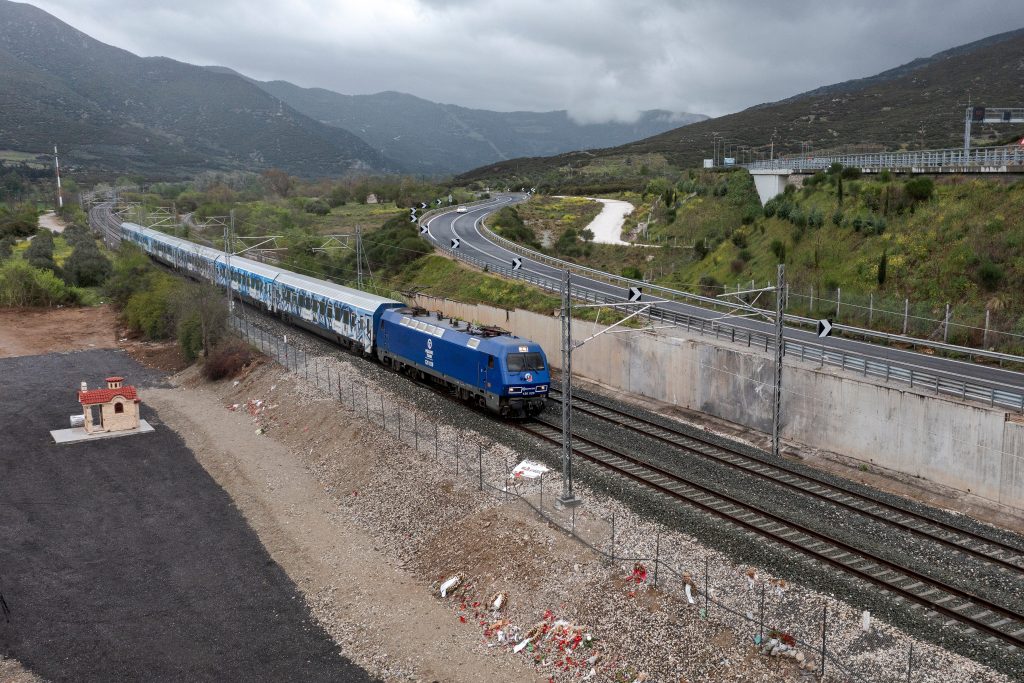
 Three and a half years after the Tempi rail disaster—the deadliest railway accident in modern Greek history, which claimed 57 lives—Greece’s rail network is still operating without the European Train Control System (ETCS), the continent’s primary automatic train protection system.
ETCS is designed to prevent human error by automatically braking trains when necessary. However, despite repeated government assurances that the project is nearing completion, the system has not entered operational service on any section of the national rail network.
Significant gaps also remain in the GSM-R digital railway communications system, which is a prerequisite for the full operation of ETCS.
Installation Does Not Mean Operation
The Greek government maintains that restoration work on the Athens–Thessaloniki rail corridor, damaged by Storm Daniel and Storm Elias, along with the installation of signaling, remote traffic control and ETCS equipment, will be completed by the end of the summer.
However, installation alone does not mean the system is operational.
That distinction came into focus after OSE, Greece’s state railway infrastructure manager, acknowledged before Parliament that ETCS is currently not functioning on any part of the network. The admission sparked criticism and highlighted that the key safety system remains inactive despite previous announcements.
Shortly afterward, OSE issued a written statement clarifying that although ETCS has been installed along much of the corridor, it cannot be activated until certification and licensing procedures are completed.
As a result, attention has shifted from construction work to regulatory approval by the Hellenic Rail Regulatory Authority (RAS). Even if installation is completed in August, OSE’s chief executive acknowledged that full certification and operational approval are unlikely before the end of the year.
Questions Over Delays
The continued delays have fueled questions about rail safety and project management.
According to the report, the political debate has increasingly focused on construction timelines and institutional responsibilities rather than the practical operation of safety systems. While the government argues that infrastructure projects are being delivered, responsibility for operational approval now rests with the rail regulator.
The issue has also drawn attention at the European level. PASOK Member of the European Parliament Giannis Maniatis has submitted a question to the European Commission asking whether the Greek government has accurately reported the expected operational timetable for ETCS and why the system remains inactive despite repeated announcements.
Longstanding Infrastructure Problems
The report also highlights longstanding weaknesses within Greece’s railway system.
One example is the Liosia–Kiato section, where an installed and licensed ETCS system has remained out of service since 2012 because vandalism damage was never repaired. Fourteen years later, the project is still in the planning stage, with a tender expected to be launched this fall using funding from the European Union’s Connecting Europe Facility (CEF 2).
Meanwhile, the GSM-R communications network still has significant gaps on five critical routes:
- Kiato–Rododafni
- Tithorea–Domokos
- Larissa–Volos
- Palaiofarsalos–Kalambaka
- Thessaloniki–Idomeni
Closing those gaps will require a new project with a budget of €43.5 million.
Staffing Shortages Persist
OSE also continues to face severe staffing shortages.
Fewer than 1,400 of approximately 2,500 authorized positions have been filled, including contract employees. The recruitment of 430 additional workers remains on hold pending a joint ministerial decision.
According to the railway workers’ association, only a fraction of the personnel originally planned have actually taken up their positions, while several newly hired employees have yet to complete the certification required for their duties.
OSE says it is implementing a restructuring plan, introducing a new Safety Management System and making new administrative hires. Nevertheless, the report concludes that the core European safety system designed to prevent train collisions is still not protecting passengers anywhere on Greece’s railway network.
Until ETCS becomes fully operational, every announcement regarding the completion of railway projects is likely to be followed by the same question: when will Greece finally have the safe railway system promised after the Tempi disaster?