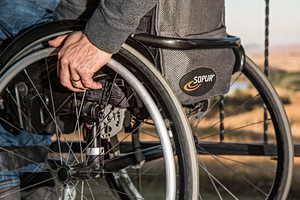
Every day, millions of people across Europe provide care for children, older relatives and people with disabilities without receiving any payment. Although often viewed as a family responsibility rather than work, unpaid care has become one of the largest forms of productive activity in society — with an economic value estimated at up to 5% of the European Union’s GDP.
This hidden workforce supports families and healthcare systems, but experts warn that it remains largely unrecognized, unevenly distributed and heavily dependent on women.
Women carry the largest share of unpaid care
According to research cited by European institutions, unpaid care affects nearly half of the EU population. Around 45.3% of Europeans provide some form of unpaid care, either for children, elderly people or family members requiring long-term support.
Women remain the main providers of this work. Global research by the United Nations shows that women spend more than twice as many hours on daily care responsibilities compared with men. Among women of working age worldwide, 45% are outside the labor market due to unpaid care obligations, compared with 5% of men.
While gender gaps in Europe are smaller than in other regions, the imbalance remains significant.
Unpaid careers often combine this responsibility with paid employment. Many face difficult choices between work, personal life and caregiving, effectively managing a “second job” alongside their professional duties.
The impact on work and personal lives
For many unpaid carers, balancing employment and care responsibilities creates serious challenges.
Among those combining paid work with unpaid care:
- 18.3% report having to change their working hours
- 15.6% need more flexible working arrangements
- 14% say they cannot dedicate the time they would like to their studies or career
- 10% need to hire outside help or find professional care services
- Around 5% are forced to leave the workforce entirely to provide care
Others work more hours or take additional jobs to cover the cost of paid care services.
Care work worth hundreds of billions of euros
Despite not appearing in official employment figures, unpaid care contributes significantly to Europe’s economy.
Research estimates that unpaid childcare alone is worth around €470 billion annually across the EU — equivalent to approximately 4.1% of GDP.
Depending on how the value is calculated, replacing unpaid childcare with paid services could cost between €335 billion and €689 billion, representing between 2.9% and 5.9% of EU GDP.
For long-term care, estimates also show a major economic contribution, reaching several percentage points of GDP in some European countries.
These figures highlight that unpaid care work represents an economic activity larger than many formal care sectors.
New support programs aim to recognize care work
In Greece, new initiatives attempt to reduce the pressure on families and provide support for those responsible for care.
The “Neighbourhood Nannies” program offers financial assistance to parents of young children, providing monthly vouchers ranging from €300 to €500 for childcare services. The program is designed especially to support mothers who want to return to work, continue their studies or remain active in the labor market.
The scheme also allows eligible relatives or people from a family’s close environment to provide childcare, meaning some previously unpaid family care may receive indirect compensation.
A similar initiative, the “Personal Assistant” program, supports people with disabilities. In areas where certified professional assistants are unavailable, such as remote locations, relatives may take on the role under specific conditions.
Experts note that such measures remain only a partial response to growing care needs as Europe’s population ages.
The rise of undeclared care work
When official care services are insufficient and unpaid family care reaches its limits, another form of care often fills the gap: undeclared paid work.
The European Labor Authority estimates that 6.8 million undeclared workers provide care or domestic services across the EU. More than half of work in the care and household services sector is estimated to be undeclared.
Most undeclared care workers are women, many of them migrants. Without formal employment status, they often lack access to social security, pension contributions and protection from exploitation.
In several European countries, migrant women provide extensive care services, including live-in assistance for elderly people, often in informal labor conditions.
In Greece, research on migrant and refugee women found that at least half of participants had worked without an employment contract or insurance during the previous year. More than one in three had worked in the wider care sector, either in personal care or domestic care roles.
European experts identify several areas where support for unpaid carers is needed, including better work-life balance policies, access to formal care services, training, income support, healthcare and official recognition.