
Seasonal influenza is currently surging in Greece, with epidemiological indicators pointing to a particularly severe outbreak and official data recording a steady rise in hospital admissions.
Health experts are sounding the alarm, highlighting low vaccination rates and warning that the current wave is likely to be prolonged.
“Global severity” and low vaccination coverage
Speaking to Orange Press Agency, Dr. Eleni Kakalou, an internist–infectious disease specialist at the 3rd University Clinic of the National and Kapodistrian University of Athens, based at Sotiria Hospital, explains why this year’s flu season has proven especially intense.
“As with every season, there are better and worse years,” she notes. “This year, however, we are seeing a relative severity of the influenza epidemic internationally.”
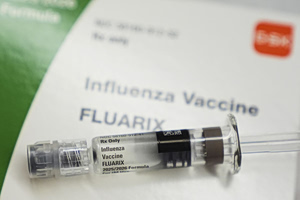
Dr. Kakalou identifies reduced vaccination coverage as a key issue in Greece. “One of the main problems this year is that significantly fewer people have been vaccinated,” she says. “We would like to remind the public that flu vaccines are available at pharmacies without a doctor’s prescription for those who need them. For people over 65 or those with serious underlying health conditions, there is also an enhanced vaccine with greater effectiveness, which does require a prescription.”
Symptoms and the ‘first 24 hours’ rule
Early diagnosis and timely treatment are critical, Dr. Kakalou stresses, urging the public not to ignore symptoms.
“If someone develops flu symptoms — fever, sore throat, muscle aches, chills, and possibly breathing difficulty accompanied by cough — they should contact their doctor, ideally within the first 24 hours,” she says. “A rapid test can confirm the diagnosis, followed by prompt initiation of antiviral treatment, which reduces the risk of complications.”
Rising hospitalizations and deaths
According to Dr. Kakalou, Greece is currently approaching the peak of the flu season, though the virus is expected to continue circulating into early spring.
“We are now in the second week of January. This week we have seen an increase in severe cases, ICU admissions, and eight deaths,” she explains. “That said, this period traditionally marks the peak or near-peak of the flu epidemic. It will likely persist until late March or early April.”
She concludes with a clear public health message:
“For those who remain unvaccinated, the advice is to get vaccinated as soon as possible. And if they become ill and live with vulnerable individuals, they should speak with their doctor about the early use of antiviral medication.”
What the Hellenic National Public Health Organization (EODY) data show
Dr. Kakalou’s assessment is fully supported by the latest epidemiological report from EODY, covering the period from January 5 to January 11, which indicates that influenza positivity in the community remains high.
Key findings include:
- Rising admissions: 871 new hospital admissions for influenza were recorded, up from 722 the previous week.
- Severe cases and deaths: Fifteen new severe cases requiring ICU care and eight new deaths from laboratory-confirmed influenza were reported in a single week. Since the start of the season, there have been 45 ICU admissions and 15 deaths.
- Dominant strains: The vast majority of samples tested positive for influenza type A, with the A(H3) subtype predominating.
Finally, regarding COVID-19 (SARS-CoV-2), a slight increase in hospital admissions was recorded (189 new cases), along with one new intubation and six deaths.