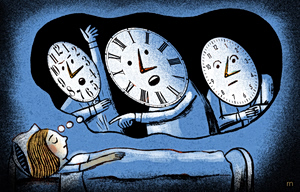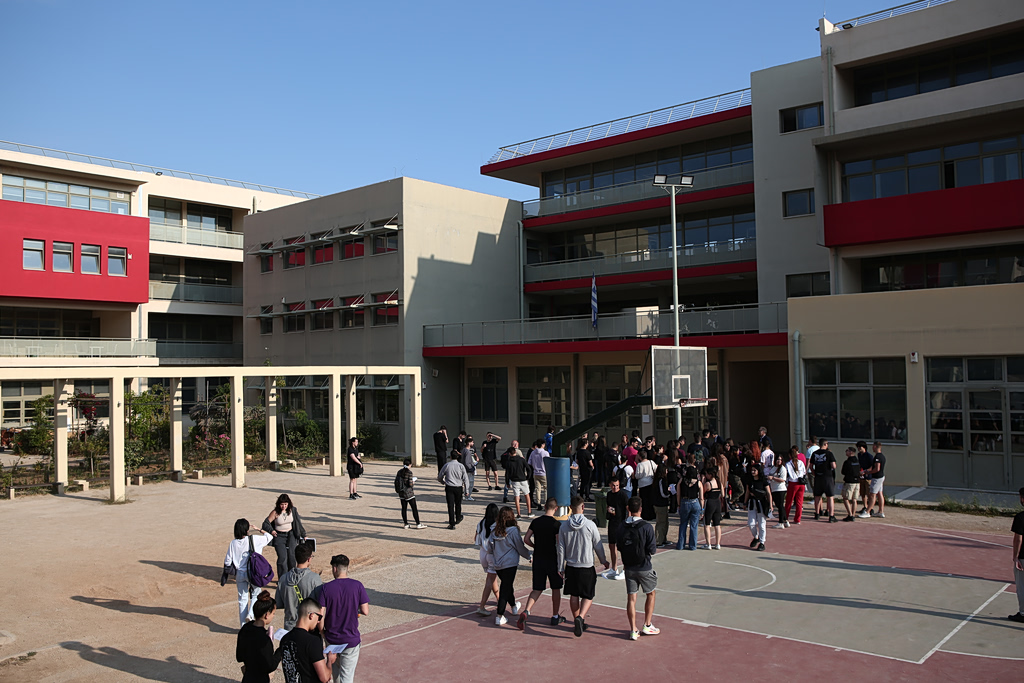
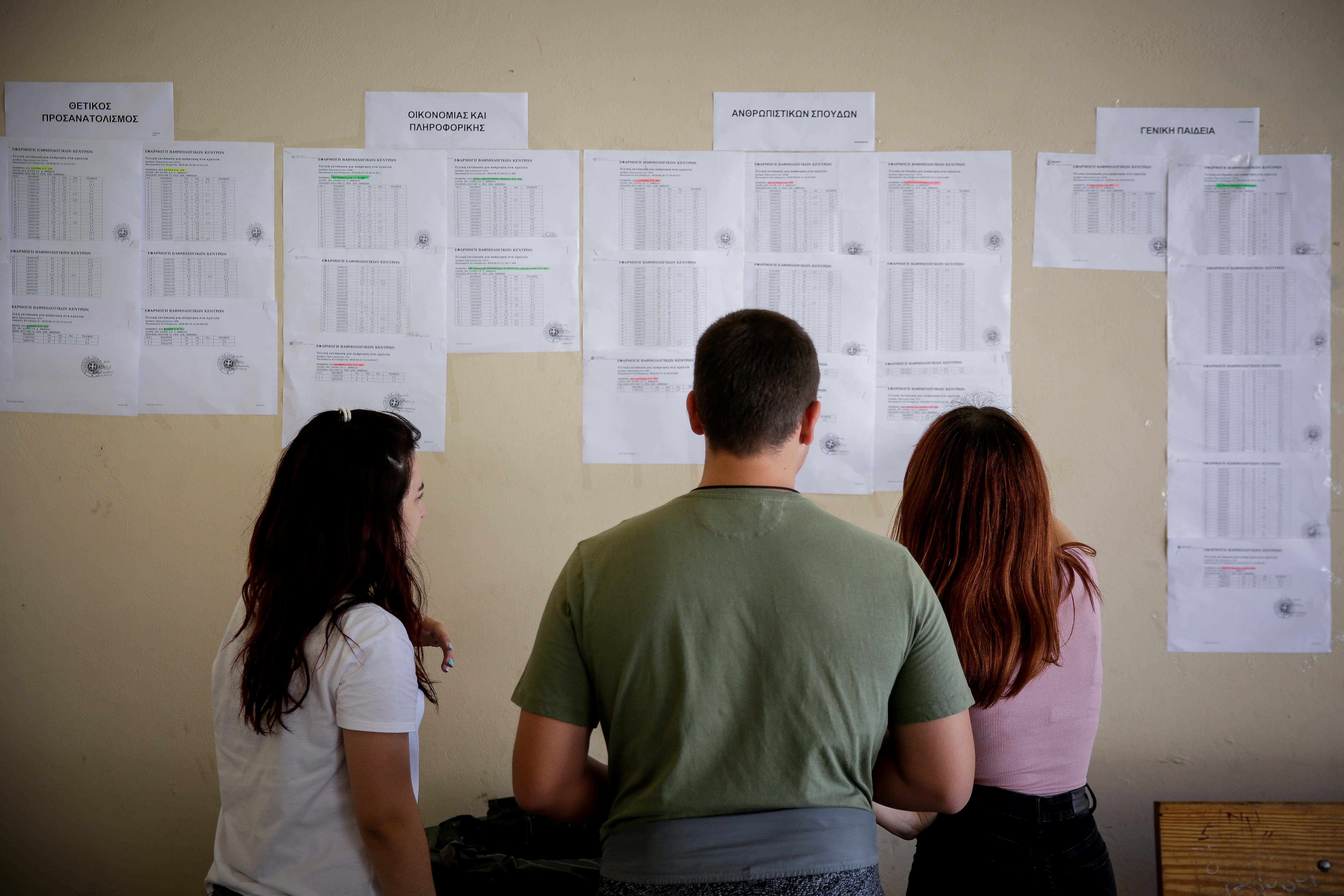
High-school senior Emma woke up on May 30th ready. After twelve years lost in humungous textbooks, nodding-off in musty classrooms, repeating utterly boring and seemingly useless information, the finish line was finally in sight: the dreaded “Essay” examination that would launch this year’s Panhellenic university entrance exams.
She opened the booklet and read the topic that would have her complete attention for the next three hours: Creativity. “Oh, sweet irony,” she whispered to herself and began to write.
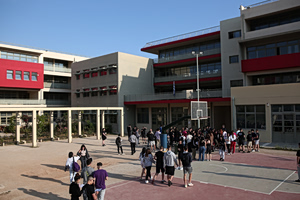
Emma’s moment of reflection may have provided her with inspiration for the task at hand, but it reveals a wider issue pervasive in Greek education: the serious threat the system poses to students’ creative development.
In a world of chaotic information, creativity is the ability to filter, make sense of, and use that information in original ways.
“In one sentence, creativity is seeing what others don’t”, says Stefanos Azariadis, soft skills development trainer at BrickWiz and a student of the Torrance Institute for Creative Thinking. “We’re not talking about scientific breakthroughs, but innovation in everyday life,” he explains.
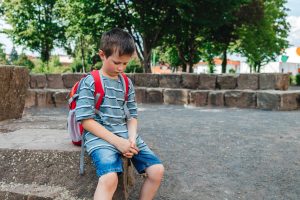
Creative potential is immense among children, who run wild with unrestricted imagination. However, data show that opportunities for turning this potential into practice dwindle as they climb up the school ladder.
A 2024 study from the OECD’s Program for International Student Assessment (PISA) tested teenage students from over 60 countries in creative thinking, mapping proficiency onto a scale from 1 (lowest) through 6 (highest). Greece ranked significantly lower than the OECD average and was one of the five countries where over 10% of students performed at Level 1 or lower. PISA’s baseline for competency was Level 3.
But why are the results so disheartening?
Because the mission of Greek education as this is enshrined in the Constitution (Law 1566/85), is “to contribute to the well-rounded and balanced moral, intellectual and physical development of pupils, so […] they will be able to develop into well-rounded individuals with a fulfilling and creative life.”
A key cause may be that the education system lacks a clear, working definition of what creativity actually is.
“Many Greek teachers still see creativity as that arts and craft class once a week,” says George Lucas, educator, multiple intelligences expert, and founder of Ataxia School, the first “democratic”, child-centered, self-directed and peer-to-peer-learning school in Greece.
Students from kindergarten through high school really are taught to think in boxes, to be scared of asking questions and making mistakes, and to store and recall information.
Standardized tests that require textbook answers to get good marks hinder original and critical thinking and indoctrinate students into believing that there is only one correct solution to any given problem.
“The Greek educational system is structured towards a single ultimate objective: the university entrance exams. Anything that doesn’t fit neatly into that goal is seen as unnecessary, even distracting,” Azariadis argues.
The eye-opening PISA report also reveals that less than half of Greek students believe their teachers encouraged them to approach assignments in original and creative ways. Indeed, Greece ranked second to last among OECD countries in the respective index.
“There are certain conditions that are required for creativity to develop,” Lucas explains. “You could have the most creative person in the world, but if you put them in a sterile environment, that potential will remain untapped.”
Creative children are often seen as disruptive, loud and disobedient by teachers who, failing to identify the potential behind their behavior, “discipline” them for it.
This failure stems from two key issues. This first is the lack of proper training for educational professionals in this area. Teachers are overwhelmed by the need to cover immense and inflexible curricula, which makes any additional effort to incorporate illusive concepts like creativity an afterthought.
Indeed, a study on Greek primary school teachers’ view on creativity in classrooms, published in the journal Thinking Skills and Creativity in 2009, showed that over half of those surveyed felt ill-prepared for incorporating creativity in their classrooms.
The second issue is that this restrictive system is deeply rooted in the Greek reality. “Believe it or not, people prefer living in boxes. Being creative means embracing the unexpected and that is too much responsibility for many people,” Lucas says.
Not all hope is lost, however, even if radical change remains out of reach. Smaller initiatives on a school-by-school basis can serve as a starting point.
Azariadis suggests incorporating games into classes. “Play provides a sense of safety which allows students to make mistakes, improvise and try out different ideas, so it’s definitely a start to creative development,” he notes.
He also emphasizes the need to train educational professionals, especially in primary school, on how to actually build creative environments in the classroom. “You need practical workshops for educators to get hands-on experience in creating supportive environments, not just theory-babble,” he says.
Lucas also suggests tweaking the space where learning takes place. “Do you want children to think outside the box? Then don’t put them in one.” Changing the layout of the classroom, holding classes outside, and creating spaces that allow for exploration and inquisition can significantly open children’s minds.
“Odysseus is the unsung creativity hero, you know,” Azariadis concludes proudly. “He would have never reached Ithaca, it he’d tried to solve the problems he encountered on his journey by thinking inside the box.”