 Μake us preferred on Google
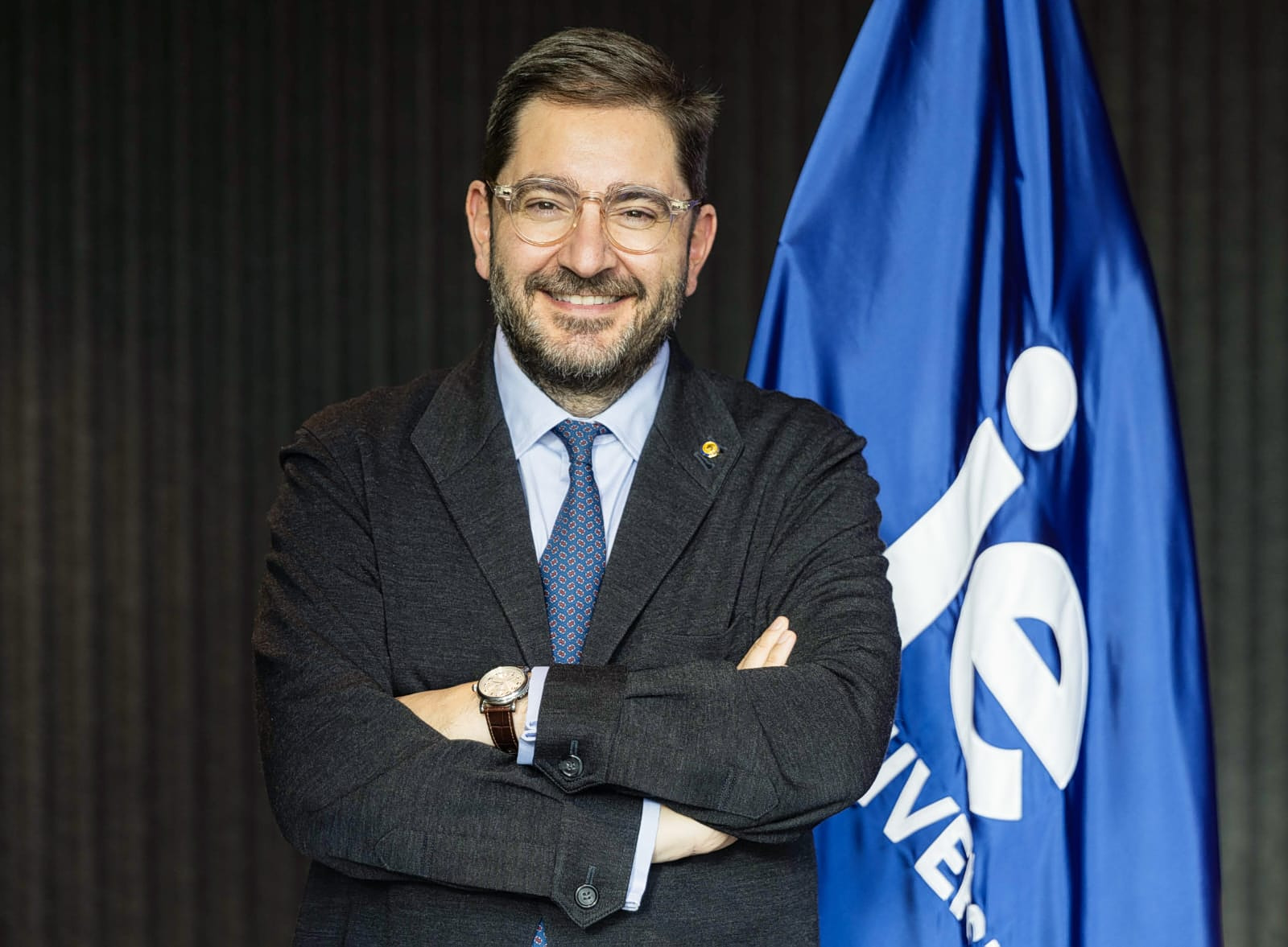
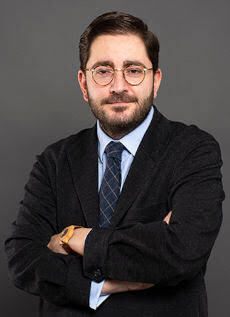
 Dr. Manuel Muñiz, a Professor of Practice of International Relation, a Rector of IE University, an international university with campuses in Madrid and Brussels, served as Spain’s Deputy Minister of Foreign Affairs, visited Athens and gave an exclusive interview to To Vima.
Discussing today’s increasingly unsettling global landscape, Professor Muniz emphasized that Europe must stop complaining about the obstacles on the international geopolitical landscape—including the stance adopted by Trump’s United States toward Europe. He argued that Europe possesses both the resources and the human capital to shape its own future, provided it decides what kind of future it wants to build.
You have served as Spain’s Head of Technology Diplomacy. What are the main challenges, and how can technology diplomacy help in this rapidly changing world?
When I was Spain’s Deputy Foreign Minister, (2020-2021), one of the issues I was focused on, was the design and the launch of Spain’s technology diplomacy. Technology is fast becoming a full domain of foreign policy and it will soon be as significant as climate diplomacy, or as trade and economic diplomacy. Technology is a domain of diplomacy because it touches growingly what we called, at the time, the three P’s. The first P, was power. Technology changes the distribution of power globally. New offensive and defensive capabilities, new weapons, cyberspace. The second P, was prosperity. Technology changes economic activity, where talent is located. And the third P, was political systems or principles. Technology affects fundamental dynamics of democratic life, the individual rights of the citizens.
Technology diplomacy should be the object of attention of our diplomats, of our foreign ministries, of our governments. In the last G7, finally, one of the big topics on the agenda, was AI. And you had at the same table, the heads of the governments and the heads of the big AI companies. The world is finally understanding that technology needs to be the object of global governance. That was the thesis behind Spain’ s tech diplomacy.
Europe has a reputation for responding slowly- on technology as well. What can it do, to accelerate its pace?
When I look at the state of the world and where the world is headed, almost every major challenge, brings with it a question about what kind of Europe we want to build. The first question for Europeans is, what are we going to do with our own single market. The second question, is what Europe is going to do about its security and defense and about technology. I look at the technology landscape, and I see that the Chinese and the Americans are leading on frontier models in AI. We’re building applications, but not the models. Except Mistral, which is a French model, most of the competitive frontier models are either American or Chinese.
I think there are two paths. One path leads to integration, that leads to Europe having a voice in a world of giants, -people tend to forget this is a world of giants. The other path leads to fragmentation, to a weakening of the euro. In that case, Europe would become the object of foreign policy, not an actor of foreign policy. We will be forced to swallow trade agreements that are unpalatable, to use technology that is not regulated here.
Things look very grim. French presidential elections are in less than ten months. Many Europeans fear the rise of Marine Le Pen’s far right. If France is governed by the far right, can those leaders understand what’s at stake?
The real tension will be between the pro-Europeans and these nationalist tendencies within Europe, that could lead to the fracturing of the European project. I find it singularly outrageous that some of these political movements in Europe call themselves patriots: I cannot think of a single most misleading message to Europeans today, than to say to them, that they will be more sovereign, more free, if they operate as 27 small political entities, trying to deal with China, with the US, with Russia. There is nothing patriotic about that. It’s an absolute perversion of the concept of European sovereignty.
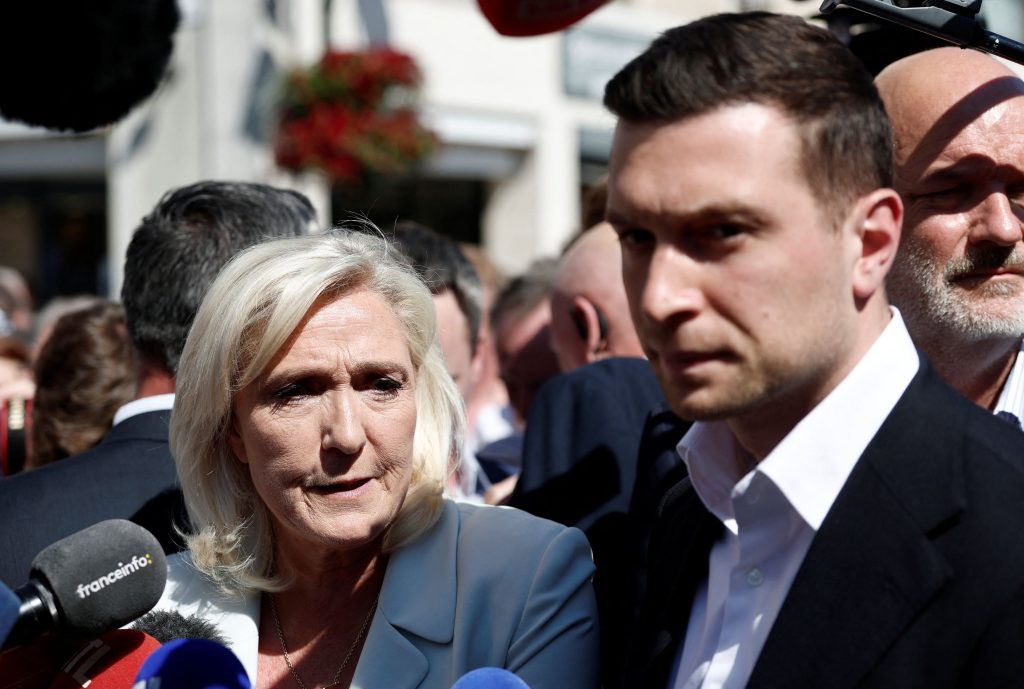
French far-right leader Marine Le Pen and Jordan Bardella, president of the French far-right Rassemblement National (National Rally – RN) political party, talk to journalists as they arrive to visit a market in La Fleche, in the Sarthe department, a day after Le Pen announced her candidacy for the 2027 French presidential election following an appeals court ruling that shortened her ban on running for office while upholding her conviction for embezzling EU funds, France, July 8, 2026. REUTERS/Benoit Tessier
Bur the European project has always advanced in moments of crisis. But integration has never happened without the cost of non-integration being very clear. European countries and European citizens have needed to be very conscious of the cost of not integrating, before the steps for integration were made. This is what preceded the euro. It’s what happened after COVID, the European recovery funds. This is what preceded the birth of the common foreign and security policy.
Your country, Spain has been affected by scandals, there’s been talk about snap elections. But the Spanish right has to collaborate with the far right party, Vox, the anti-European party, in order to from a government. Where do things stand?
We are bound to have elections before the summer of 2027. If elections happen earlier, it will be because there is a vote of no confidence and the government is kicked out in a vote of no confidence. At the moment, in Spain there is arguably a majority to topple the government. But there is clearly no majority for an alternative government.
In case of a rightwing government we may see changes to economic policy, to immigration policy, social policy etc., towards more conservative stance. But on foreign policy, Spain actually has a big consensus.

Poll workers use fans as they pose for a picture during the general snap election in Madrid, Spain, July 23, 2023. REUTERS/Nacho Doce TPX IMAGES OF THE DAY
Most Spaniards are significantly pro-European, they’re in favor of a common army, of a common foreign policy, They’re Euro-Atlantic, despite the troubles with the Americans, they’re mostly pro-NATO, which was not the case some decades ago. They’re pro-multilateral, they like international rules. We’re fairly progressive as a country and we want to project that globally. There might be some differences on the foreign policy approach, to the Venezuelan dossier, or some other Latin American dossier, but I wouldn’t foresee massive changes in the foreign policy agenda.
Twelve out of 19 Latin American countries have shifted to the right. Do you think this shift as a challenge, given the fact that is seen as favorable to President Trump?
Spain’ s relationship with Latin American countries is very deep, Spain is a structural actor in Latin America. There’s a history, our investment and economic presence is still huge, we are one of the biggest investors and one of the biggest trading partners in the region Our relationship goes well beyond these electoral cycles of moving left and right.
They have been claims that the Sanchez government has been too soft on the Maduro government or on the Colombian government or on the Cuban, but this is a manifestation of not being in office, because when you are in office and you’re running Spain’s foreign policy, you have to be very conscious of your interests on the ground.
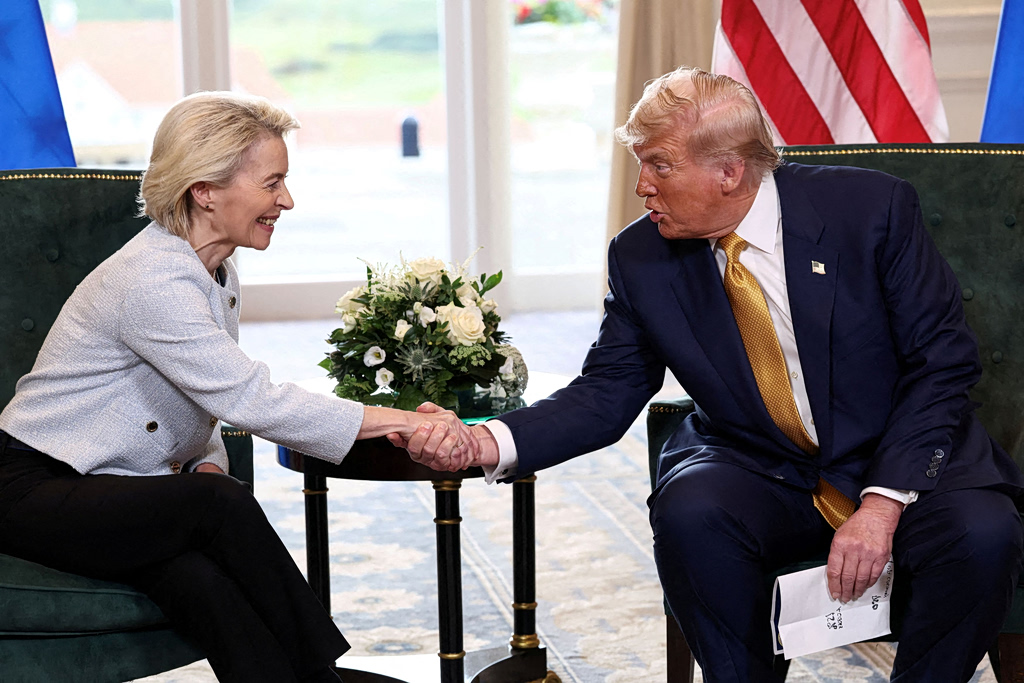
U.S. President Donald Trump shakes hands with European Commission President Ursula von der Leyen, after an announcement of a trade deal between the U.S. and EU, in Turnberry, Scotland, Britain, July 27, 2025. REUTERS/Evelyn Hockstein//File Photo
What is your take on EU and U.S. under Trump in view of the midterm elections in November?
I cannot think of a period over the last seven decades, where the transatlantic partners have had so many disagreements I can think of big crises in the transatlantic relationship but now you have disagreements on almost everything, not just the management of the crisis in Ukraine but on the future of NATO. It’s always very risky to make predictions, but I think in the coming months we will see a more significant withdrawal of conventional forces from Europe by the US.
There is even a deeper area of collision, which it has been made clear by the American administration that they would like to see a change in the political ideology of some governments in Europe, be it Germany or France. This is a serious source of friction between the transatlantic allies.
What can be done, in your assessment?
Mario Draghi had a wonderful article in the Financial Times, a few months ago, it was titled something like “Forget the US”, which said that we are complaining about the discussions with Americans on a 15% tariff or 10% tariff on the border in the US, and yet in Europe we’ re imposing on ourselves this immense set of barriers to trade internally. If we were just to undo half of those barriers, that would be a boon to growth that would compensate for any of the discussions we’re having with the Americans on tariffs.
On security and defense, we spend in Europe about 400 billion a year in security and defense. In Europe we have 20 tank programs, 20. The Americans have one. Is the issue, really, whether the Americans are going to go down from 90,000 conventional troops in Europe to 60,000?
Or is the question of how are Europeans going to procure for continental defense? Both are relevant, but the real issue is the latter. On this, I think the Americans are right to push for burden sharing.
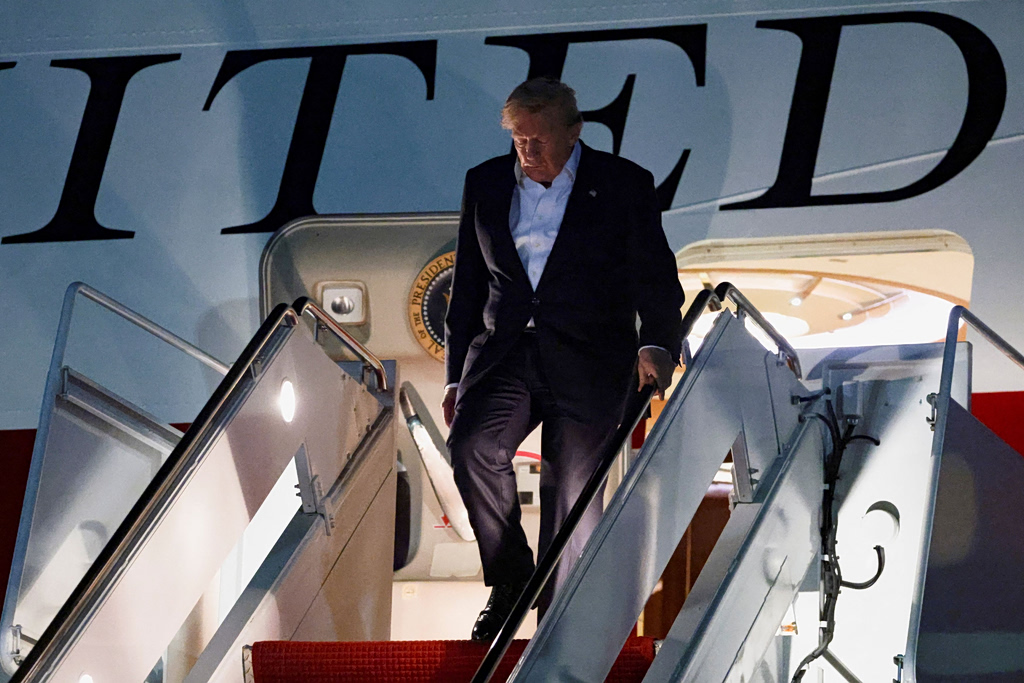
U.S. President Donald Trump arrives aboard the new Qatari-gifted Air Force One, as he returns to Washington after participating in a NATO leaders’ summit in Turkey, at Joint Base Andrews, Maryland, U.S., July 9, 2026. REUTERS/Jonathan Ernst
To me the more problematic element of the current US administration, is the interference in European domestic politics. That goes beyond policy divergence, and we should push back diplomatically on that. I know for a fact, that we’re doing this.
When I go to Japan, to Canada, to Indonesia, and I tell people that the Trump administration seems to be tough on Europe, they wonder why is this so difficult for Europe, when you have a single market of close to 500 million people, a sophisticated industry, some of the world’s best academic institutions and some of the best human capital in the world. In Europe you have one major security threat, to your east. But Japan, for example, has Russia, China, North Korea, all nuclear, all hostile.
I think we should leave behind the face of complaining and basically putting all of the burden of this on the Americans, and we should really build an agenda for the future of Europe.
The future of Europe depends also on what you call talent economy. As Rector of the IE University, one of the mot prestigious in Spain, how do you think talent economy and geopolitics can shape education?
We are in the process of a revision of the distribution of international talent that we have not seen in seven decades. During the Second World War and the post-World War period, Europe lost an immense amount of human talent and capital, which went mostly to the U.S. But now things are changing. The U.S. had a drop in international students last year of about 18 %. So, it’s a four-lane highway for European institutions to internationalize and to attract more talent. We’re a very attractive continent, very safe, we have wonderful academic institutions.
The future of Europe is in the hands of Europeans. If we design the rules and the institutions that can compete for this talent, then we have an opportunity to reverse something, not just vis-a-vis the Americans, but also be competitive when attracting Asian talent and talent from the Global South. At least this is also part of my mission as Rector of a university like IE, -90% percent of our students come from abroad. We are a living testament that in Europe, when you design an institution to be international, it can attract and retain talent.