The race of the Hellenes has been wiped out in Europe. Physical beauty, intellectual brilliance, innate harmony and simplicity, art, competition, city, village, the splendour of column and temple — indeed, even the name has disappeared from the surface of the Greek continent…. Not the slightest drop of undiluted Hellenic blood flows in the veins of the Christian population of present-day Greece.
(Jakob Philipp Fallmerayer, “The History of the Morea Peninsula [Peloponnese] in the Middle Ages”, 1830)
The celebration of the 100th anniversary of the Gennadius Library in Athens, marked by a splendid exhibition showcasing many of its prize possessions, is occasion to remember the remarkable contribution of the Greek diplomat Joannes Gennadius (it was built in memory of his illustrious father Georgios, an important figure in Greek education who had also served as director of the Greek National Library), to our understanding of the continuity of the Greek nation.
A passionate book collector whose 25,000-volume collection constituted the foundation on which today’s 145.000-volume collection was built, Gennadius bequeathed his library to the American School of Classical Studies in Athens – which he admired, just as he deeply respected the accomplishment of American universities and academia – rather than to his own compatriots, to a Greek institution like the National Library.
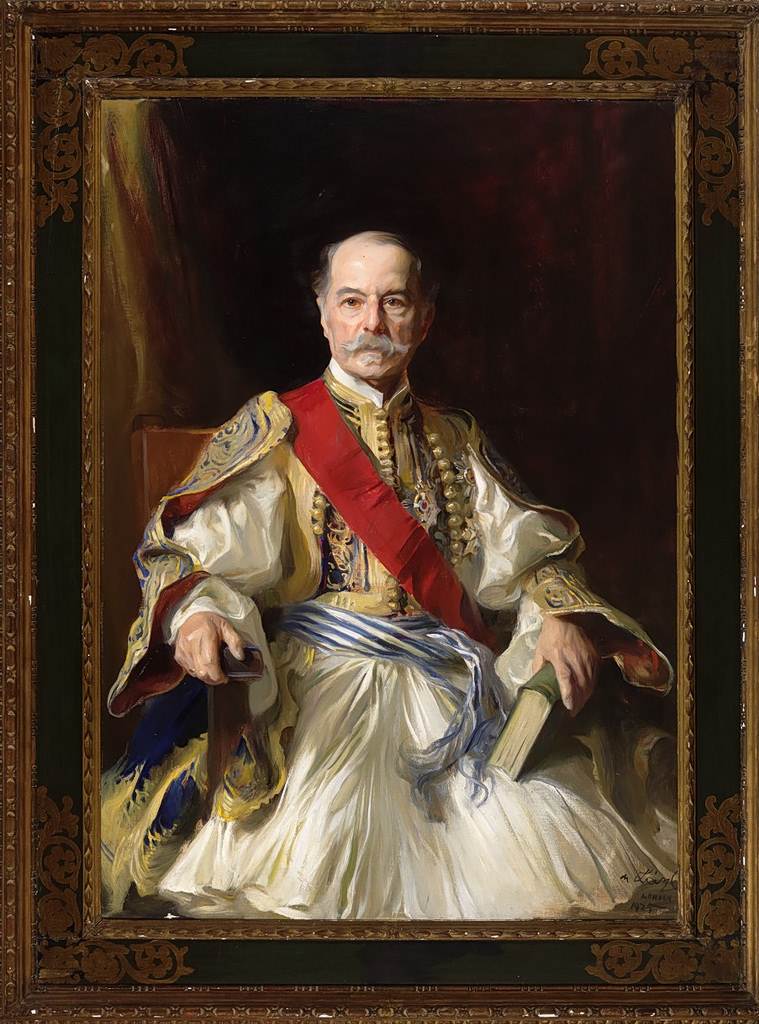
Portrait of Joannes Gennadius by Philip de László. 1925. From the collections of the Gennadius Library of the American School of Classical Studies at Athens.
Over the last century, the American School has remained faithful to Gennadius’s vision and mission – to demonstrate the continuity of Greek culture from antiquity all the way through to Byzantium and the Modern Greek era.
His vantage point was in no way obvious. From the 19th century into the 20th, Western historiography had been influenced by the racialist, genetic theory of a Bavarian gymnasium professor named Jakob Philipp Fallmerayer. He viewed peoples primarily as biologically distinct groups and maintained that the modern Greeks have no Hellenic blood. Although he could not but acknowledge the obvious continuity of the Greek language, and certain cultural vestiges preserved through Byzantium, the thrust of his thesis – and the part from which he gained fame – was race-based.
Critically, Fallmerayer’s book was published in 1830, the very year of the establishment of the Greek state and of the start of the effort to establish a Modern Greek identity. A key part of that effort was the creation of a new form of the Greek language called “katharevousa” (puristic Greek) which was based on the Attic Greek dialect, the language of Plato and Aristotle. This move had been proposed by the towering Greek intellectual Adamantios Korais, who was much influenced by European Enlightenment ideas and who first argued for the cultural continuity of the Greeks.
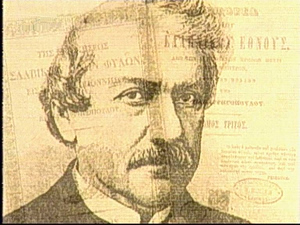
Historian Konstantinos Paparrigopoulos, considered the father of historiography in Modern Greece, established the cultural continuity of the Greeks since antiquity.
It was not until the 1860s-1870s that the founder of Modern Greek historiography, Constantine Paparrigopoulos, established the continuity of the Greek people from antiquity until his day, in his monumental six-volume History of the Hellenic Nation.
In an exclusive interview with TO BHMA International Edition, Dr. Maria Georgopoulou, who has served as director of the library for over two decades, offers rare insight into what led a Greek diplomat and passionate bibliophile to undertake a project of such national significance, and why he entrusted it to the Americans, rather than to his own compatriots.
What insights have you gained over the years regarding Gennadius’s character and personality, and why he entrusted his library to an American institution to respect and build on his contribution rather than to his compatriots, for example the National Library? Is it still a fundamentally American institution or yet another Greek library? One sees that the large majority of Overseers are Greek.
Having led the Gennadius Library for more than twenty-two years, and having guided countless visitors through its collections and history, I have often reflected on the motives that led Joannes Gennadius to assemble such an extraordinary library and ultimately to offer it to the American School of Classical Studies at Athens.
To understand Gennadius, one must begin with a deeply personal fact: he lost his father when he was only ten years old. Throughout his life, he seems to have been guided by the desire to honor his father’s memory and to live according to the values he believed would have made him proud. This impulse shaped not only his life, but also his collecting vision.
For Gennadius, books were not simply objects of scholarship or beauty; they were witnesses to the continuous history of Hellenism, from antiquity through Byzantium and into the modern era. Documenting and preserving that continuity became something close to a personal mission.
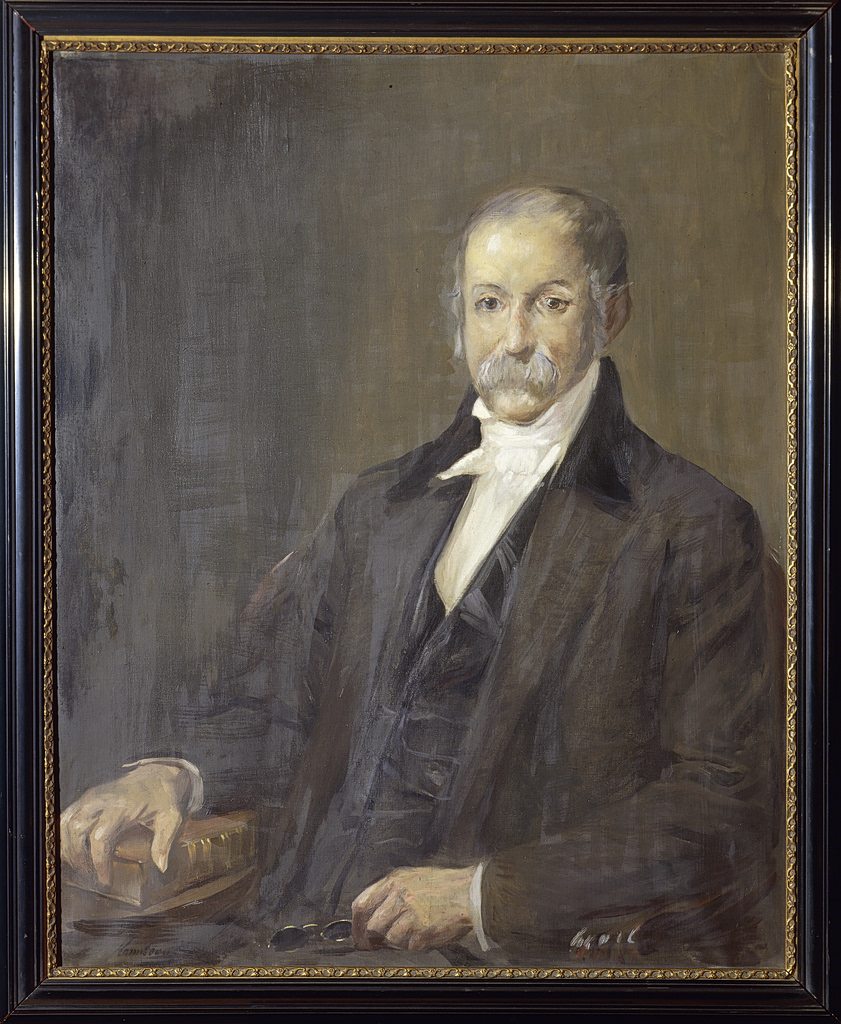
Portrait of George Gennadius from the collections of the Gennadius Library of the American School of Classical Studies at Athens.
When Gennadius arrived in England in the 1860s, he encountered a society deeply enamored with ancient Greece yet strikingly indifferent to modern Greece and its people. This realization profoundly affected him. Through journalism, essays, lectures, and above all through the books he collected, he sought to demonstrate that Greece had never ceased contributing to the intellectual and cultural life of the world. His library became, in many ways, an argument in material form: proof that Greek civilization did not end in antiquity, but continued to evolve and shape history across the centuries.
At the same time, Gennadius himself lived much of his life between worlds. Although intensely devoted to Greece, he spent most of his adult life abroad, particularly in London. The financial collapse of Greece in 1893 led to his dismissal from the diplomatic service and left him outside official public life for many years. Even though he later married into wealth, this period seems to have deepened a certain mistrust toward Greek state institutions. It may also help explain why he ultimately chose to entrust his collection not to the Greek state, but to the American School of Classical Studies at Athens — an institution he greatly admired.
In the speech he delivered at the inauguration of the Gennadius Library, he spoke warmly of America and of the young American universities, whose energy, idealism, and intellectual ambition he deeply respected. I believe it was precisely this spirit — the optimism and dynamism of American academic life — that convinced him his collection would find a secure and meaningful future there.
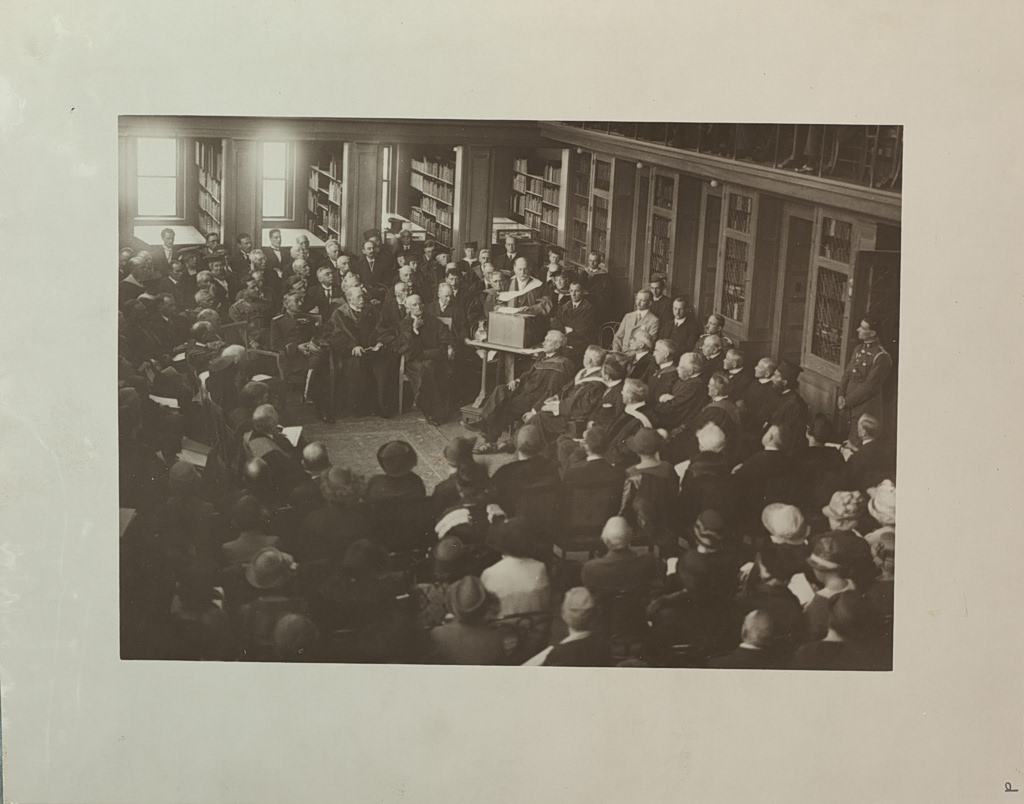
Gennadius Library inauguration, Speech by Joannes Gennadius. April 23, 1926. From the collections of the Gennadius Library of the American School of Classical Studies at Athens.
Yet vision alone could not realize the project. Gennadius possessed the books, but he needed the means to create a building worthy of them and worthy of his father’s memory. In the aftermath of the First World War, it was American philanthropy that made this possible. The Carnegie Corporation contributed the remarkable sum of $275,000 for the construction of the library — an extraordinary act of generosity at the time. The result was one of the most distinguished neoclassical buildings in Athens, clad in marble from Naxos and designed as a monumental home for the history of Hellenism.
In many ways, the Gennadius Library — and indeed the American School itself — continues to stand between two worlds: Greece and the United States. The scholarship produced at the School, whether in archaeology, history, or the newer archaeological sciences, is rooted in Greek material, Greek landscapes, and Greek history, yet it is studied and interpreted within an international academic framework.
This unique position has allowed the institution to serve as a bridge between cultures, intellectual traditions, and scholarly communities. It is precisely this ability to connect worlds — with generosity, rigor, and imagination — that remains one of the Gennadius Library’s greatest strengths today.
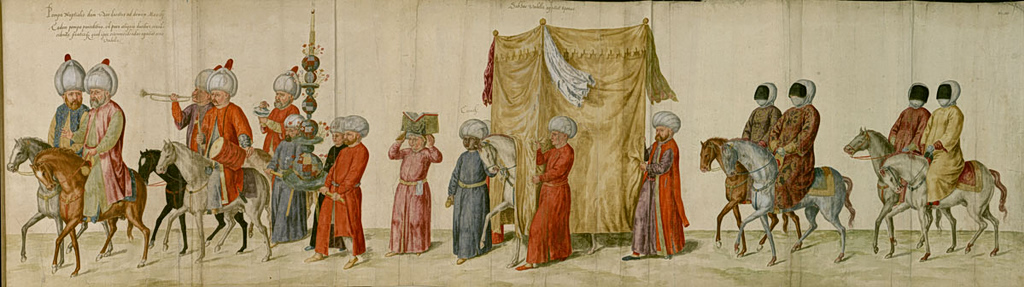
De Vos, Manuscript album with Ottoman costumes (1574): A Turkish Wedding procession. From the collections of the Gennadius Library of the American School of Classical Studies at Athens.
What have been the greatest joys and most important challenges of being director of the Gennadius Library, and what have been the library’s main achievements during your tenure?
This centennial year of the Gennadius Library has been both deeply moving and profoundly rewarding for me. After more than twenty years at the helm of this remarkable institution, the anniversary has offered a rare opportunity not only to reflect on what the library has achieved in recent decades, but also to look back across an entire century shaped by the vision, dedication, and quiet labor of generations of librarians, scholars, and staff.
At the same time, it inevitably turns one’s thoughts toward the future — and for me, that future lies above all in reaching younger generations and ensuring that the library continues to speak meaningfully to them.
One of the great privileges of leading an institution like the Gennadius Library is the opportunity to enrich its collections. Every important acquisition — whether a rare book, a map, a painting, or an archival document — brings with it a deep sense of fulfillment, because one feels entrusted, however briefly, with adding another layer to the library’s living history. Some acquisitions carry a particularly personal resonance.
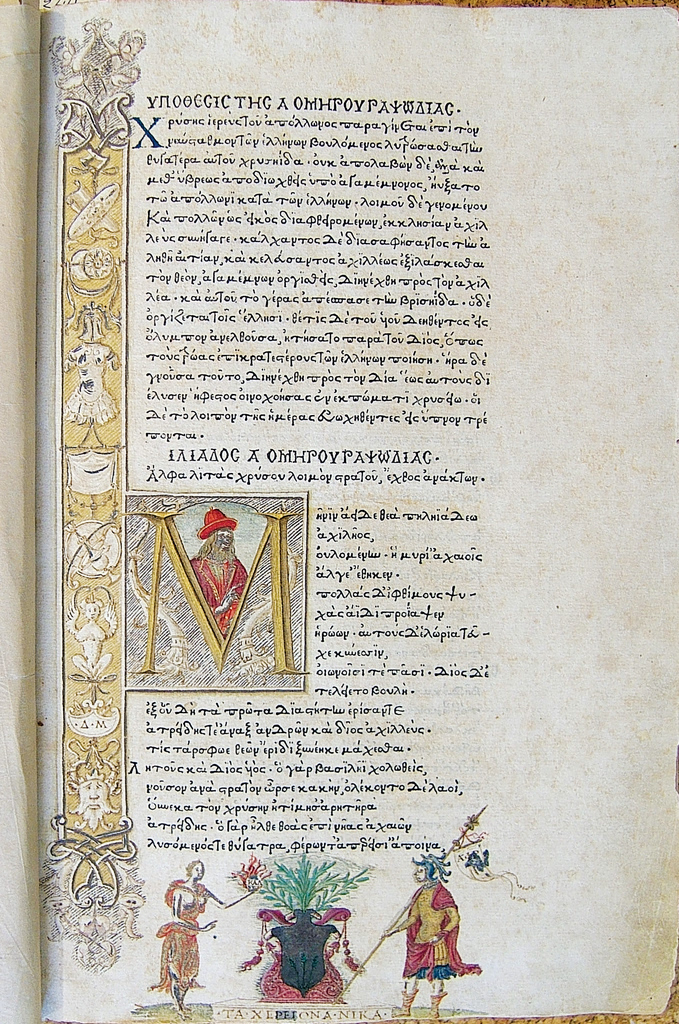
First printed edition of Homer. Florence 1488. Vol 1, beginning of the Iliad. From the collections of the Gennadius Library of the American School of Classical Studies at Athens.
One that meant a great deal to me was the acquisition of a map of Venetian Crete depicting the Ottoman siege of Candia (Heraklion) in 1669, a subject closely connected to my own doctoral research More recently, we acquired the archives of a French family who served as vice-consuls on the island of Milos during the late eighteenth and nineteenth centuries thanks to the advice and collaboration of historian Mark Mazower of Columbia University. Collections such as these reinforce the sense that the library is not static, but constantly growing and evolving, and that one has contributed, even modestly, to its future.
Another source of great satisfaction has been the expansion of the library’s academic and research programs. Until six years ago, the Gennadius Library supported only a single fellowship. Today, it hosts seven fellows, creating a vibrant intellectual community of young scholars who come to Athens to work with the collections and develop new research.
Watching these fellows engage with the treasures of the library and transform them into fresh scholarship has been one of the most rewarding aspects of my tenure. It has also strengthened the Gennadius Library’s role not simply as a repository of books and archives, but as a true center of intellectual life and academic exchange.
Exhibitions, too, have been especially important to me, perhaps because my own formation is as an art historian. I have always believed that exhibitions are far more than displays of objects; they are narratives in space, powerful ways of telling stories and connecting audiences emotionally and intellectually with the past. Through exhibitions, the library has been able to reach audiences well beyond the academic world and invite them into conversation with history, literature, art, and memory.
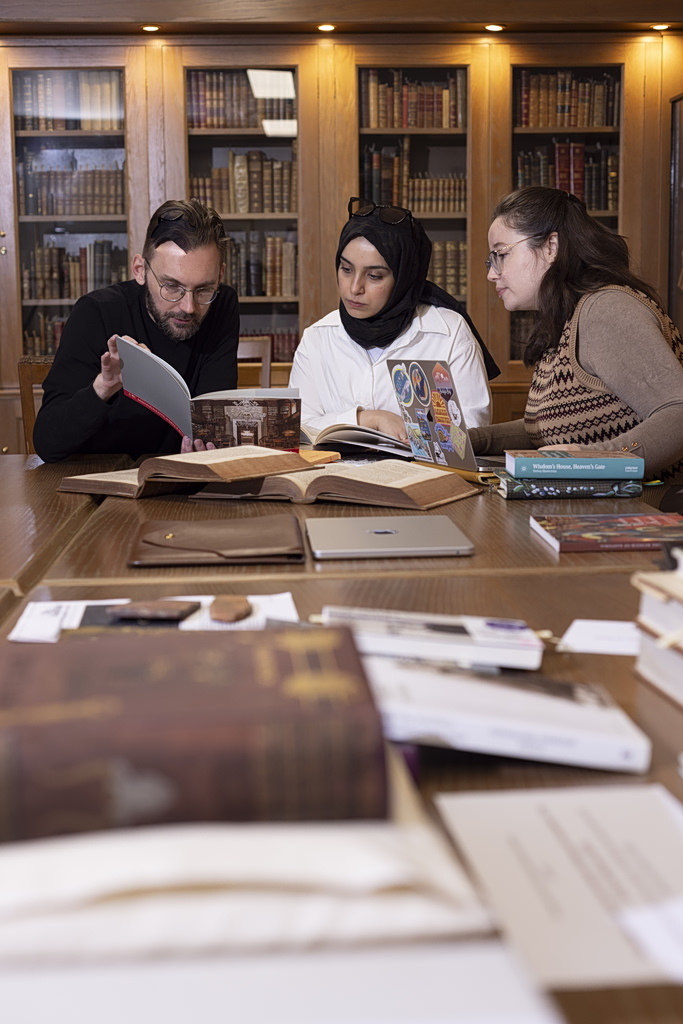
Gennadius Fellow in the Reading Room. Copyright Jeff Vanderpool
At the same time, leading a small institution of this kind inevitably comes with frustrations and challenges. When one compares the resources available to major universities and research libraries in the United States with those of an institution like ours, the differences are striking. We do not always have the means to expand as quickly as we would wish, to digitize our collections at the necessary scale, to share them more broadly with the public, or to remain at the forefront of rapidly evolving technologies.
The Gennadius Library is, in many ways, a boutique institution — distinctive, highly specialized, and deeply personal in character — but that also means that progress often requires patience.
Perhaps the greatest challenge we face today is precisely this question of digital expansion: how to make the extraordinary riches of the library more accessible to the world through technology. This means not only digitization itself, but also the creation of platforms and tools that are elegant, intuitive, and welcoming to users rather than cumbersome or opaque. If the Gennadius Library is to remain vital in the century ahead, it must continue to preserve the past while also finding new ways to communicate it to future generations.
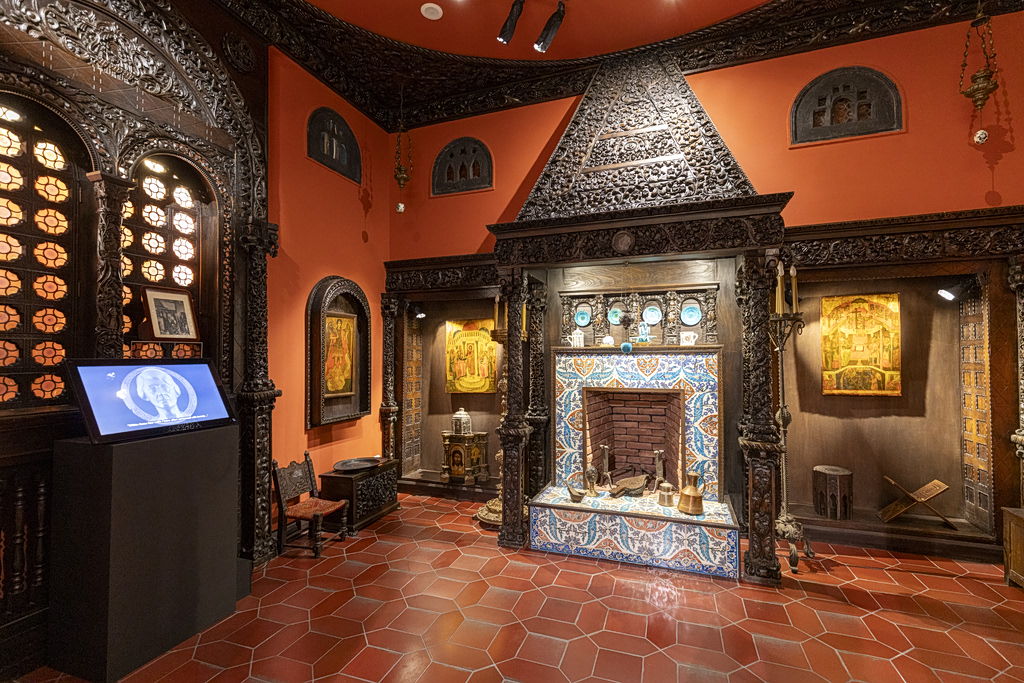
The Macedonian Room donated to the Gennadius Library by Helen Stathatos in 1969.
Aside from being an important resource for scholars and researchers, what has the Gennadius Library offered the Greek public and society more generally? What is your philosophy of keeping it useful for the Greek people?
One of our deepest commitments at the Gennadius Library has always been to ensure that the library serves not only scholars, but the wider public as well. Of course, the collections themselves already speak to a broad audience.
The library preserves rich materials relating to nineteenth- and early twentieth-century local history — documents, publications, and archives that allow people to explore the histories of their families, villages, and regions. Many visitors come not as academics, but simply as individuals searching for a connection to their own past.
At the same time, over the last two decades we have worked consciously to broaden the library’s public role. A turning point came in 2005 with the addition of the Cotsen Hall auditorium at the American School. This new space allowed us to develop an ambitious program of lectures, symposia, concerts, theatrical performances, and public events that opened the collections of the Gennadius to audiences far beyond the traditional academic world. Through these programs, we have tried to communicate not only the richness of the library’s materials, but also their broader educational and cultural value to people who might never otherwise enter a research library.
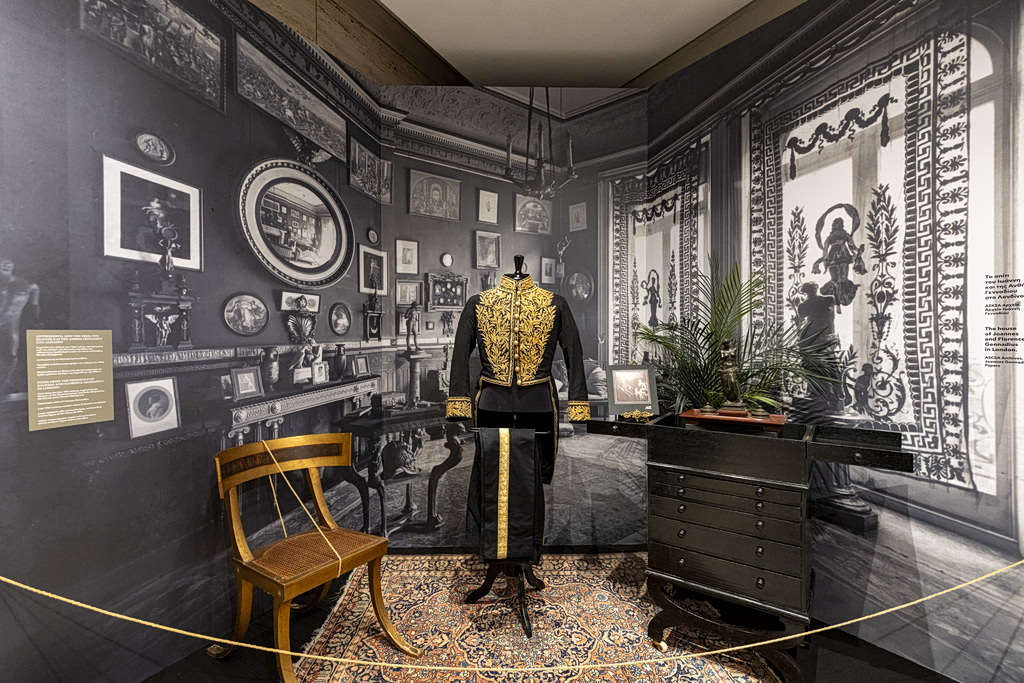
Gennadius100 exhibition: Recreation of the house of Joannes Gennadius in London with his diplomatic costume.
We are especially proud of the community of Friends of the Gennadius Library that has grown steadily over the years. Their enthusiasm and support have helped us better understand how deeply people value institutions like the Gennadius Library and how strong the need remains for spaces dedicated to history, culture, and learning.
One of our most important goals in recent years has been to reach younger audiences, particularly school students. Slowly but steadily, we have begun opening the library to schools and creating programs specifically designed for them.
As part of the celebrations for the library’s centennial year, we launched a new nationwide school competition aimed at students in junior high school and the first years of high school. Using specially selected materials made available through the library’s website, students were invited to create a work inspired by the history and culture of their own region — whether in the form of an essay, a poem, a video, or a work of art.
For us, this initiative represents something of a pioneering project: an attempt to encourage young people to engage creatively with history, memory, and local identity through the collections of the library. The response has been deeply encouraging. By the end of April, when submissions closed, we had received forty-five entries from schools across Greece, many of them from regions far beyond Athens. That, perhaps more than anything else, gives us hope for the future — the sense that the Gennadius Library can continue to inspire new generations and remain a living presence far beyond its walls.
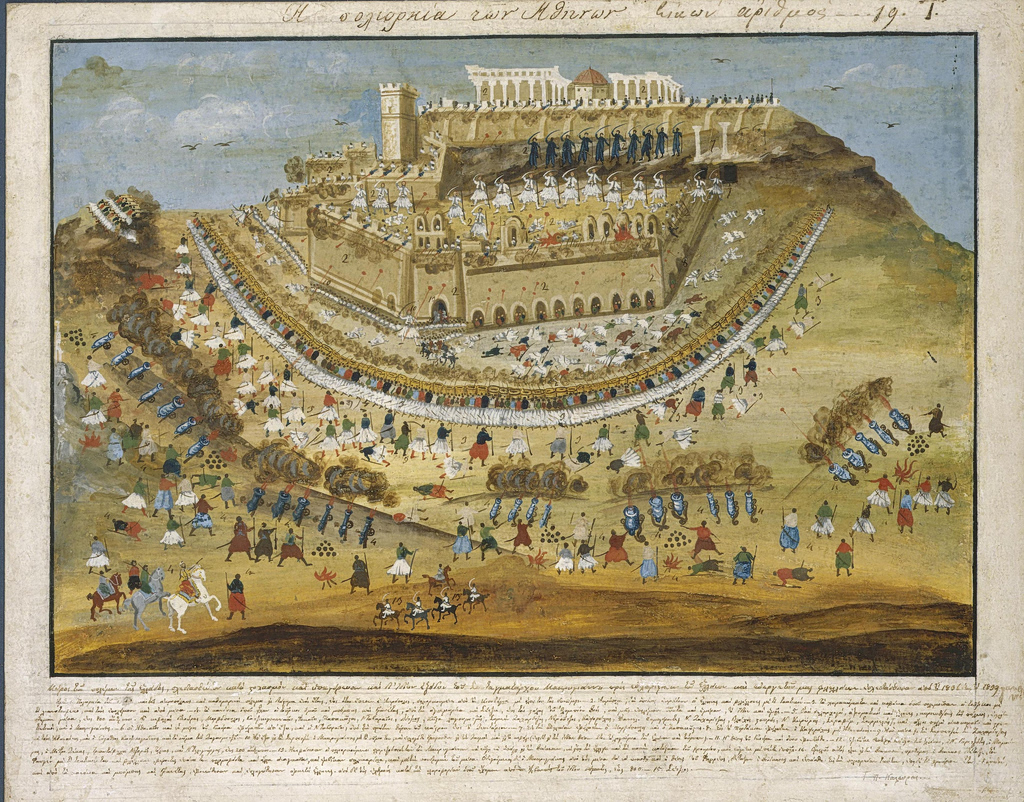
Dimitrios Zographos, Second Siege of Athens. Illustration of General Makriyannis Memoirs from the Greek War of Independence. Gouache. 1836-1839. From the collections of the Gennadius Library of the American School of Classical Studies at Athens.
The Gennadius has historically been a library of Greek history. Is it becoming a library of the present as well, a repository of modern Greek history with new acquisitions of the papers of authors, politicians and others, and perhaps the work of prominent artists, and which have been the most notable additions in that regard?
It is certainly true that the Gennadius Library is an exceptional resource for the study of the Middle Ages, the early modern world, and the nineteenth century. Yet it is equally important to recognize that the library has never been confined to those historical periods alone. Joannes Gennadius himself continued collecting books until the very end of his life — well into the late 1920s and early 1930s, before his death in 1932 — and as a result the collections contain a wealth of material relating to the twentieth century as well.
In particular, there is extensive documentation concerning the final years of the Ottoman Empire, the upheavals of the Eastern Mediterranean, the population exchange between Greece and Turkey, and the political and social transformations that shaped the modern Greek state.
At the same time, the character of the library evolved significantly during the postwar decades. By the 1950s, the area around Kolonaki, where the library is located, had become increasingly vibrant and socially diverse, and the Gennadius Library itself began attracting a broader intellectual and cultural community. This transformation was reflected most visibly in the development of its archival collections, which opened entirely new directions for the library.
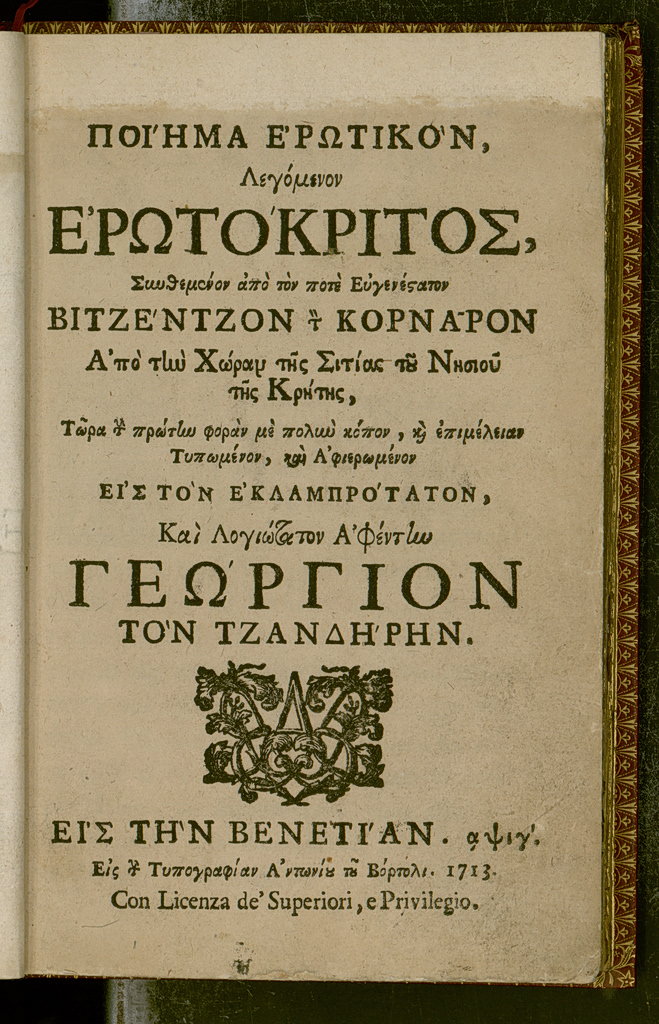
First edition of Vincenzo Cornaro’s Erotokritos printed in Venice 1713. From the collections of the Gennadius Library of the American School of Classical Studies at Athens.
The first major archival acquisition after the papers of Joannes Gennadius himself was the archive of Heinrich Schliemann, the archaeologist whose excavations at Mycenae and Troy transformed the study of the ancient world. This was followed by the papers of George Seferis, Greece’s Nobel Prize–winning poet, and later by those of Odysseas Elytis, the country’s second Nobel laureate in literature.
Over time, the library also became home to the archives of important political figures, among them Emmanuel Tsouderos, prime minister of the Greek government-in-exile during the Second World War, and Constantine Tsatsos, scholar, intellectual, and later President of the Hellenic Republic.
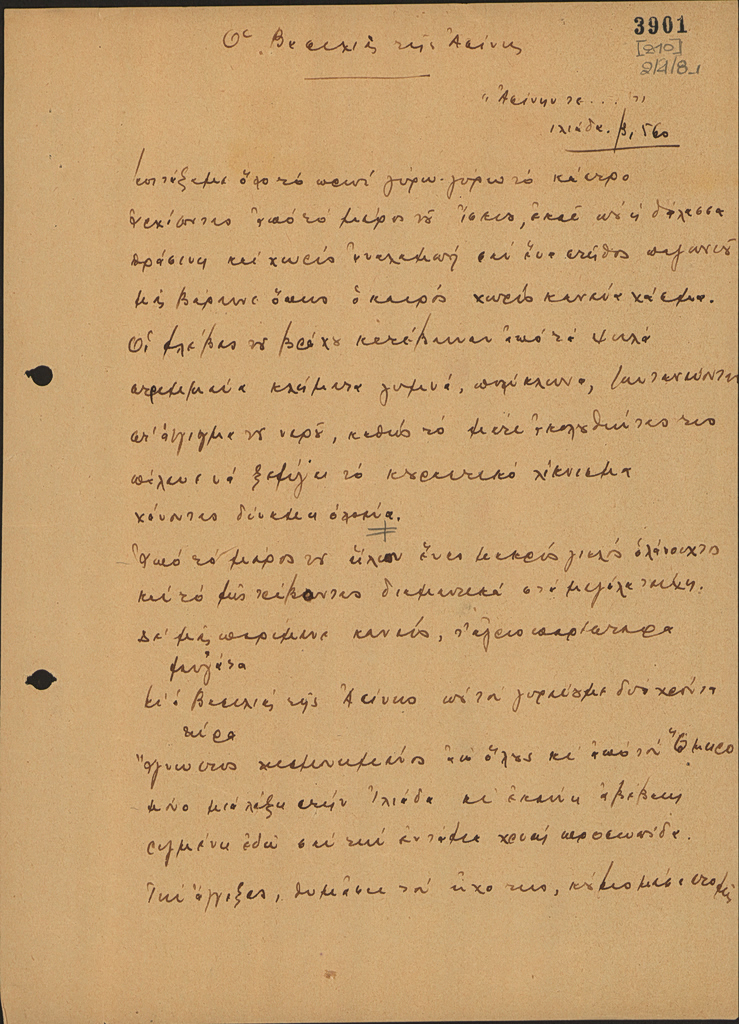
First page of Nobel Laureate George Seferis’ famed poem “King of Asini” (Archives of the American School of Classical Studies Athens).
Alongside these came the papers of many literary figures associated with the “Generation of the Thirties,” whose work helped define modern Greek literature and identity. These archival acquisitions fundamentally broadened the horizons of the library and transformed its collecting policy. The Gennadius Library no longer focused only on earlier periods of Greek history; it became equally committed to documenting the intellectual, political, and cultural life of modern Greece.
The themes that preoccupied Joannes Gennadius himself — the Eastern Question, the place of Hellenism within the Eastern Mediterranean, and Greece’s relationship with the wider world — remain central to the library’s mission today. As a result, the collections continue to expand in areas such as twentieth-century political history, the Greek Civil War, the history of Cyprus, and the cultural and literary production of modern Greece. In recent years, the library has continued to acquire the archives of major contemporary writers, including Vassilis Vassilikos, Angelis Raptopoulos, Margarita Liberaki, and members of her literary circle. Oh, and of course there are music archives, including those of maestro Dimitri Mitropoulos, as well as the archive of folklorist Elias Petropoulos which includes the baglama od Tsitsanis and Mpatis.
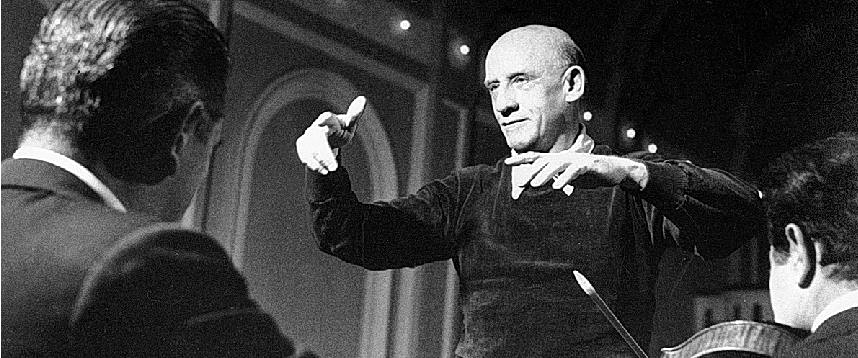
One of the treasures of the Gennadius Archives are the papers of maestro Dimitri Mitropoulos, one of the greatest conductors of the 20th century.
In this sense, the Gennadius Library is not a static institution devoted only to the distant past. It continues to evolve, collecting and preserving the materials necessary for understanding the newer chapters of Greek history and culture.
Because it remains part of the American School of Classical Studies at Athens, it also maintains a strong commitment to the modern history of archaeology itself — including the preservation, restoration, and interpretation of monuments and archaeological sites. In this way, the library continues to bridge the worlds of history, literature, politics, archaeology, and cultural memory across the centuries.
What is being done to build digital tools for the public to access the works of early foreign travelers to Greece and the library’s unique archives? What resources and digitized works in their entirety would you now like to make available to readers online?
Digitization is one of the great opportunities — but also one of the great challenges — facing research libraries today. People often imagine that digitization simply means scanning an object, but in reality it is a far more demanding and expensive undertaking. The difficulty lies not only in the fragility of the materials, which require specialized equipment and highly trained teams to handle them safely, but also in the scholarly infrastructure that must accompany the process. For a digitization project to have real value, every item must be carefully catalogued, documented, and integrated into a system that allows researchers and the wider public to understand and navigate the material meaningfully.
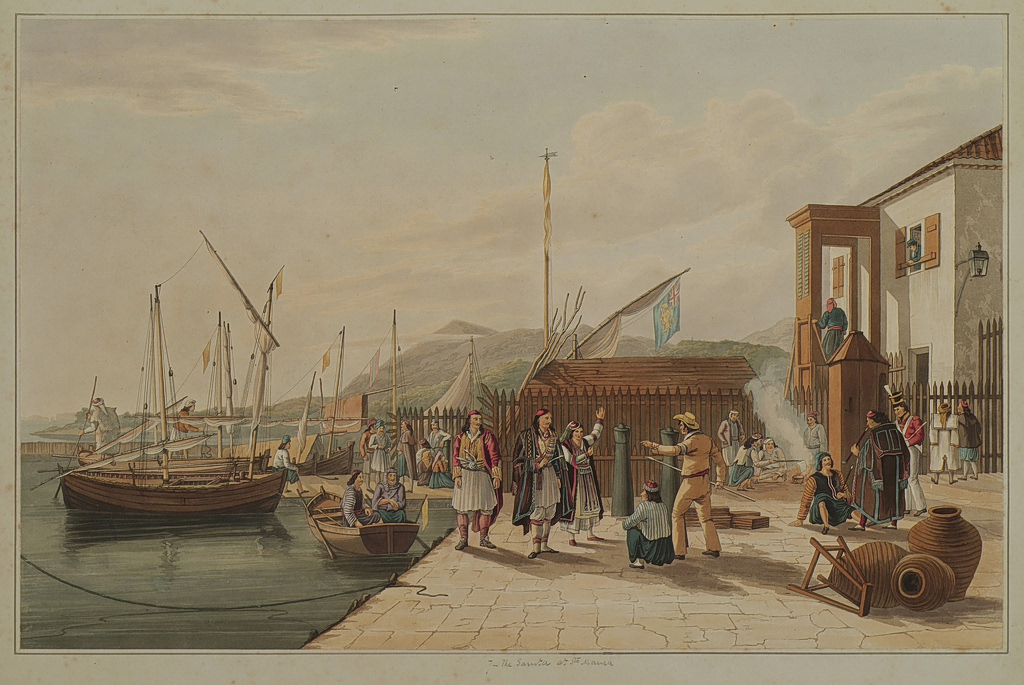
Joseph Cartwright, Views of the Ionian islands. London, 1821. From the collections of the Gennadius Library of the American School of Classical Studies at Athens.
At the Gennadius Library, we have approached digitization very consciously as a way of preserving and sharing unique cultural material. Since the first grant we received from European Union funds in 2007, our strategy has been to focus primarily on materials that exist nowhere else — manuscripts, archives, hand-drawn maps, personal papers, works of art, and fragile documentary collections that are difficult to access in their original form. We have not concentrated on printed books, since many of those can already be found in major libraries across Europe and the United States. Instead, we have chosen to dedicate our efforts to the kinds of materials that are truly singular and irreplaceable.
With the support of several European Union grants, one of our most important digitization projects has centered on the remarkable scrapbooks compiled by Joannes Gennadius himself. These consist of roughly 250 large volumes into which Gennadius assembled an extraordinary variety of material over many decades: newspaper clippings, engravings, photographs, postcards, ephemeral prints, pages removed from books, personal notes, and all manner of documentary fragments.
Taken together, these scrapbooks offer a fascinating window not only into Gennadius’s intellectual life in London, but also into the broader world of his interests and obsessions. They reveal his fascination with costumes, portraits, maps, topography, political figures, and the great historical events that shaped modern Greece and Europe — the Balkan Wars, the Greco-Turkish War of 1897, the First World War, and the wider Eastern Question.
In many ways, these volumes form an intellectual self-portrait of the founder himself. Digitizing them allows us both to preserve these fragile materials and to make them accessible to scholars and readers around the world without risking damage to the originals.
Yet digitization alone is not enough. Equally important is the question of access: how to create platforms that are open, intuitive, and easy to navigate, so that these materials can truly be used and appreciated by a broader public. Our goal has always been that, whenever copyright restrictions allow it, digitized materials should be freely accessible online. Ultimately, digitization is not simply about technology; it is about democratizing access to knowledge and ensuring that the collections of the Gennadius Library can continue to inspire researchers, students, and readers far beyond the walls of the institution itself.