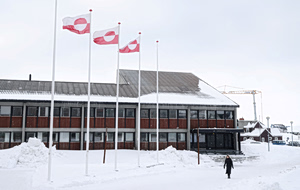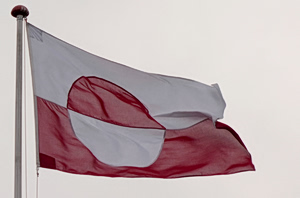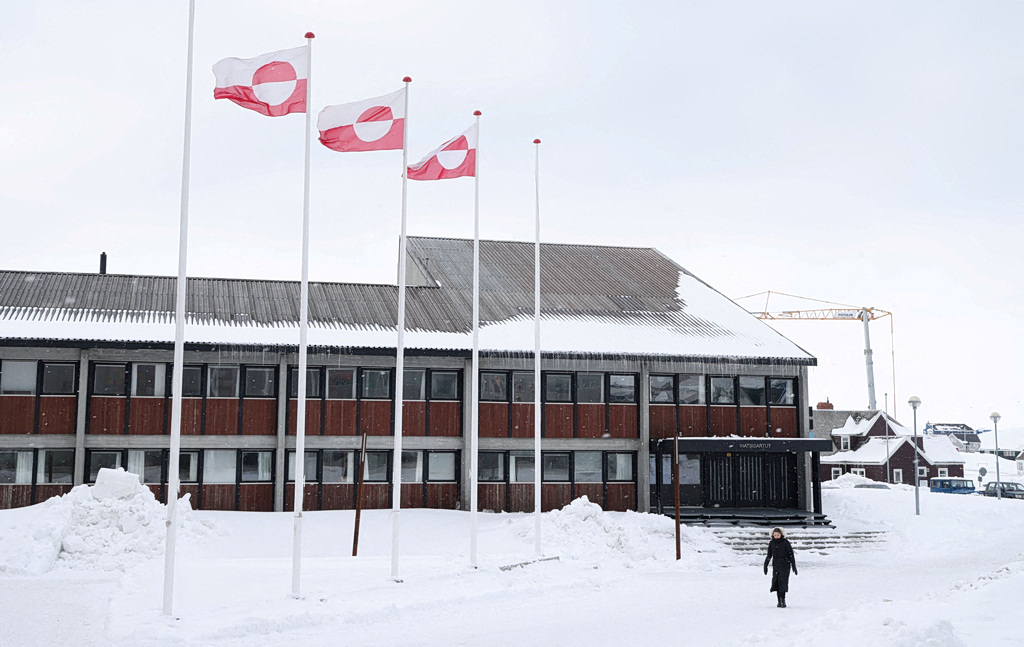
Rain lashed down on Westminster with unusual persistence, turning Parliament Square into a blur of umbrellas and reflections as dusk settled over London. Inside the Palace of Westminster, however, the atmosphere was taut rather than gloomy. Parliamentarians, advisers, diplomats and a handful of journalists gathered quietly in the IPU Room, a space more accustomed to routine briefings than moments of geopolitical anxiety. Just minutes before the meeting began, a small but striking detail caught the eye: the red-and-white Greenlandic flag was carefully placed on the podium. It stood there alone, symbolic and deliberate, moments before Greenland’s minister took her position to address the small audience assembled on this rain-soaked evening.
This was not a routine parliamentary event. A senior minister from Greenland’s government had travelled to London at short notice to make a direct appeal to British MPs, as her country faced an extraordinary challenge: renewed threats by former US president Donald Trump to annex Greenland, the semi-autonomous Danish territory that has long occupied a strategic place in the Arctic and in Western security thinking.
Naaja Nathanielsen, Greenland’s Minister for Business, Mineral Resources, Energy, Justice and Gender Equality, had diverted her journey home from Copenhagen to appear in person at Westminster. She addressed what had been convened as an emergency meeting of MPs, hosted by the All-Party Parliamentary Group (APPG) on Greenland.
TO VIMA was inside the room as Nathanielsen spoke candidly about Greenland’s economic ambitions, its place within the Kingdom of Denmark, and the fear now gripping a population of just 57,000 people.
The timing was critical. Just hours later, the Danish and Greenlandic foreign ministers were due to meet US Vice President JD Vance and Secretary of State Marco Rubio in Washington, following Trump’s latest escalation: public rhetoric and congressional moves pointing towards the “Greenland Annexation and Statehood Act”. What once sounded implausible had suddenly acquired the weight of legislative intent.
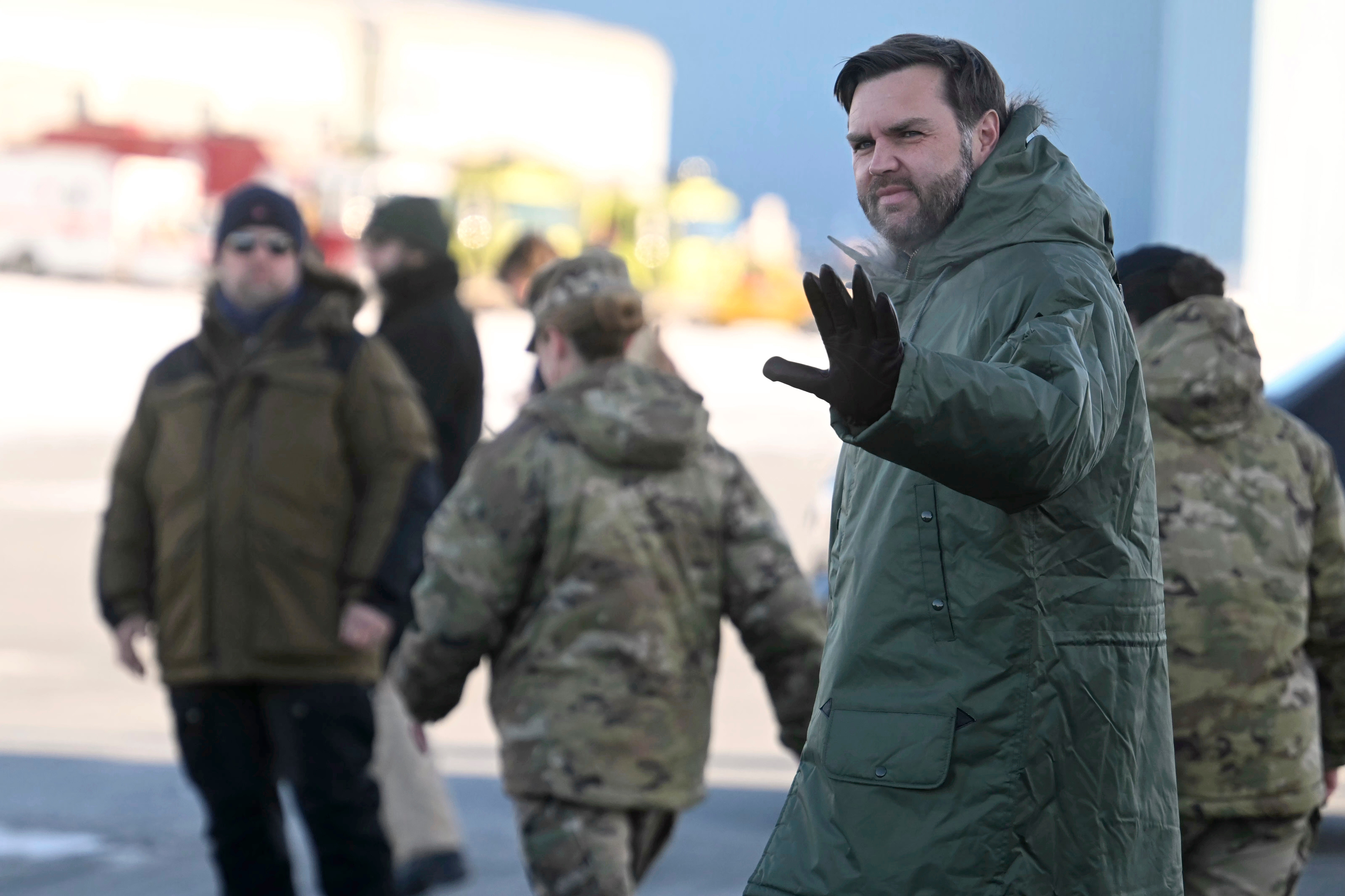
FILE – Vice President JD Vance arrives at Pituffik Space Base in Greenland, March 28, 2025. (Jim Watson/Pool via AP, File)
“Never in my wildest dreams”
The meeting opened with remarks from Brendan O’Hara MP, Chair of the APPG on Greenland, whose sense of disbelief set the tone. When the group was formed in 2020, he reminded the room, its focus was benign and pragmatic: trade, fishing, tourism, and the security partnership linking Greenland, Europe and NATO.
“Never in my wildest dreams,” he said, “did I imagine there would be this crowd coming out for a meeting on Greenland.” Yet the packed room testified to how dramatically circumstances had changed. O’Hara described how events had accelerated with alarming speed, culminating in the presentation of a bill in the US Congress proposing annexation. Within minutes of contacting Greenlandic officials, he explained, Nathanielsen herself had offered not only to speak by video link but to be physically present in London.
His words were unambiguous. Any attempt to annex Greenland, he argued, would be “fundamentally illegal”, violating every tenet of international law.
Then, as the rain continued to drum against the windows, O’Hara handed over to the minister.
From economic ambition to existential anxiety
Nathanielsen began by thanking the APPG, the MPs present, and the British Prime Minister, Keir Starmer, for expressions of solidarity. Such support, she said, was being heard in Greenland and deeply appreciated. Only weeks earlier, her work had been focused almost entirely on promoting business opportunities and economic development. For four to five years, her central task had been to transform Greenland’s resource potential into tangible improvements in everyday life.
That conversation, she explained, had dominated Greenlandic politics and household discussions until very recently. Questions about infrastructure, healthcare access, inflation and a shrinking workforce were the “kitchen table” concerns of ordinary people. Economic development was not, she stressed, primarily about independence from Denmark, but about improving living standards in the present.
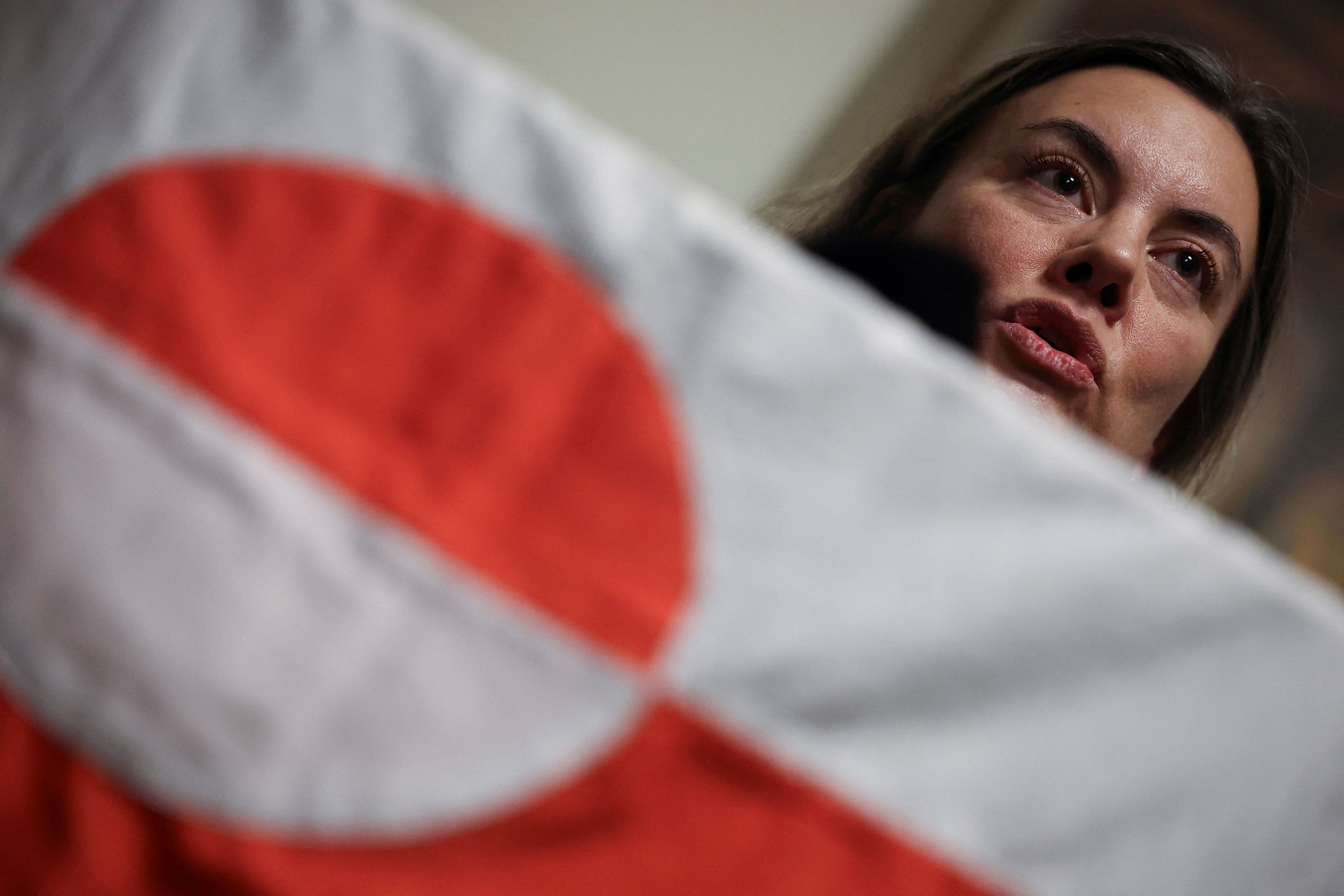
Greenland’s Minister for Business, Mineral Resources, Energy, Justice and Gender Equality Naaja Nathanielsen holds a flag of Greenland during a press conference with the Chair of the APPG on Greenland, Brendan O’Hara as U.S. President Donald Trump and White House officials continue to discuss plans to bring Greenland under U.S. control, in London, Britain, January 13, 2026. REUTERS/Toby Melville TPX IMAGES OF THE DAY
Then, suddenly, everything changed.
“Right now,” she told MPs, “people in Greenland worry about the future we are facing.” The effect of US rhetoric had been profound. “People are not sleeping. Children are afraid.” Anxiety had permeated daily life in a society unaccustomed to being spoken about as an object to be bought or seized.
An economy in transition
Nathanielsen walked the room through Greenland’s economic realities with clarity and restraint. Fishing still dominates the economy, while tourism, mining and energy are gradually expanding. More than half of Greenland’s national budget-around 54 per cent-comes from a block grant from Denmark, underscoring the scale of the challenge in building a fully sustainable economy.
The island’s mineral wealth has attracted growing international attention, particularly as countries seek secure supplies of critical minerals for the green transition. Climate change, the Covid-19 pandemic and the war in Ukraine have all exposed vulnerabilities in global supply chains, often concentrated in China. Greenland, Nathanielsen noted, possesses some of the world’s largest deposits of minerals deemed vital to future industries.
Yet Greenland is not an easy place to do business. High environmental, social and governance standards are non-negotiable. Workers are paid properly, environmental protections are strict, and regulatory processes are demanding. “We want to mine responsibly,” she said, emphasising that development would not come at any cost.
British involvement has been significant, particularly since Brexit, with UK-based companies active at various stages of exploration and development. Only one mine is currently operational, highlighting how early-stage the sector remains. Greenland, she said, is still very much a “greenfield” country.
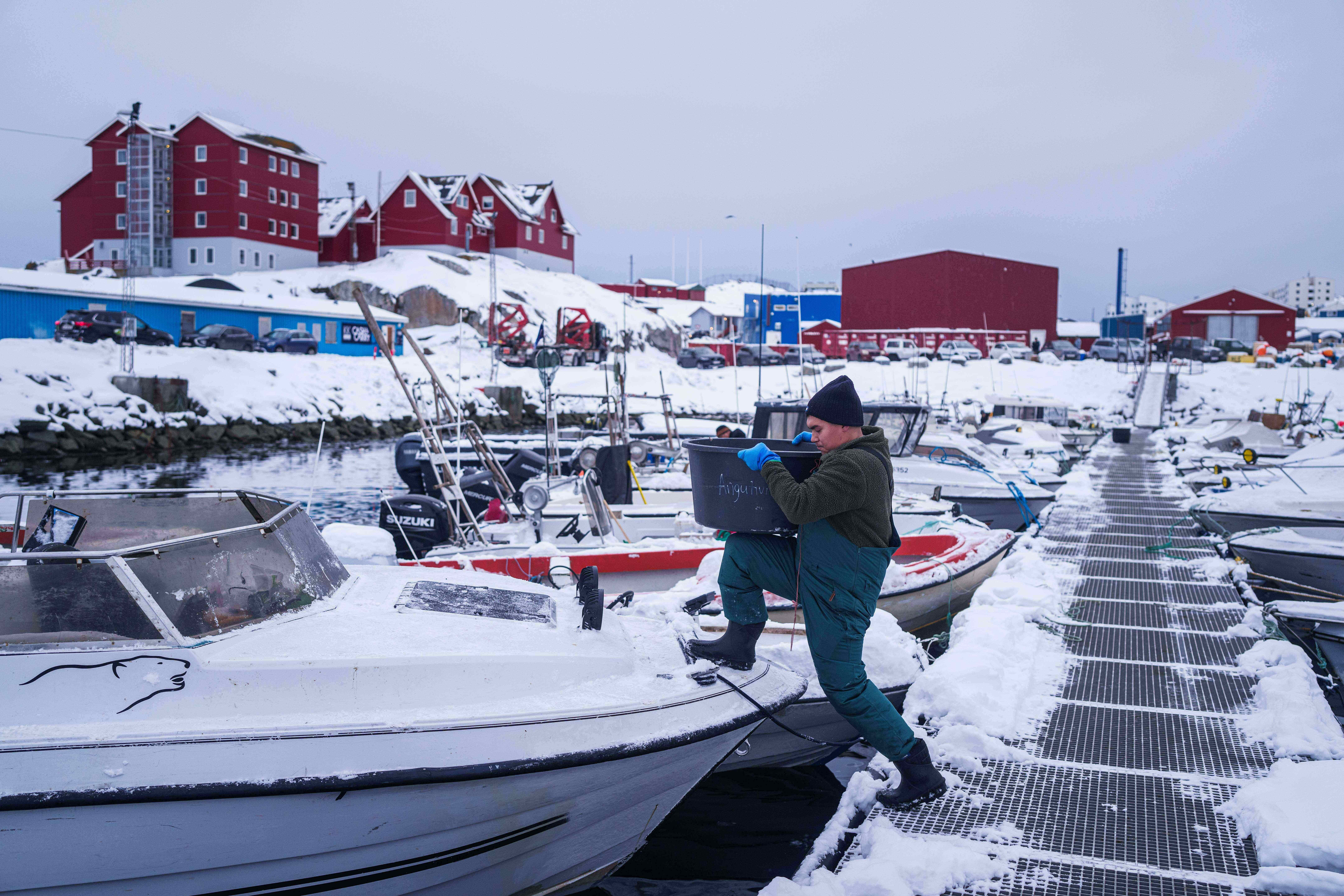
A fisherman carries a bucket onto his boat in the harbor of Nuuk, Greenland, on Tuesday, Jan. 13, 2026. (AP Photo/Evgeniy Maloletka)
Notably, the government has chosen not to exploit its untapped oil reserves, deciding that both environmentally and economically it makes more sense to leave them in the ground. Instead, attention is turning to hydropower, with forthcoming tenders for projects that could rank among the largest in Europe and produce far more energy than Greenland itself requires.
Tourism, too, is growing, albeit carefully. Greenland has no desire to become “southern Spain”, Nathanielsen quipped. The goal is sustainable, locally controlled tourism that respects the rugged character of the country while offering economic opportunities beyond fishing.
Alliance, not annexation
It was when Nathanielsen turned to geopolitics that the mood in the room shifted palpably. Greenland, she insisted, has always been and remains firmly part of the Western alliance. It supports NATO and regards the alliance as a cornerstone of global stability. That position was reiterated, she noted, in recent statements by Greenland’s premier and Denmark’s prime minister.
Greenland understands US concerns about increased Russian and Chinese activity in the Arctic. Indeed, she argued, Greenland itself has long called for greater monitoring and dual-use installations in the region, even during more peaceful times. Security cooperation, she stressed, is not the issue.
What is incomprehensible is the leap from alliance to annexation.
Greenland’s population of 57,000 people, scattered along the coastline of the world’s largest island, poses no threat to anyone. Yet history, Nathanielsen observed, offers uncomfortable precedents of indigenous populations being challenged over their right to inhabit resource-rich lands. Greenland was once a Danish colony, and while that relationship has included difficult chapters, the past 300 years have also been a journey towards self-rule and democratic maturity.
Today Greenland has its own parliament, government, education system and institutions. It is small, but not incompetent. At the same time, Nathanielsen was strikingly honest about the limits imposed by size. Complete self-sufficiency, particularly in defence, is not realistic. Independence is debated in Greenland, but it is not the majority view, despite impressions sometimes created by international media.
“We are not unhappy with the house,” she said metaphorically, “but we have some problems with the interior.” Greenland seeks greater room to manoeuvre while remaining within the Kingdom of Denmark-a nuanced position that resists simplistic binaries.
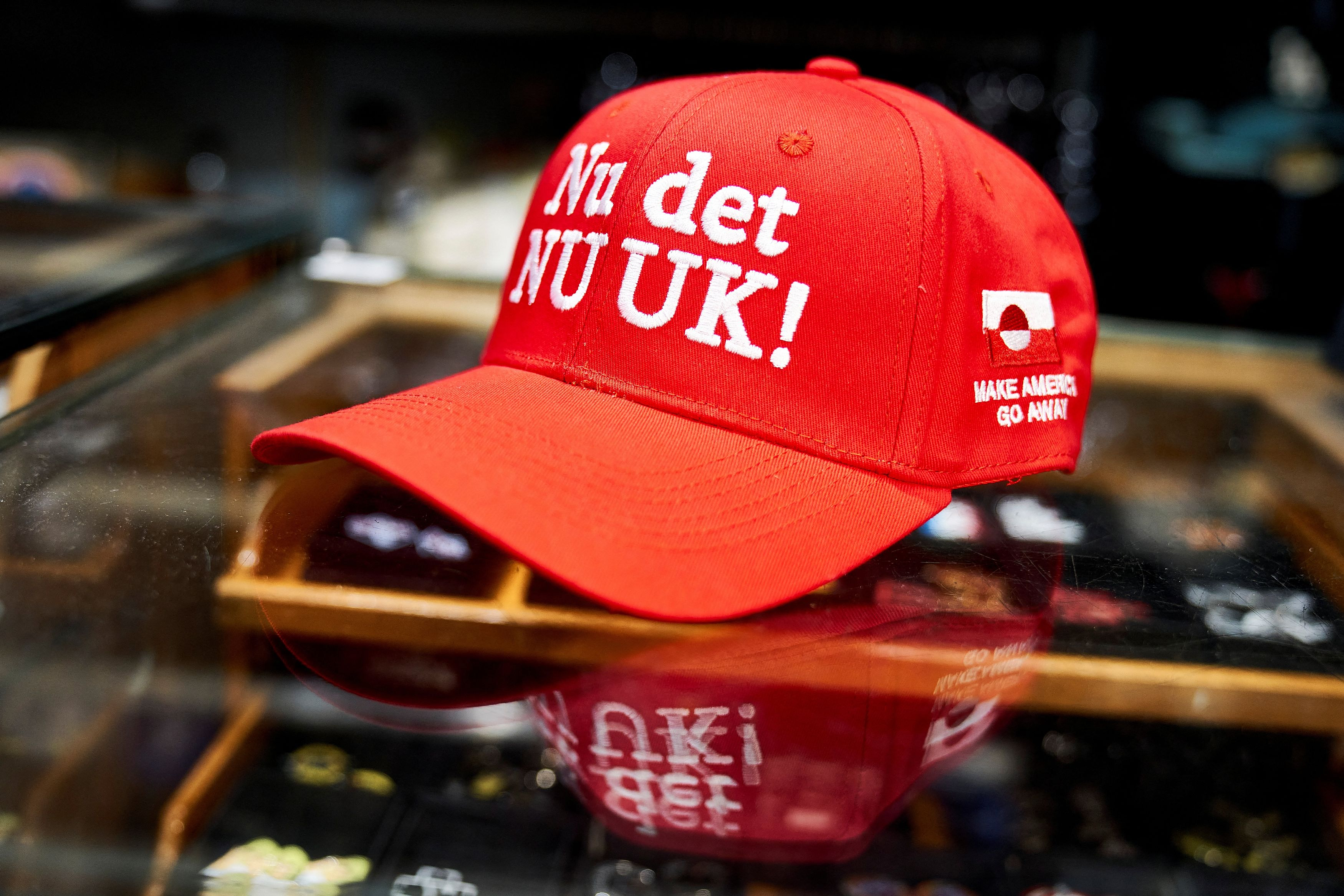
A Anti-MAGA cap “Nu det NUUK!” which is sold in the clothing store McKorman on Noerrebrogade, is displayed, in Copenhagen, Denmark January 13, 2026. The message “Nu er det NUUK!” and “Make America go away” is embroidered on the cap. After the heated debate between the U.S., Greenland, and Denmark about Trump’s renewed desire to take over Greenland, “Nu er det NUUK” has gone viral on the internet. The phrase “Nu er det NUUK!” refers to Greenland’s capital Nuuk – and can be translated from Danish as “Enough is enough”. Thomas Traasdahl/Ritzau Scanpix/via REUTERS ATTENTION EDITORS – THIS IMAGE WAS PROVIDED BY A THIRD PARTY. DENMARK OUT. NO COMMERCIAL OR EDITORIAL SALES IN DENMARK.
A plea for law, dialogue and solidarity
The internet age, Nathanielsen suggested, struggles with such complexity. Algorithms reward stark narratives, not layered realities. Yet Greenland’s history, geography and politics are inherently complex, and always have been.
The United States, she acknowledged, has long considered Greenland part of its national security sphere, formalised through treaties dating back to 1951 and deepened in 2004. Greenland has cooperated willingly and openly as an ally. The world has changed, she said, and priorities have shifted-but change does not require force.
“Greenland is right now facing two choices, it seems, if you rely on the media: to be sold or to be annexed,” she said. “It is just unfathomable.”
Her hope rested on dialogue: that the imminent meeting in Washington would give Greenland a real voice at the table and that its perspective would be heard alongside those of Denmark and the United States.
As for Britain’s role, Nathanielsen was clear. The UK can help by doing precisely what it was doing in that rain-soaked room: insisting on the relevance of NATO, upholding international law, and continuing to engage with Greenland as an ally and partner. International law, she reminded MPs, was forged in the aftermath of catastrophic wars. Ignoring it risks repeating history’s gravest mistakes.
“For others this may be a piece of land. For us, it is home”
Speaking after an emergency meeting with British MPs, Nathanielsen addressed questions with a mixture of composure and visible frustration, describing the US threats as “offensive”, “bewildering” and deeply unsettling for Greenlandic society.
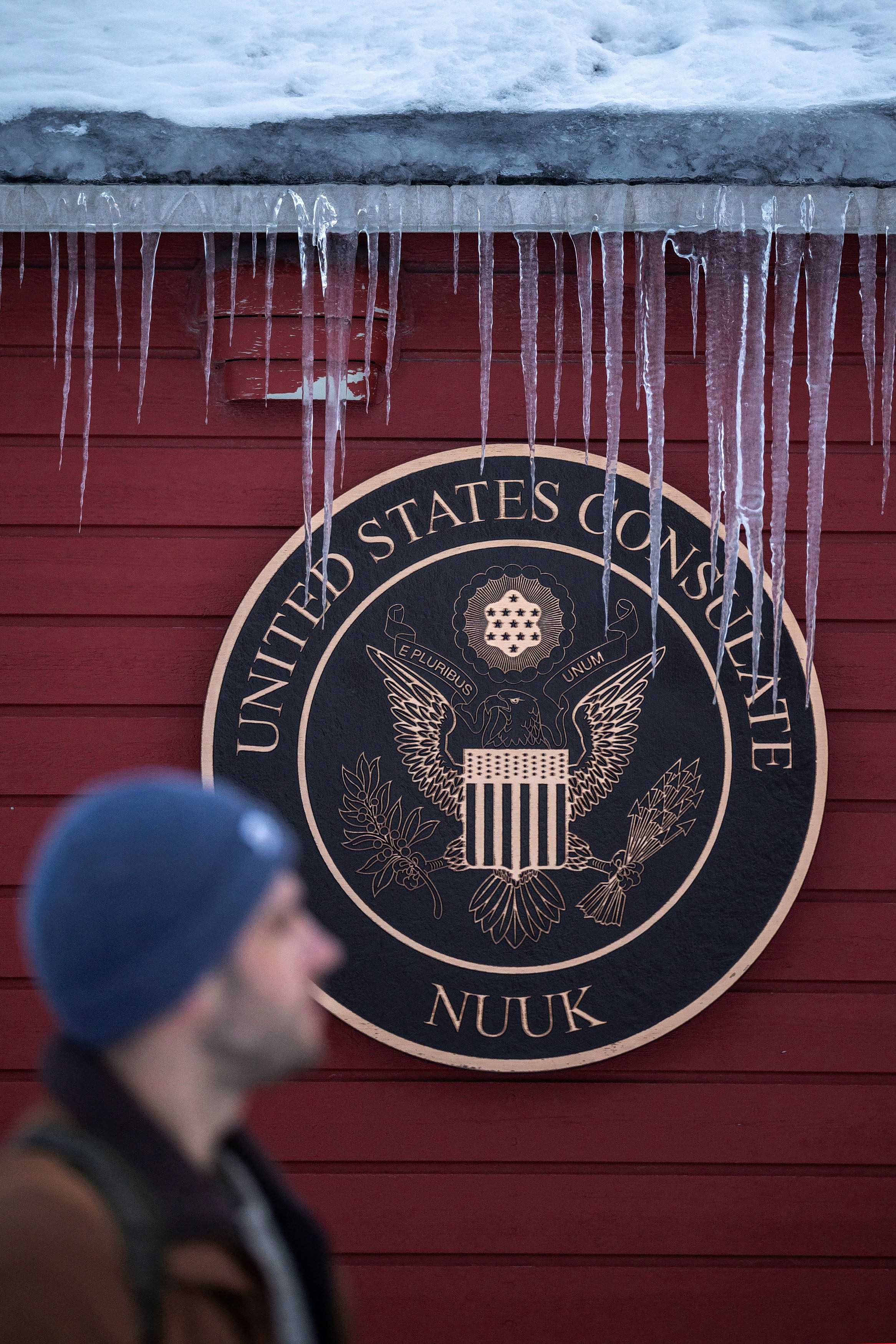
A journalist walks past icicles hanging from a gutter outside the U.S. Consulate in Nuuk, Greenland, January 13, 2026. REUTERS/Marko Djurica
“We feel betrayed,” she said plainly. “We are allies of the United States. We have been good partners. And now we find ourselves holding a press conference about the possible selling or annexation of our country. This is not something we sought, and it is not something we deserved.”
Her remarks came just hours before a high-stakes meeting in Washington between senior US officials and representatives of Denmark and Greenland, following the introduction in Congress of the so-called Greenland Annexation and Statehood Act. Nathanielsen said she could not speak to the agenda of that meeting, but stressed that Greenland’s overriding aim was clarity – and dialogue without force.
A population under pressure
Repeatedly pressed on how Greenlanders are responding to the crisis, the minister painted a stark picture of anxiety spreading through a small society unused to being treated as a strategic object.
“People are worried,” she said. “They are concerned about the messages coming from the United States about annexing Greenland or buying Greenland. It causes a great deal of worry about the future.”
The psychological impact, she added, is tangible. “People are reporting difficulties sleeping. This is filling discussions around households. It is a massive pressure we are under, and people are feeling the effects of it.”
Politically, however, the message from Nuuk is unequivocal. Across parties and coalitions, Greenland’s leaders have been clear that there is no appetite for becoming part of the United States.
“We are an American ally,” Nathanielsen said, “but we do not see ourselves as becoming Americans. We are quite happy with being part of the Kingdom of Denmark.”

Houses in Nuuk, Greenland, January 13, 2026. REUTERS/Marko Djurica
Contingency plans – but no appetite for conflict
Asked whether Greenland is preparing for the possibility of US military force, Nathanielsen acknowledged that contingency planning exists, as it does in any country, but made clear that force is neither expected nor welcomed.
“We do have contingency plans,” she said cautiously, declining to offer details. “Of course we are trying to make sure everybody is safe. Hopefully this will not be needed.”
She was equally direct when asked whether Greenland expects NATO allies such as the UK to intervene if the United States were to act militarily.
“If that scenario were to happen,” she said, “we would all be in a completely new situation. It would imply one NATO country attacking another. At that point, we would all be under attack.”
Such an outcome, she warned, would represent a breakdown of international law and the alliance system that has underpinned European and transatlantic security for decades.
“NATO has brought peace, prosperity and stability – not only to its members but beyond them. I hope we will never get to that situation, and we should do everything we can to prevent it.”
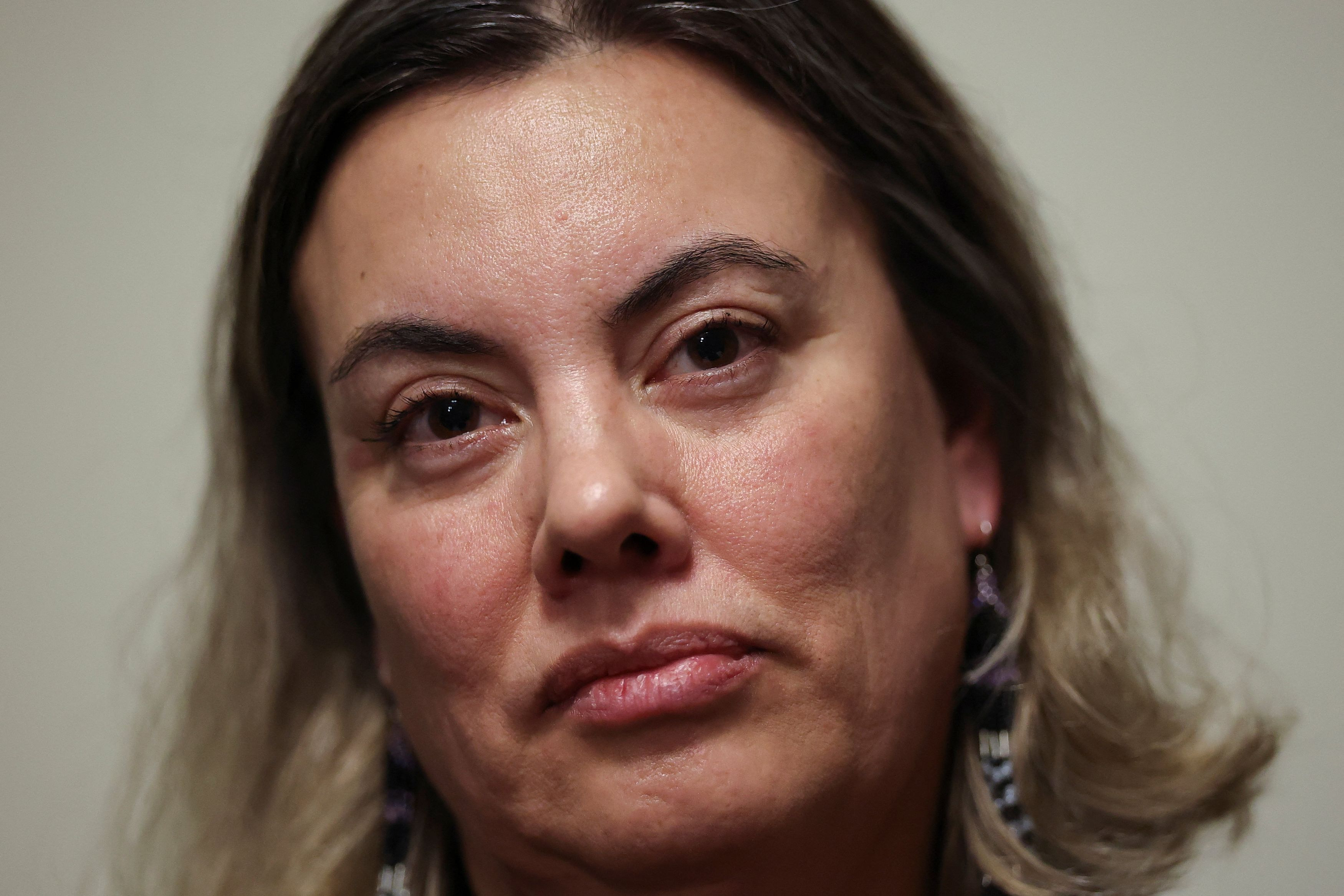
Greenland’s Minister for Business, Mineral Resources, Energy, Justice and Gender Equality Naaja Nathanielsen looks on during a press conference with the Chair of the APPG on Greenland, Brendan O’Hara as U.S. President Donald Trump and White House officials continue to discuss plans to bring Greenland under U.S. control, in London, Britain, January 13, 2026. REUTERS/Toby Melville
Security concerns without sovereignty claims
Nathanielsen repeatedly emphasised that Greenland understands US security concerns in the Arctic and does not dismiss them. Russia is an Arctic state; China has shown long-standing interest in the region. Increased monitoring, she said, is sensible and welcome.
“We have called for more monitoring of the Arctic for many years,” she said. “We are quite happy to house these installations if that is necessary.”
However, she rejected claims that Greenland is currently facing an imminent threat from Russian or Chinese activity.
“We do not see any imminent threat,” she said. “We don’t detect large-scale Russian or Chinese investment in Greenland, and we have stopped all exports to Russia under sanctions.”
Security cooperation, she argued, can be expanded without challenging sovereignty. “There is no reason why these concerns cannot be handled through dialogue and agreements.”