The idyllic island of Kythera, lying off the southeastern tip of the Peloponnese peninsula in Greece, has fascinated archaeologists for many years—and not without reason. The island has long served as an important geographical and cultural bridge, linking Minoan Crete, the Mycenaean Greek mainland, and the wider Aegean and Mediterranean regions.
It was in the early 1960s that the first major organized excavation project was carried out on the island by the British School at Athens, led by Nicolas Coldstream and George Huxley. This landmark excavation followed earlier investigations in the 1930s, which first brought to light traces of Minoan occupation on the island. Key archaeological discoveries—including the Minoan peak sanctuaries, excavations at the Kastri settlement, and findings at the Paleokastro Acropolis—revealed the island’s close links with Crete during the Minoan era, while also confirming early urbanization, extensive maritime trade networks, and, most importantly, continuous forms of organized society dating back to the Neolithic period.

Interest in Kythera’s hidden past is what brought a team of archaeologists from around the world to the island in the summer of 2026. The EVOKE (Exploring Vythoulas Origins in Kythera Environs) Project, a five-year international archaeological research program, is directed by researchers from the University of Sydney and brings together specialists, students, and collaborators from universities and research institutions in Australia, Greece, the United Kingdom, the United States, Brazil, and elsewhere.
The project works in close collaboration with the Greek Ministry of Culture and the local Ephorate of Antiquities, while also engaging a broad network of scientific specialists whose expertise allows researchers to investigate every aspect of the site’s archaeology.
Why Vythoulas matters
Dr. Lita Tzortzopoulou-Gregory, Archaeological Research Facilitator of the EVOKE Project, told TO BHMA International Edition that the excavation aims “to better understand the long-term history of human occupation on Kythera.”
“Our aim is not simply to uncover ancient buildings or artefacts, but to reconstruct how people lived, adapted, and interacted with their environment over thousands of years,” she explained.
Tzortzopoulou-Gregory said Vythoulas preserves evidence spanning more than five millennia, offering an exceptional opportunity to examine continuity and change within a single landscape. She emphasized that this continuity is what makes Vythoulas “truly unique” and the reason it was selected for excavation. Evidence of human occupation spans from the Late Neolithic period to the present day.
“This remarkable sequence makes it one of the most significant archaeological sites on the island and an exceptional case study for Greek archaeology more broadly,” she said.
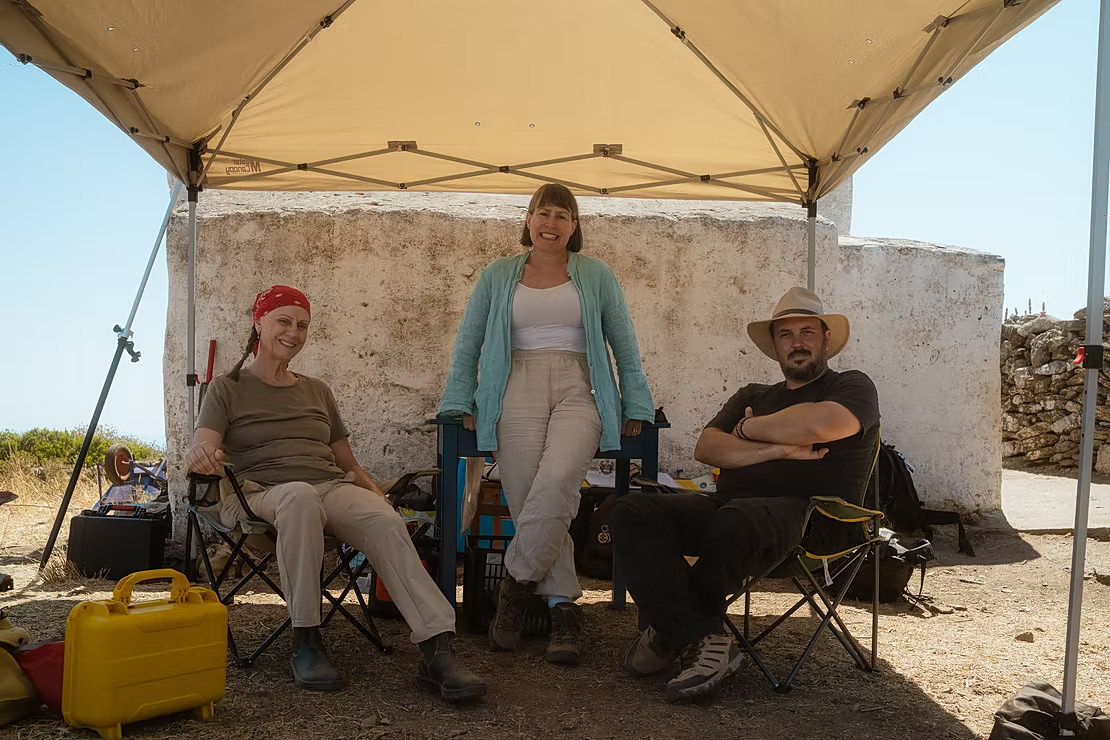
The three directors of EVOKE, Lita, Tamar and Konstantinos. PHOTOGRAPHS PROVIDED BY EVOKE PROJECT
Vythoulas allows archaeologists to examine how one community evolved across successive periods—from prehistory through the Bronze Age, Classical, Hellenistic, Roman, Byzantine, Venetian, and Ottoman periods, and into the modern era. According to Tzortzopoulou-Gregory, very few sites in Greece preserve such an extensive and uninterrupted archaeological record within a single location.
“This continuity enables us to explore long-term processes of settlement, resilience, adaptation, and cultural transformation in ways that are rarely possible elsewhere,” she explained.
This first excavation season, carried out between June 22 and July 11, focused on establishing the site’s archaeological sequence and identifying the nature and extent of occupation across different periods.
“We aimed to understand the site’s stratigraphy, locate well-preserved occupation layers, recover environmental evidence, and collect material that will allow us to build a robust chronological framework,” Tzortzopoulou-Gregory said.
The inaugural excavation has already confirmed the site’s exceptional archaeological potential, producing exciting results that include securely dated occupation layers, architectural remains, evidence of domestic and agricultural activities, and environmental samples that will enable archaeologists to reconstruct past landscapes, diets, and farming practices.
“Together, these discoveries will help us better understand not only Vythoulas itself but also the wider development of Kythera through time,” she noted.

Beyond the excavation
The Vythoulas program extends well beyond excavation alone, comprising several interconnected components that reflect its broader multidisciplinary scope. Each excavation season, Tzortzopoulou-Gregory explained, is followed by extensive post-excavation work, including the conservation, cataloguing, specialist analysis, and scientific study of recovered material.
“Our research integrates archaeological, anthropological, historical, environmental, and archival evidence to build as complete a picture as possible of life at Vythoulas across more than five thousand years,” she said.
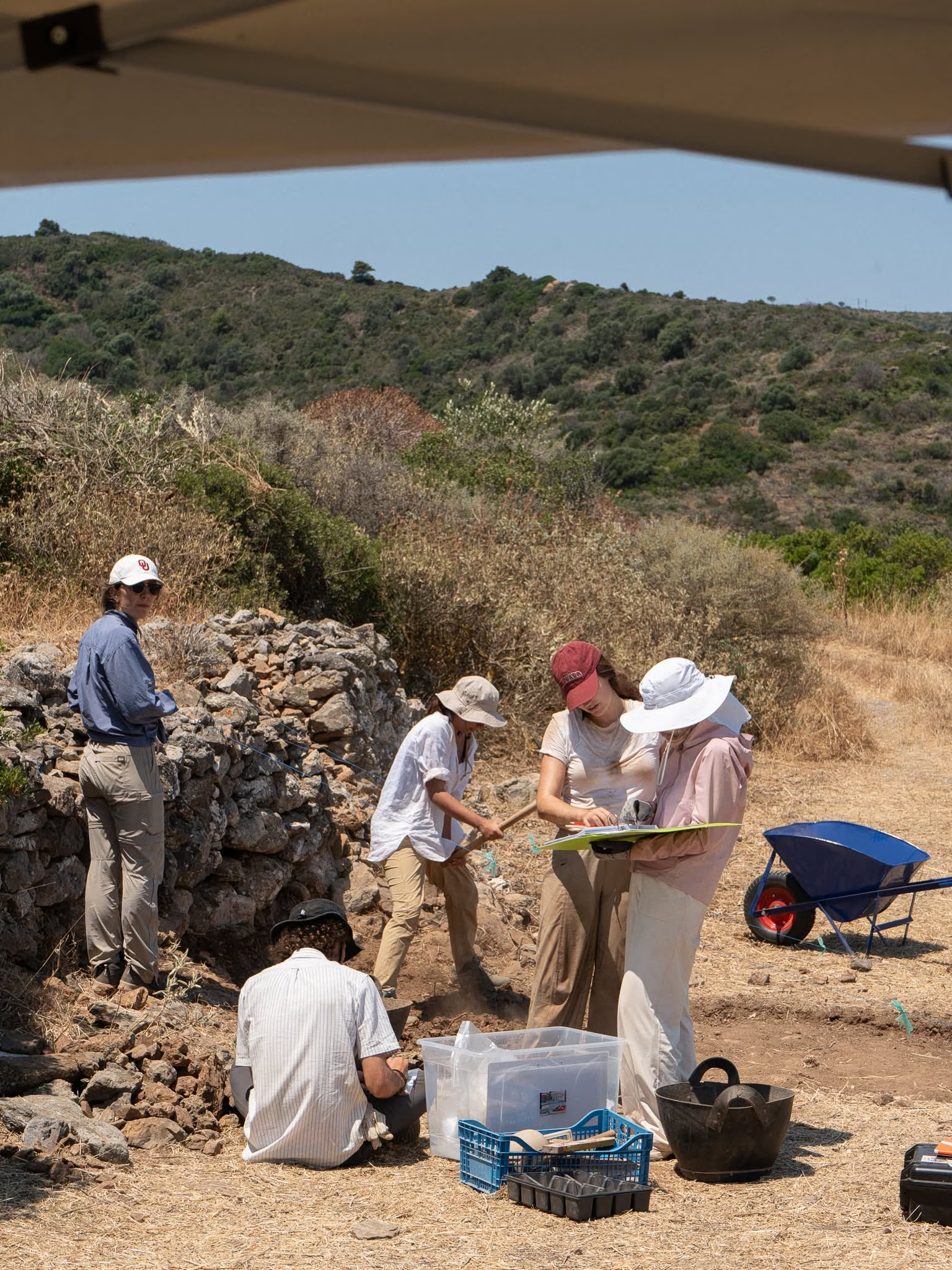
Another day spent at the unearthed archaeological site in Kythera. PHOTOGRAPHS PROVIDED BY EVOKE PROJECT
Alongside the study of artefacts and architecture, historical documents, archival records, oral histories, and local traditions are also examined “to better understand how the community evolved into the modern era and how its inhabitants interacted with both the local environment and wider Mediterranean networks.”
The project also brings together specialists in ceramics, lithics, archaeobotany, zooarchaeology, geoarchaeology, archaeometallurgy, environmental archaeology, digital recording, and Geographic Information Systems (GIS), while incorporating scientific dating methods, photogrammetry, and other advanced analytical techniques. These complementary approaches allow the research team to reconstruct not only the site’s chronology and development but also changing patterns of land use, economy, migration, social organization, and human-environment interaction over millennia, she noted.
The findings will ultimately be disseminated through academic publications, conference presentations, museum exhibitions, educational programs, public lectures, and digital resources, ensuring that the knowledge generated by EVOKE is accessible to both the scholarly community and the wider public.
Science meets archaeology
Discussing the project’s methodology and advanced techniques, Tzortzopoulou-Gregory noted that modern archaeology is an interdisciplinary science, and EVOKE fully embraces this approach.
“Alongside traditional excavation methods, we use high-resolution drone photography, digital mapping, Geographic Information Systems (GIS), photogrammetry to create detailed three-dimensional models, digital recording systems, and comprehensive spatial databases that integrate every piece of archaeological information,” she said.
She also stressed the importance of scientific sampling. In coming seasons, archaeologists will recover flotation samples for archaeobotanical analysis, collect sediment for geoarchaeological study, analyze faunal remains to better understand animal husbandry and diet, and employ scientific dating and other laboratory techniques to establish accurate chronologies.
“These methods enable us to reconstruct not only what people built or used, but also their environment, economy, agricultural practices, and everyday lives with a level of precision unimaginable only a few decades ago,” she pointed out.
A lasting legacy for Kythera
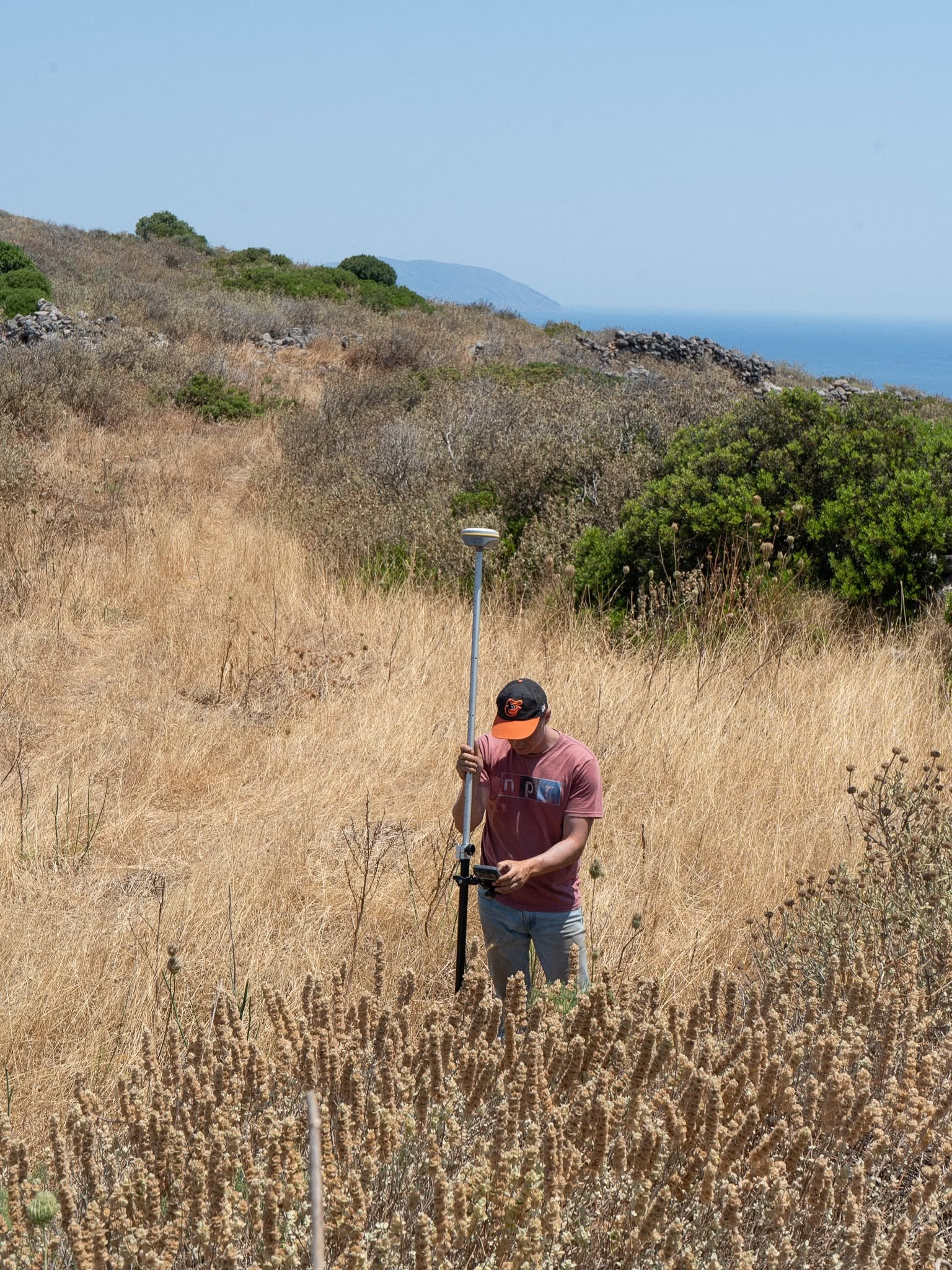
EVOKE embraces advanced tools. PHOTOGRAPHS PROVIDED BY EVOKE PROJECT
EVOKE’s ambitions extend far beyond archaeological research, aiming to leave a lasting legacy for Kythera, its local community, and future generations. According to Tzortzopoulou-Gregory, the project seeks to deepen appreciation of the island’s exceptional cultural heritage while creating opportunities for education, community engagement, and sustainable cultural tourism.
A key pillar of this vision is the active involvement of local residents through public presentations, open excavation days, educational initiatives, and partnerships with local organizations. At the same time, EVOKE serves as an international training platform, offering hands-on field experience to students from around the world while helping prepare the next generation of archaeologists.
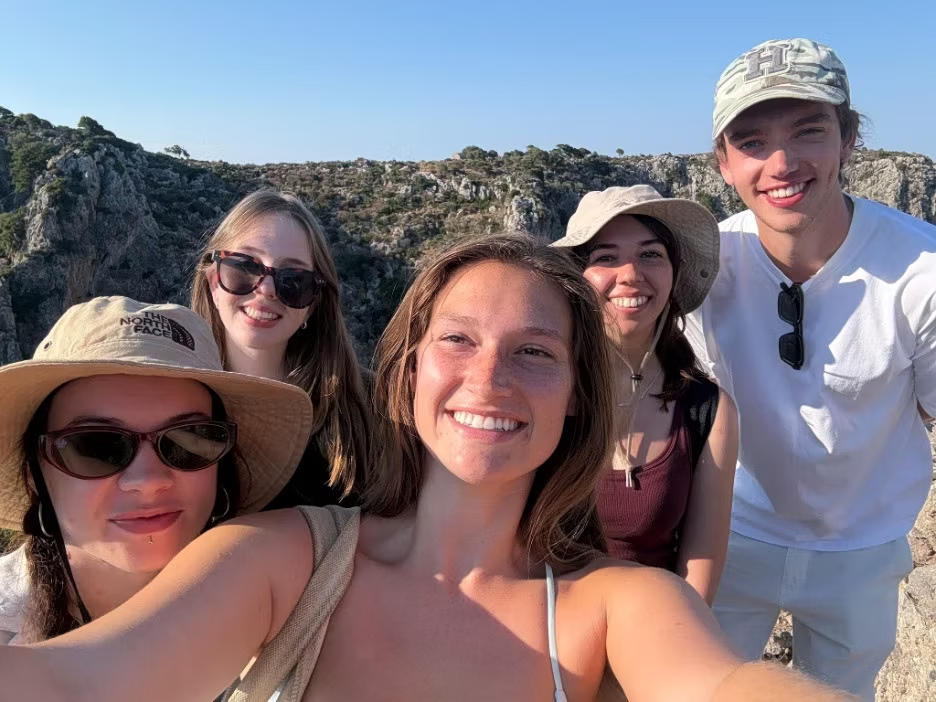
Making friends while exploring Kythera. PHOTOGRAPHS PROVIDED BY EVOKE PROJECT
By combining scientific research with public outreach and education, the project aspires to ensure that its impact endures long after the excavation itself has concluded.
“Ultimately, we hope EVOKE will establish Vythoulas as a site of international archaeological significance, enrich our understanding of Kythera’s unique place within Mediterranean history, and leave a lasting legacy through publications, museum exhibitions, educational initiatives, and long-term partnerships that continue to benefit the island well beyond the duration of the excavation itself,” Tzortzopoulou-Gregory said in her closing remarks.
The inaugural field season of the EVOKE project, led by Professor Tamar Hodos, has now come to a close. The team will return next year, when excavations resume with renewed anticipation that the soil of Vythoulas, on the northeastern side of Kythera, will reveal more of the long-hidden stories of its ancient inhabitants—secrets that have remained buried for thousands of years.