 Μake us preferred on Google
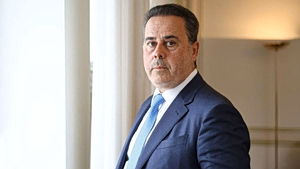
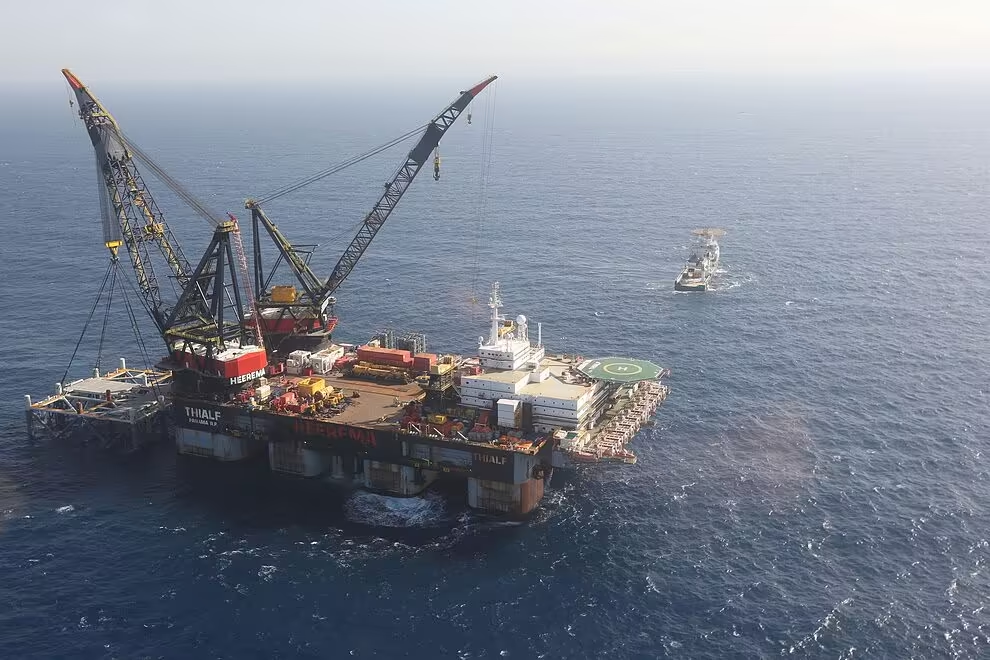
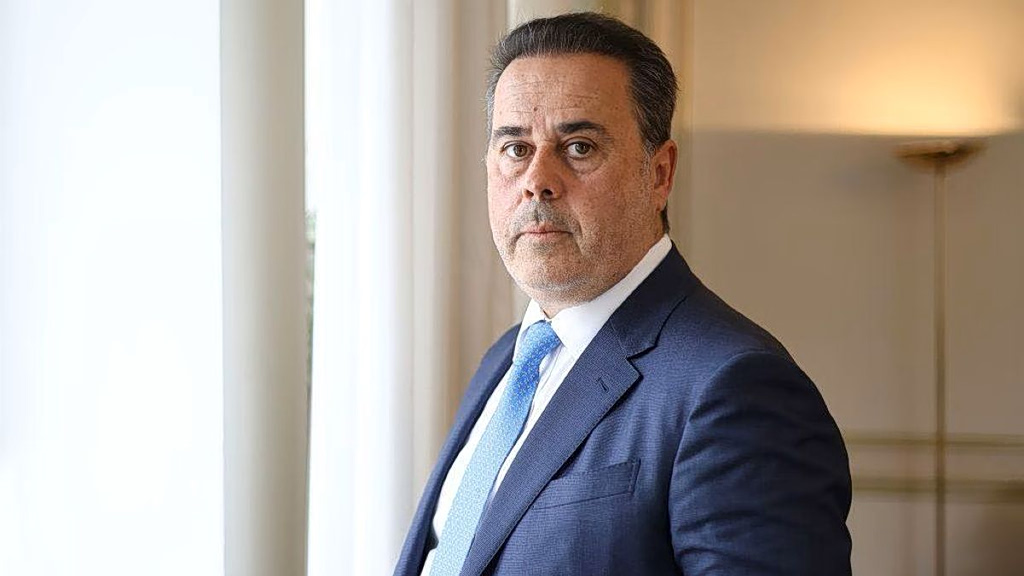
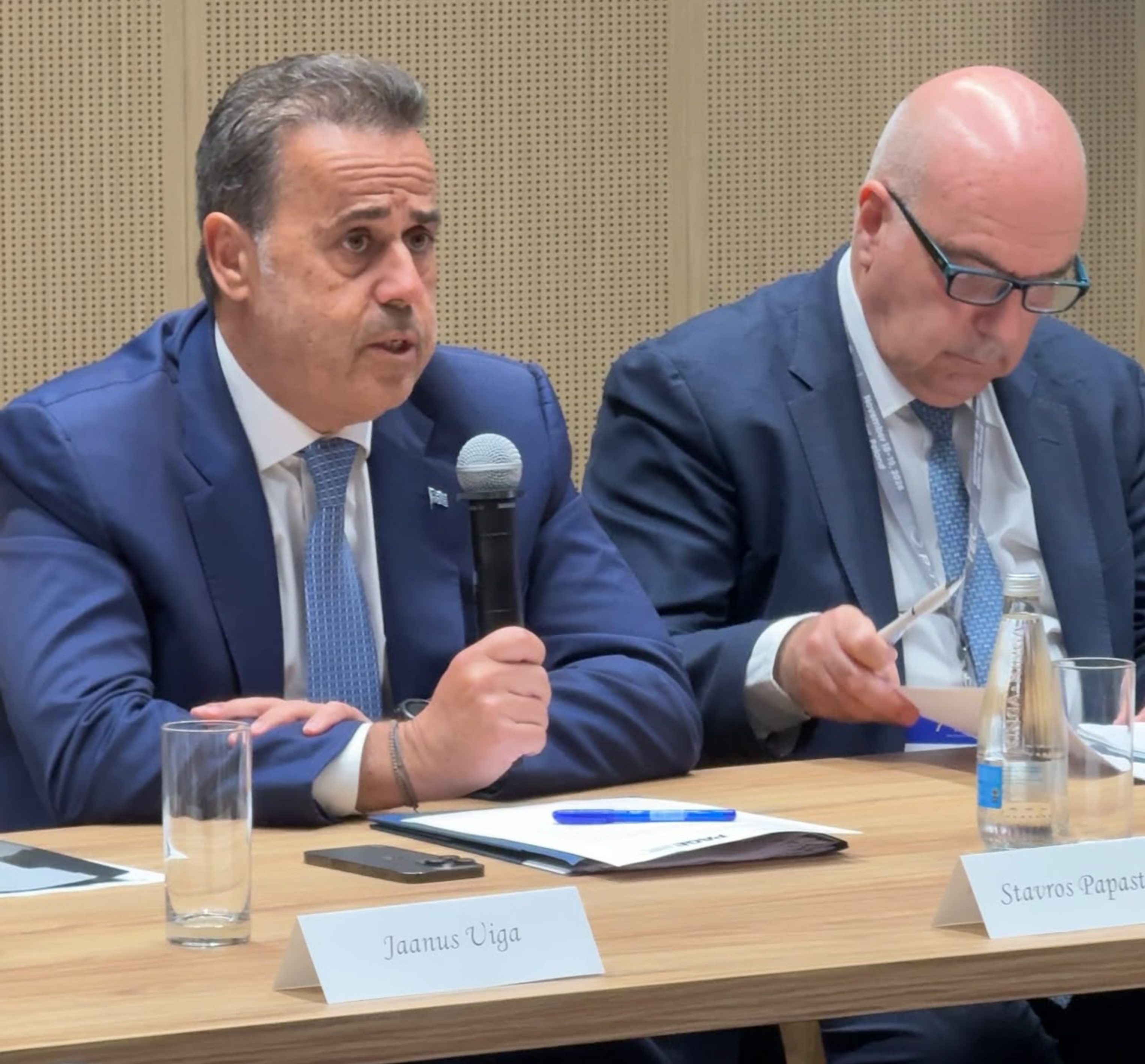
Seismic surveys for hydrocarbons will begin by the end of the week, Environment and Energy Minister Stavros Papastavrou announced in an interview with MEGA TV.
“The environmental Action Plan will be approved today, and by the end of the week the seismic surveys will begin. They will start in the southern Ionian Sea, south of the Peloponnese, and then move south of Crete, with the aim of finding out what undersea wealth our country holds,” he said.
“So, beyond the exploratory drilling that ExxonMobil, Energean and HELLENiQ ENERGY will carry out in the northern Ionian in April, a second area where we are moving ahead with a plan is the southern Ionian and the other areas under concession to Chevron and HELLENiQ ENERGY. The presence of one of the most modern ships shows the interest of the world’s biggest companies in our undersea wealth,” he added.
On The Energy Crisis
Papastavrou stressed that international geopolitical developments, including the war in Ukraine and the crisis in the Middle East, are putting heavy pressure on energy prices. He said Greece’s energy mix, with its large share of renewables, helps keep prices in check. In the first half of 2026, Greek prices were 15% below the European average.
He noted that the support program for consumers continues, with interventions every two weeks depending on fuel price fluctuations. So far, he said, €1.95 billion has been spent on support measures.
He also mentioned the heating allowance, which is 30% higher this year than last year and covers about 1.2 million people.
The minister said the government is seeking more fiscal flexibility at the European level, so that it can provide additional funds for direct support to households.
On the “blue” fixed-price electricity tariff, he said that “for it to work, it requires a 12-month commitment. And what is important to know is that this safe haven exists now. It allows those who do not want to wait and see whether prices come down” to lock in a rate.
“We Are Looking At Measures For Bakeries And Pastry Shops”
Papastavrou left open the possibility of measures for bakeries and pastry shops. “Under the tools Europe provides, there was support for industry, but the truth is that not everyone can be supported to the extent they would like,” he said.
“Bakeries and pastry shops are two types of businesses that are energy-intensive and have come under very heavy pressure.”
He explained that in March 2025 the government ran a program to offset the biggest price increases of the winter months. “It is something we are looking at for the coming months, but for a specific sector of small and medium-sized businesses, as in 2025,” he said. A program would come at the end of March or in April, once there is a clear picture of how much prices have risen. “There has not been a decision yet, but that is the plan.”
On The Cable
On the Greece-Cyprus electricity interconnection, Papastavrou said it is “a very important project, a European project, which will end Cyprus’s energy isolation and could, at a second stage, also connect Israel with Cyprus and Europe.”
“It is moving ahead with a plan, with confidence, without fanfare. The company applied in Greece and in Cyprus. The relevant NAVTEX notices have been issued. It is carrying out the seabed surveys. It will take about four to five months to complete the surveys from Greece to Cyprus,” he said.
According to Papastavrou, construction of the cable is moving ahead at the same time, and cable-laying will begin toward the end of 2027.
“It is a technically complex project, but Greece, Cyprus, France, the European Union and America, since US lawmakers from both the Democratic and Republican parties often refer to it, see it as both important for energy and geopolitically important. And it is moving ahead without turbulence,” he said.
On France’s diplomatic note to Turkey, Papastavrou said: “France chose to give a briefing, which does not create any fait accompli or recognize any right.”
“The most important thing is for all of us to remember, without any criticism, that the Turkish government had repeatedly said this project would not move ahead unless permission was requested from Turkey. And that did not happen.”
He added: “But the most important thing is for all of us to understand that we need to strengthen interconnections. We were talking earlier about the higher costs Greek consumers face. The more connected we are, and the more interconnections we create, the better. There is also a very big project to bring cheap electricity from Egypt to Greece and Europe, the GREGY project. We need to strengthen interconnections because that will also help bring prices down further. Everyone understands this, and fortunately the project is moving ahead without turbulence.”
Asked whether France’s move had been agreed with Ankara, Papastavrou said Meridiam, which joined the project on August 7, is the only company that has carried out a similar project: the UK-Germany interconnection, which has an undersea section. “So the addition of a French giant with the greatest know-how in Europe has, I think, come to secure and strengthen the project’s delivery,” he said.
“So we are moving ahead. It is a project that the European Commission itself supports. When I went to the Council of Ministers in Luxembourg, Mr. Jørgensen himself made a public statement of support. Our 25 counterparts, along with the Cypriot Energy Minister, backed it.”
“It is a European project, funded with €650 million by the European Union, the highest amount of funding Europe gives to a project. It is no longer Greek or Cypriot. It is European. We have joined forces and we are moving ahead,” he said.
He explained that connecting with Cyprus is very useful for Greece. Cyprus is currently isolated in energy terms, and it could later be connected to Israel, from which energy could flow north. “Interconnections are very important right now,” he said.
Energy Storage Is A Complex Issue
Asked why Greece has not done more to store energy, Papastavrou said: “Because we have a large share of renewable energy sources, over 50%, the rise in natural gas prices hits us at half the rate. To put it simply, half of the energy mix comes from renewables. We are the 12th lowest in Europe, according to Eurostat.”
“We fell behind on storage because it was complex. We had to create grid capacity and invest in infrastructure, because batteries and storage need grid capacity to connect,” he said.
He gave the following figures for connected storage capacity:
- March 2026: zero megawatts.
- April 1: the first 32 megawatts.
- Today: 750 megawatts.
- Goal: he hopes Greece will reach 3 gigawatts by 2028.
“A ministerial decision for specific batteries was signed last week. It is an area where I have the honesty to say we had fallen behind, and now it is a priority,” he stressed.
On The Lignite Phase-Out
On the phase-out of lignite, Papastavrou said: “Lignite in Greece is polluting, given the quality of the lignite we have. When you produce power from lignite, you now have to pay for emissions allowances. The allowance system, the ETS, makes it uneconomical. It may be economical for one, two or three days, but not for the other 300.”
“The lignite phase-out, to call things by their name, is a path our country has followed for the past 20 years. In 2019, when Mr. Tsipras handed over power, the phase-out was already 65% complete. Mr. Tsipras, who now goes around saying it is bad, passed the baton at two-thirds.”
“The thermal value of our lignite is not the same quality as Germany’s. So, with the allowances you now have to pay under the European carbon emissions trading system, it is not productive. That is the reality,” he said.