 Μake us preferred on Google
A local community can agree that the climate crisis demands urgent action and still ask why a project is being planned in this particular place, on these particular terms. The question does not make it an enemy of progress. It makes it a party to a decision whose consequences it will live with. If the green transition needs citizens only at the moment they are required to consent, something essential has been lost before the works even begin.
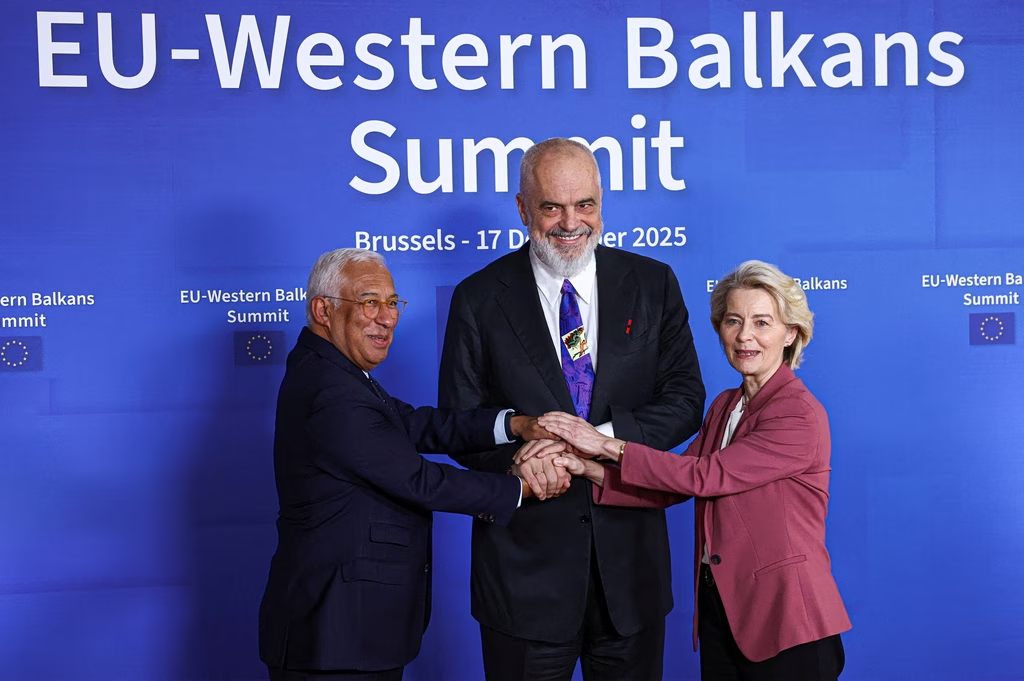
On 18 November 2026, the Council of the European Union and the European Parliament reached a provisional agreement on faster permitting for renewable energy, grid and storage projects. The agreement has not yet received final approval. It provides for the possibility of prioritizing renewables and electricity grids under a presumption of overriding public interest. It also includes principles of citizen participation, dialogue with an optional independent mediator, and fair benefit-sharing with local communities for renewable projects above 7 MW.
This coexistence of speed and participation is the politically critical point. The European announcement acknowledges that the social dimension cannot be absent. The question is what that will mean in practice: a real ability to shape the design, or better communications management of a decision that has already been made?
Acceleration is necessary. Delays in clean energy infrastructure carry a cost, as do dependence on imported fossil fuels and the postponement of decarbonization. An administration that lets files circulate unanswered is not defending democracy. It is simply not doing its job. There is no reason to idealize bureaucracy just because we resist bypassing citizens.
But we need to be clear about what exactly we are accelerating. Removing unnecessary administrative stages is one thing; shrinking the time a community needs to understand a project and formulate a reasoned position is another. The first can improve a process. The second can make it faster on paper and more confrontational in reality.
“Overriding public interest” must not function in public debate as an answer that abolishes all questions. A shared European goal does not make every siting decision, every technological choice or every distribution of burdens self-evidently optimal. Defending the transition requires us to distinguish its necessity from the quality of a specific project. Otherwise, climate policy risks demanding trust precisely where it avoids giving explanations.
Citizens need timely access to understandable information, genuine alternatives and answers to their objections. Participation has substance only when something can still change. If people are called in after the key choices have been locked in, consultation becomes a ritual of validation. And when a resident has to spend personal money on technical advisers in order to understand what is being proposed for their own place, formally equal access does not guarantee an equal voice.
This does not mean that every objection should acquire a veto. Local communities are not homogeneous, nor does every organized group speak for all residents. Interests may clash, inaccuracies may circulate, and the needs of other areas may be overlooked. That is why transparent weighing procedures and reasoned decisions are required. Democratic participation does not promise that everyone will agree. It demands that it be possible to explain why one position was accepted and another rejected.
Equally critical is who benefits. Benefit-sharing must not be treated as a price paid to make opposition go away. Nor can a financial payment substitute for environmental scrutiny. What is needed are clear, verifiable commitments to the local community, with attention also to those who own no land, hold no capital and have no access to the powerful. A just transition cannot be reduced to deals with those who already hold the most bargaining power.
Here we meet a related question raised at the third regional conference of the Youth Climate Diplomacy Forum for South-East Europe, titled “Securing Our Future: Youth Diplomacy Across Water, Fire, Earth & Wind”. Its official 2026 presentation sets as its goal a shift from young people’s participation as mere involvement to their institutional representation in climate diplomacy. It is not part of the European legislative agreement. But it exposes the same gap between being invited into the conversation and having a meaningful role in it.
Young people are not a decorative promise for tomorrow. They are today’s citizens, who will live for decades with the infrastructure and commitments being decided now. If we ask them to change their habits, take responsibility and trust the transition, we owe them stable ways to take part in designing and overseeing it. An invitation to a panel is not institutional representation. The value of such initiatives will be judged by whether their proposals gain a follow-up beyond the event itself.
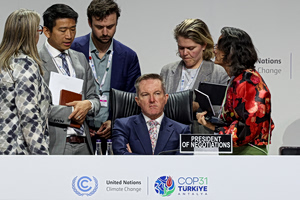
The same demand applies from a European negotiation to a municipality hosting an energy project. Trust requires a visible ability to influence outcomes and accountability for what was agreed. It is not enough to explain to people why they must accept a change. They must be able to see where their own knowledge was heard, how their place was protected and what will return to their community.
The climate crisis leaves us no luxury of inaction. But it does not release us from the obligation to decide democratically. If Europe wants the transition to endure socially and politically, it must invest also in the capacity of its institutions to listen, to respond and to correct course.
If we are building a sustainable future, but those who will live in it are asked only to accept it, for whom exactly are we building it?