
 Μake us preferred on Google
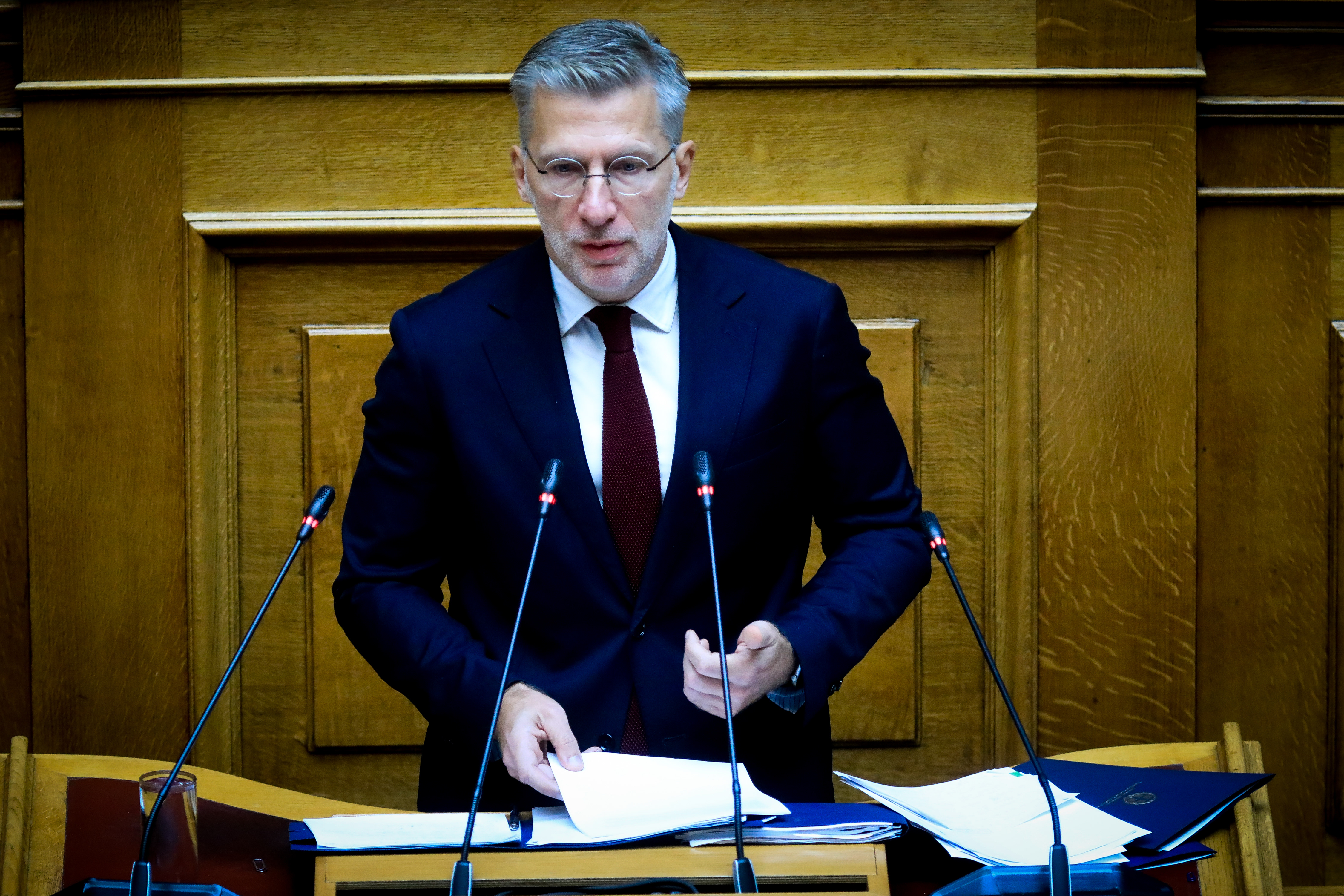
Greece recorded the eighth-largest increase in real disposable income among European Union member states between 2019 and 2025, State Minister Akis Skertsos said, citing Eurostat data. However, he acknowledged that households continue to struggle with the rising cost of living and that the income gap between Greece and wealthier EU countries remains substantial.
In a post comparing Eurostat figures, Skertsos argued that the picture of income trends in Greece changes significantly depending on whether 2010 or 2019 is used as the starting point.
He referred to a chart from Eurostat’s EU Statistics on Income and Living Conditions (EU-SILC) survey, published the previous week, which placed Greece last in the EU for the change in real disposable income between 2010 and 2025.
Skertsos said the chart measures the percentage change in income from a common baseline rather than comparing the actual disposable income levels of different countries. It assumes that each country’s income stood at 100 in 2010 and tracks how much it subsequently increased or declined.
This distinction, he argued, helps explain why several Eastern European countries appear near the top of the ranking despite still having lower income levels than countries in Central and Western Europe.
According to Skertsos, the comparison also needs to account for Greece’s severe debt crisis and the prolonged recession that followed, which he said reduced national income by 27%, or nearly one-third, during the previous decade.
While Greek incomes were collapsing, he added, the rest of Europe’s economies were growing and incomes were rising, further widening the gap between Greece and its European partners.
Greek real disposable income stood at 63.7 in 2019, using 2010 as the baseline of 100. By 2025, it had recovered to 77.7.
Real incomes grew 22% between 2019 and 2025
Using 2019 as the starting point produces a different picture, Skertsos said. Between 2019 and 2025, Greece recorded a 22% increase in real disposable income, after accounting for inflation, compared with an EU average increase of 14%.
That placed Greece eighth among EU countries, with stronger growth than 19 other member states, according to the minister.
Skertsos stressed that the figures should not be a cause for celebration, as the gap between Greek incomes and those in the EU’s most developed economies remains considerable.
He argued, however, that closing that gap depends on Greek real incomes growing faster than the EU average, adding that this had been happening over the past seven years.
The minister also acknowledged the continuing financial pressure on households, noting that inflation makes it difficult for many families to cover basic expenses, including rent and monthly grocery bills.
“ We know that inflationary pressure makes it difficult for many families to pay their rent or cover their monthly grocery shopping,” he said, while maintaining that Greece was moving in the right direction.
Skertsos said the government’s policies were contributing to rising real incomes and a gradual narrowing of the gap with the rest of Europe.
He concluded that statistical surveys and charts can produce different interpretations depending on the period selected for comparison and how the figures are understood.