The image is striking: a modern cinema audience sitting in darkness, faces illuminated by the glow of a vast mythological world unfolding on screen. On one side of the room, a teenager watches Odysseus battle monsters and gods; on the other, an older viewer holds a newly purchased copy of Homer’s Odyssey, turning the pages of a poem written almost 3,000 years ago. Between the two worlds—Hollywood and Homeric Greece—a new cultural phenomenon is emerging.
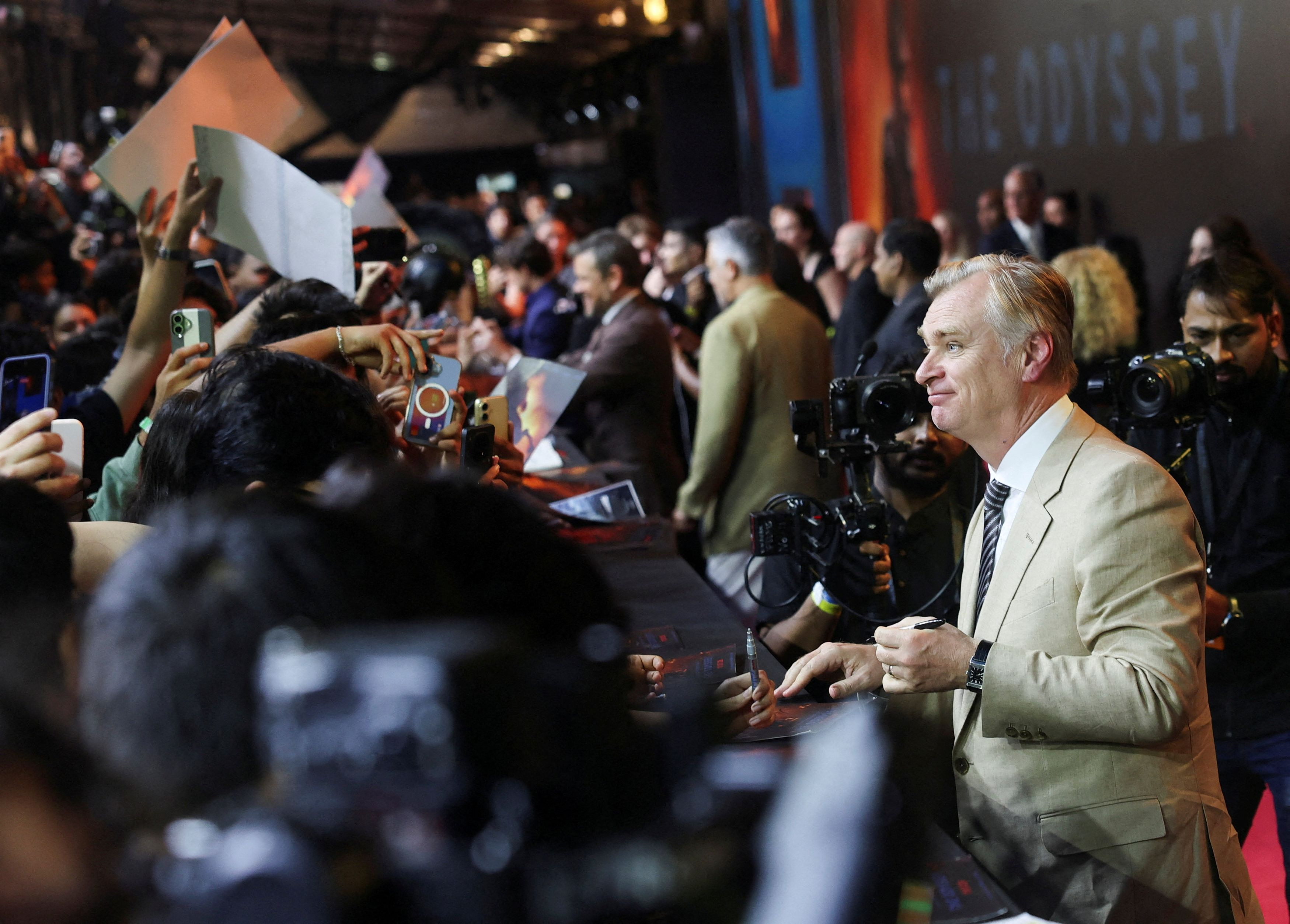
Filmmaker Christopher Nolan interacts with fans on the red carpet during the Mumbai premiere of The Odyssey, in Mumbai, India, July 11, 2026. REUTERS/Francis Mascarenhas
The release of Christopher Nolan’s The Odyssey has created what academics are calling an “Odyssey effect”: a wave of renewed public curiosity about Homer, Ancient Greek literature and the classical world. Universities, translators, tutors and publishers are reporting increased interest, but the crucial question remains: can the excitement generated by cinema become a lasting engagement with one of humanity’s greatest literary works?
Speaking exclusively to TO VIMA, leading classicists from Britain’s top universities say the opportunity is enormous—but transforming cinematic enthusiasm into genuine intellectual curiosity will require effort.
“The million-dollar question is what happens next” – Tim Whitmarsh on turning viewers into readers
For Tim Whitmarsh, the success of Nolan’s film represents a rare opportunity for classicists.
“It’s been a huge success and people are also talking about the reaction of classicists to the film,” he says. “So we’ve got a lot of opportunity here. But whether we can actually turn that into genuine interest in reading The Odyssey, even in translation, that’s the million-dollar question.”
Professor Whitmarsh argues that The Odyssey is particularly well placed to attract modern audiences because, unlike many ancient works, it possesses the qualities of a contemporary novel.
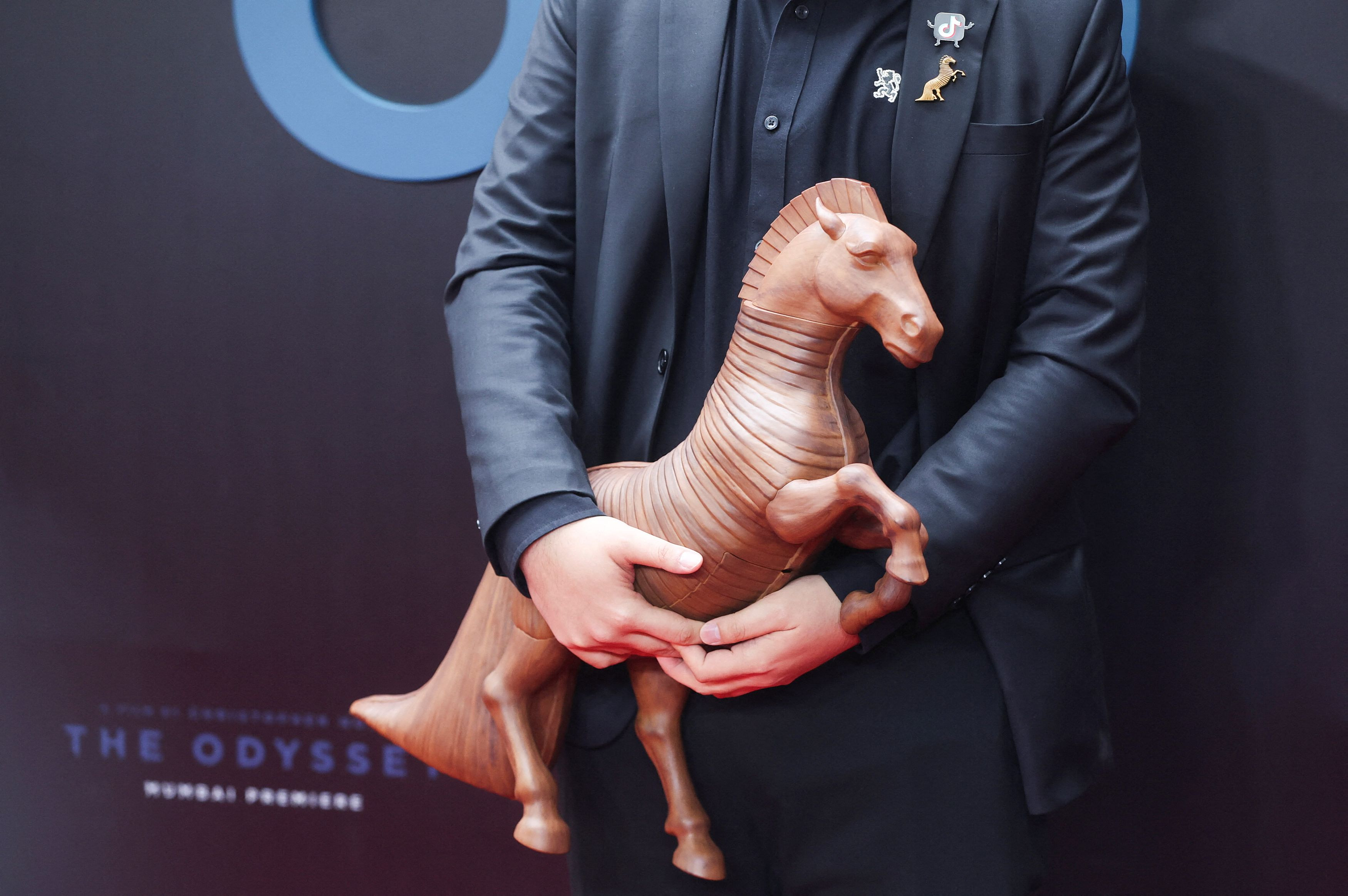
An social media influencer holds a replica of a Trojan horse on the red carpet during the Mumbai premiere of The Odyssey, in Mumbai, India, July 11, 2026. REUTERS/Francis Mascarenhas
“It’s good that it’s The Odyssey rather than The Iliad,” he says. “I think that The Odyssey is much more readable for modern readers. It’s more like a novel, it’s more exciting, more varied, and it has more narrative complexity than The Iliad.”
However, he warns that increased book sales alone cannot prove a cultural revival.
“A spike in sales of The Odyssey is not necessarily evidence of anything because we all know people can buy books and then not read them,” he says. “The real question is how we in the profession work hard to translate the current interest into genuine academic interest in antiquity.”
For Whitmarsh, even a relatively small conversion rate would represent success.
He points to a video he made after the film’s release with colleagues discussing the epic from a classicist perspective, which attracted around 65,000 views. A follow-up video teaching viewers how to read the opening lines of The Odyssey in Ancient Greek attracted far fewer viewers – around 1,200.

“That’s the translational issue,” he explains. “Interest in a Hollywood movie is one thing. Translating that into academic interest, which involves quite a lot of brain work, is a difficult challenge.”
Yet he sees reason for optimism.
“If 60,000 people watched a discussion of the movie and 1,200 were genuinely interested enough to try to get their teeth into a little bit of Greek, that is a real result. That is one person in 60 who found themselves interested in Ancient Greek who wouldn’t otherwise have been.”

A new generation discovering Homer
At Durham University, Edith Hall believes the impact is already visible.
“Yes, absolutely, we’re already seeing it,” she says. “I’ve had numerous emails and messages from people saying they want to do Classics. How do they get to do a Classics degree?”
Hall also points to the dramatic rise in demand for translations, particularly the acclaimed version by Emily Wilson.
“She is a friend of mine and has told me that sales of her book have gone through the roof over the last 10 days,” Hall says.
She believes the film could have a lasting cultural impact, even if enthusiasm naturally declines over time.
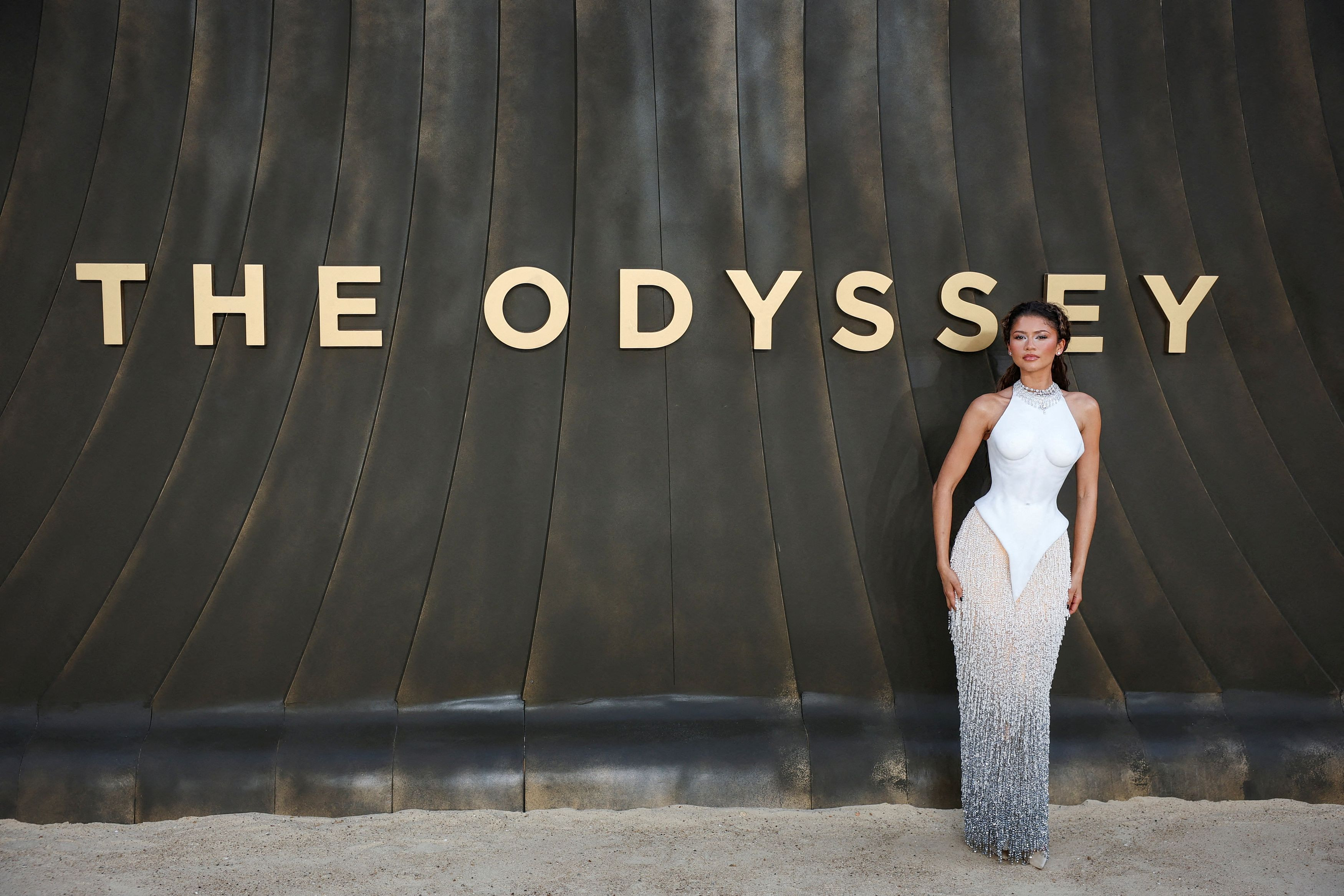
Cast member Zendaya attends the “The Odyssey” world premiere in London, Britain, July 6, 2026. REUTERS/Isabel Infantes/File Photo
“I think there’ll be a bit of a fall off after two or three years, but I think a whole generation of teenagers now will know the main story of The Odyssey,” she says. “Every time it’s discussed or there are new adaptations or versions, it becomes more and more consolidated as one of the greatest pieces of literature.”
For Hall, the enduring power of Homer lies in the universality of the story.
“The nostos theme, the homecoming, is absolutely archetypal,” she explains. “You have homecoming myths in every culture of the world. You never really can come home, because the home will not be the same, you will be changed and the home will be changed.”
She compares the renewed interest following Nolan’s film with the post-war popularity of the Penguin translation by E.V. Rieu, which became a bestseller for two decades after the Second World War.
“That was a time when so many families had their men returning from war,” she says. “The themes of The Odyssey resonated because people were thinking about return, separation and rebuilding lives.”
Hall believes the epic’s versatility explains why it continues to attract new audiences.
“It’s not just a homecoming story,” she says. “It’s also like a revenge movie, a romance, a travelogue, a road movie – and it’s the mother of science fiction.”
The monsters and strange worlds Odysseus encounters, she argues, anticipate modern storytelling from science fiction to fantasy.
“It’s like Captain Kirk arriving on a different planet in every episode of Star Trek,” she says.
Tutors and publishers see the ‘Odyssey effect’ in real numbers
The renewed fascination is also being felt beyond universities.
Joe Hytner, Founding Director of Titanium Tutors, told TO VIMA that demand for Classics lessons has increased following the film.
“It’s been very pleasing to see an upsurge in demand for Classics lessons,” he says. “Beyond the business side, it’s deeply heartening to see interest being revitalised for a subject that has sometimes been thought to be at risk in a world that focuses more and more on science and technology.”
Hytner says four recent requests specifically for Ancient Greek lessons came from people who cited the movie as their inspiration. Two were adult learners already interested in the classical world, while two were university students studying unrelated subjects who became fascinated by Homer after watching the film.
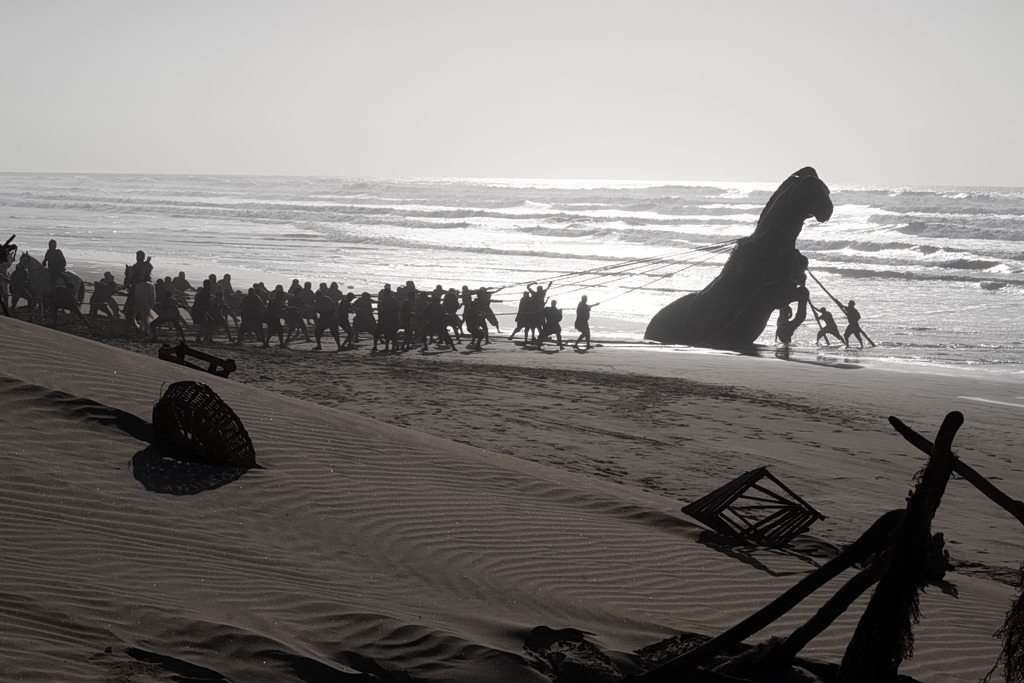
Photo by Melinda Sue Gordon © Universal Studios. All Rights Reserved.
Publishers are seeing similar trends.
Philip Stone, Head of Publisher Account Management at NielsenIQ BookData, told TO VIMA that Homer’s The Odyssey has become the bestselling poetry book of 2026 so far, following the success of Nolan’s adaptation.
He notes that printed poetry sales in the UK are currently at their highest level since official records began in the late 1990s, suggesting that the film arrived during an already growing interest in poetry.
Oxford’s Armand D’Angour: ‘Nolan has certainly been good for business’
Armand D’Angour believes the cultural impact could extend well beyond one film.
“Definitely,” he says. “It has been a huge event, with millions turning out to watch it. Controversy about it has helped publicise it further.”
He says many viewers are now seeking information about Homer and Ancient Greece.
“There has been a vast increase in discussions on social media and inquiries into online sources of information about Homer and Ancient Greece,” he says.
“Nolan has certainly been good for business.”
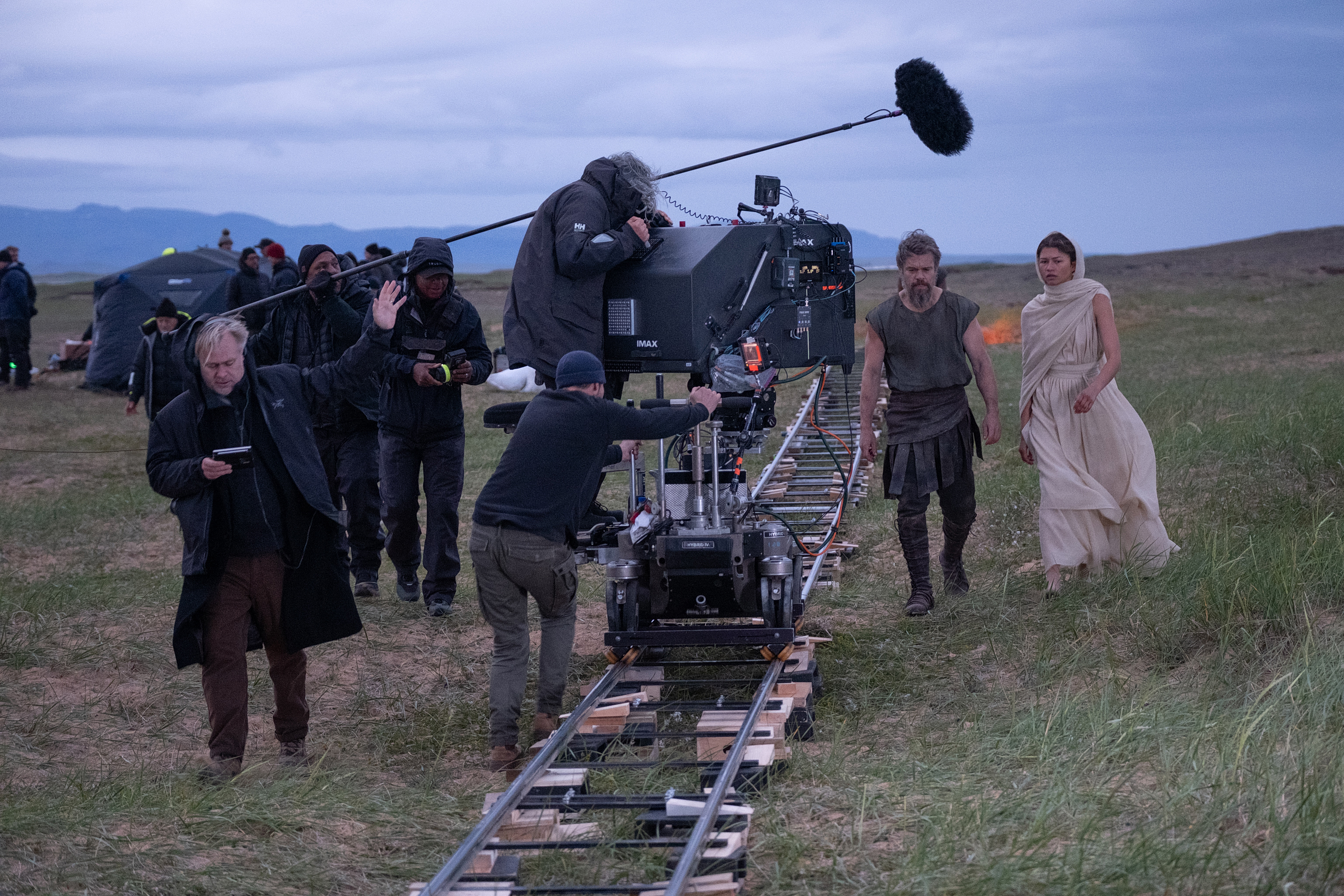
Director Christopher Nolan (frame left) with Matt Damon (as Odysseus) and Zendaya (as Athena), on set of The Odyssey. Photo by Melinda Sue Gordon/Universal Studios
D’Angour points to the popularity of translations as evidence that audiences are moving from cinema towards the original text.
“People have turned from the film to read the epic itself,” he says.
He believes the reasons for The Odyssey’s continued appeal are timeless: revenge, love, memory, friendship, fate and the desire to return home.
“The notion of taking revenge on one’s enemies is surprisingly satisfying, and is a core element of Odysseus’s return,” he says. “The idea of a nostos, a homecoming, is always appealing and touching.”
The challenge: separating myth from history
The academics agree that adaptations inevitably change the original.
Whitmarsh says he is not overly concerned about historical inaccuracies.
“It is a Hollywood movie. All Hollywood movies misrepresent the past,” he says.
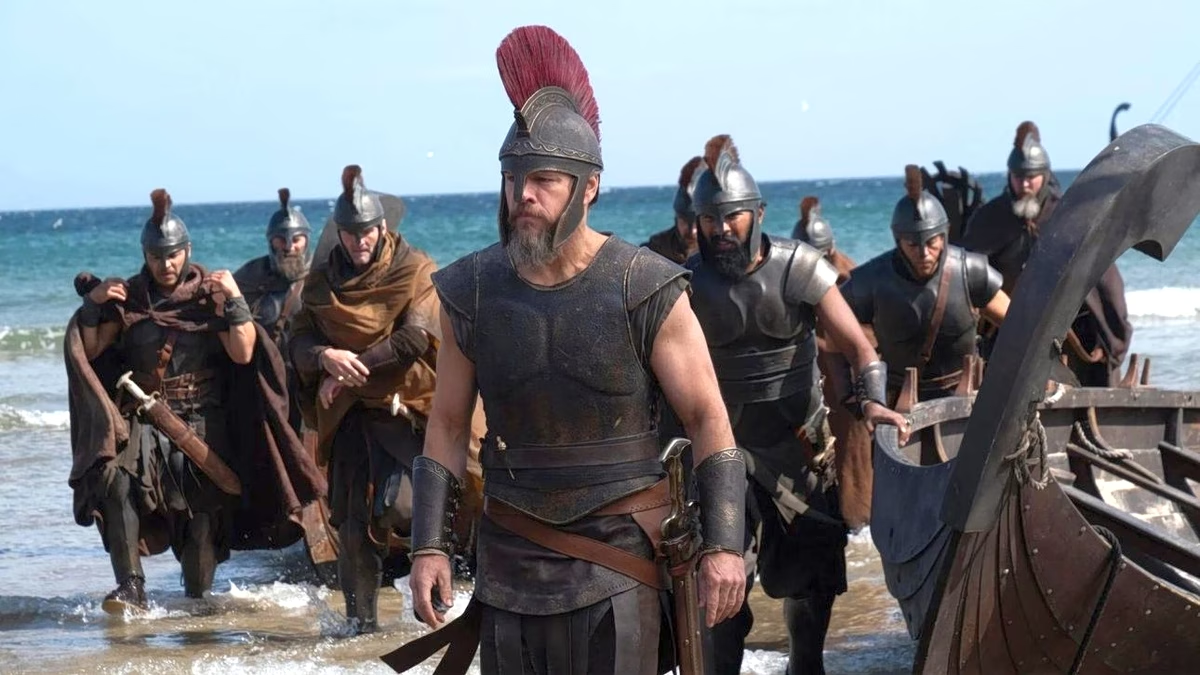
The characters do not speak Greek, the armour is not historically accurate, and Nolan has altered parts of Homer’s ending. But Whitmarsh believes such changes are necessary.
“If you’re a director, your first obligation is to make a good movie,” he says.
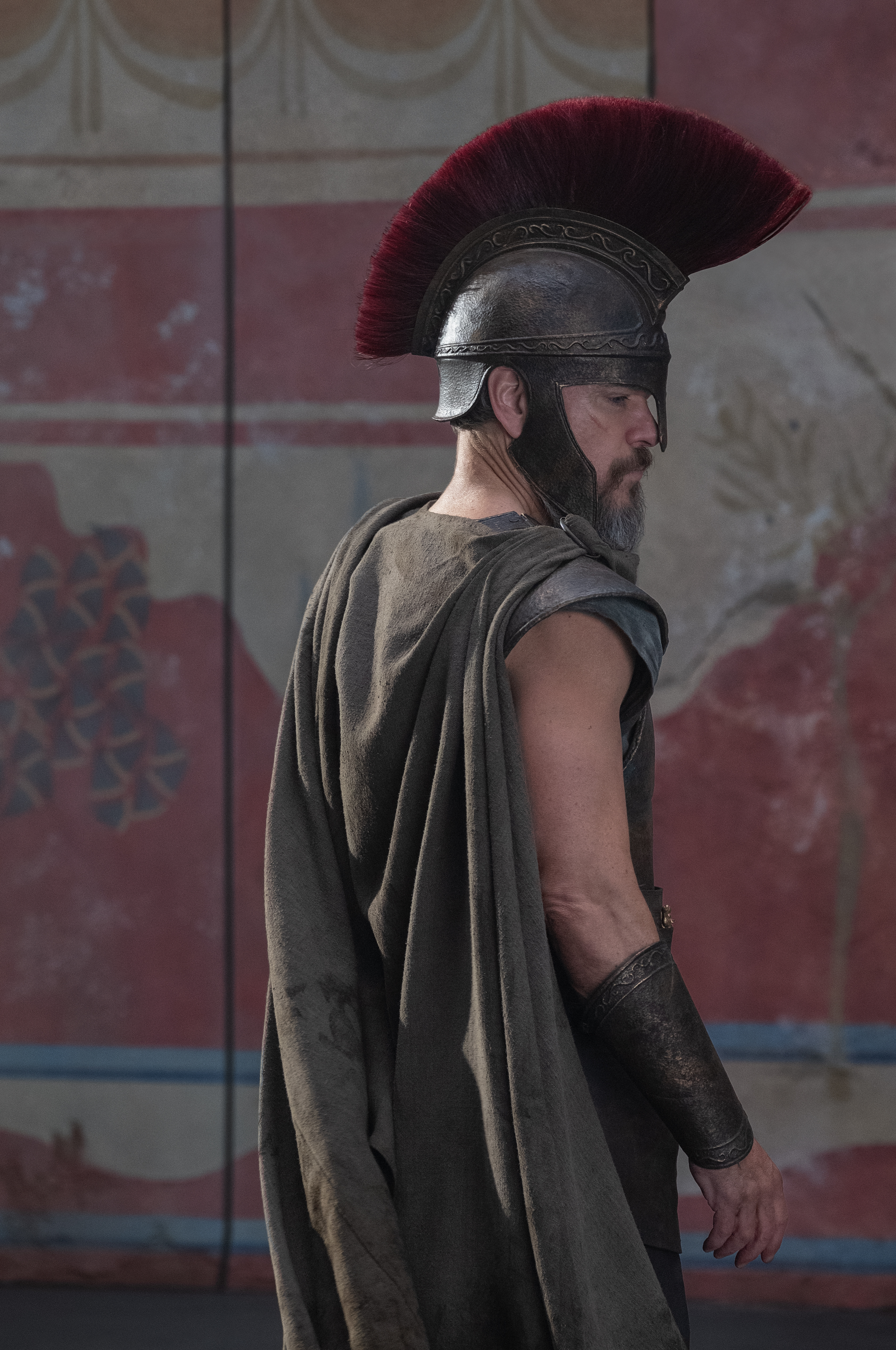
Matt Damon is Odysseus in Christopher Nolan’s film The Odyssey. Photo by Melinda Sue Gordon/Universal Studios
D’Angour similarly warns that films can create misconceptions, but argues that the benefits outweigh the risks.
“The greatest misconceptions are that the ancients were either irredeemably alien — or, conversely, ‘just like us’,” he says.
For Hall, the real value lies in curiosity.
She describes a conversation with her personal trainer, who had never previously read much literature but loved the film and asked for a translation of The Odyssey.
“She asked me to explain the Clytemnestra story,” Hall says. “She got really excited and said, ‘I must go and read more about that.’”
For Hall, that moment captures the true meaning of the Odyssey effect.
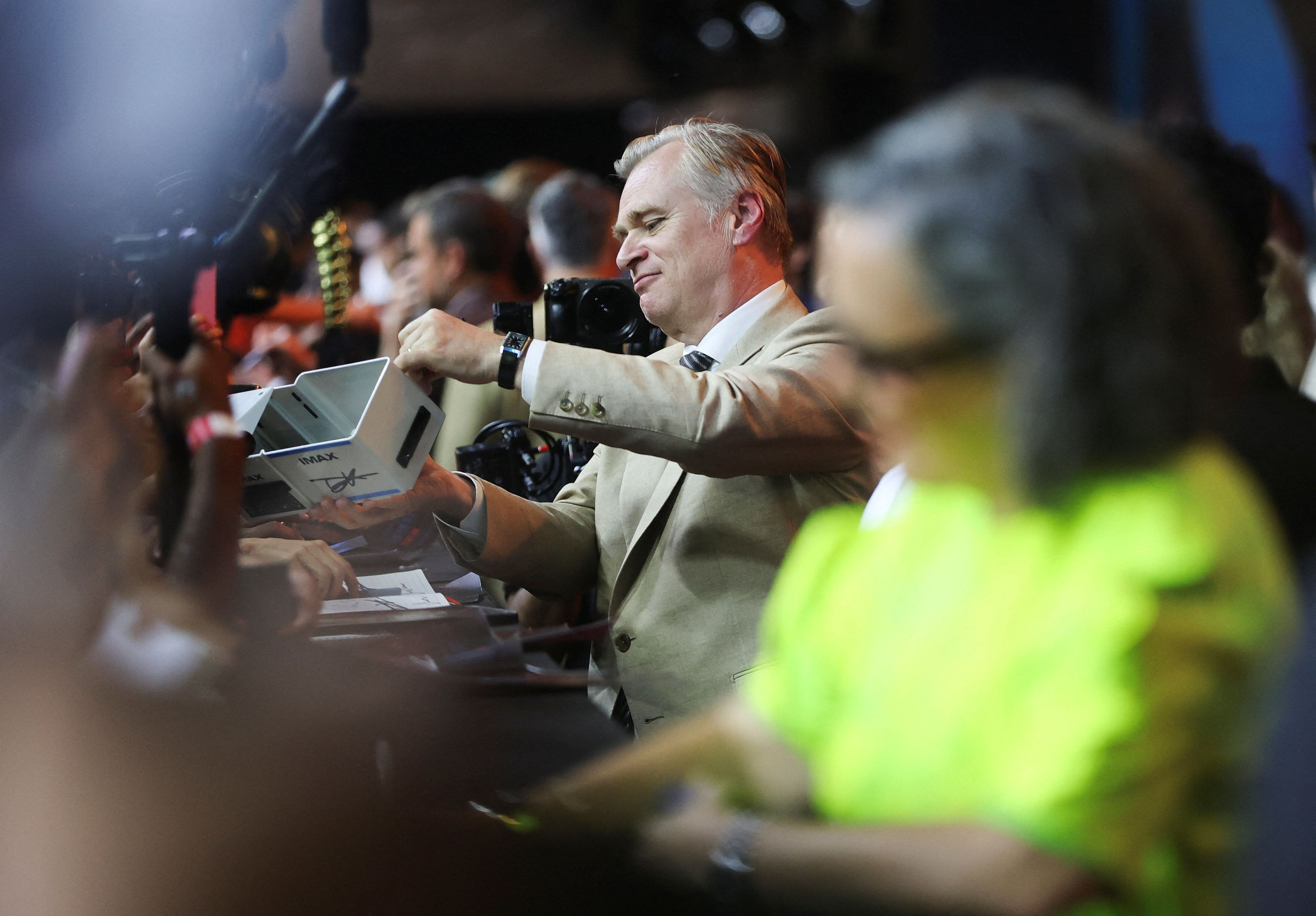
Filmmaker Christopher Nolan signs memorabilia on the red carpet during the Mumbai premiere of The Odyssey, in Mumbai, India, July 11, 2026. REUTERS/Francis Mascarenhas
A Hollywood film may not turn millions of viewers into classicists overnight. But it can create something more important: a first question, a first book, a first encounter with Homer.
Nearly three millennia after Odysseus began his journey home, a new generation may be beginning its own journey into the ancient world.