Homer’s epics, The Iliad and The Odyssey, have served as a source of inspiration for Hollywood for decades. The American film industry has produced a series of blockbuster adaptations, drawing millions of moviegoers eager to see the legendary heroes of ancient Greece brought to life on the big screen. The latest such undertaking is Christopher Nolan’s The Odyssey. The question, however, is this: to what extent should filmmakers be allowed to alter or reinterpret timeless masterpieces such as Homer’s epics in the name of “creative freedom”?
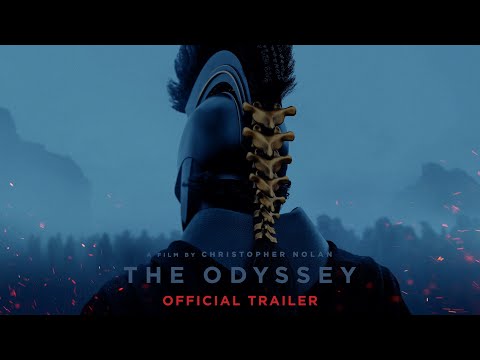
3.000 years on, the debate continues
At a time when self-proclaimed Western intellectuals and filmmakers proudly advocate for inclusion, respect, and the accurate representation of cultural heritage in adaptations of historical literature, shouldn’t those same principles apply to Greek cultural heritage, as well? Or is it somehow the exception?
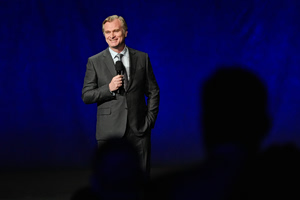
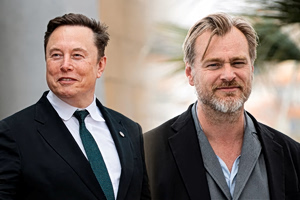
Now these questions—and several others—have sparked an “epic” controversy focused on the upcoming adaptation of The Odyssey by world-renowned director Christopher Nolan.
From Cinecittà to Christopher Nolan
The Odyssey returned to the screen recently with Uberto Pasolini’s The Return (2024), an adaptation of the final book of Homer’s epic that shifts the focus from adventure to Odysseus’ long-awaited homecoming.
Earlier screen versions were captivated by the hero’s legendary journey, rather than his return to Ithaca. In the summer of 1997, one of Athens’ major cultural events was the premiere at the Odeon of Herodes Atticus of Andrei Konchalovsky’s American television miniseries The Odyssey, starring Puerto Rican actor Armand Assante. The production highlights Odysseus’ encounters with the Cyclops, Aeolus, Circe, and Calypso, racing through the epic’s most celebrated adventures in the style of a lavishly illustrated retelling.

More than four decades earlier, Kirk Douglas had portrayed the King of Ithaca in Ulysses, directed by Mario Camerini. Produced during the golden age of Rome’s Cinecittà Studios—the “Hollywood on the Tiber” era—the film embraced myth and fantasy through visual effects that amazed audiences at the time and now exude a distinctly charming artificiality.
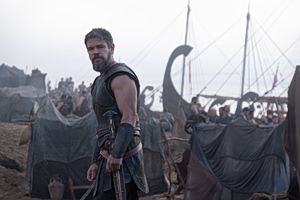
Nolan’s $250 million production began filming in Greece in early March 2025, following the arrival of Matt Damon, who portrays Odysseus. On-location shooting took place across several iconic Greek sites, including Acrocorinth and the Messinia region—Almyrolakka beach, historic Methoni castle, and the famously scenic Voidokilia bay.
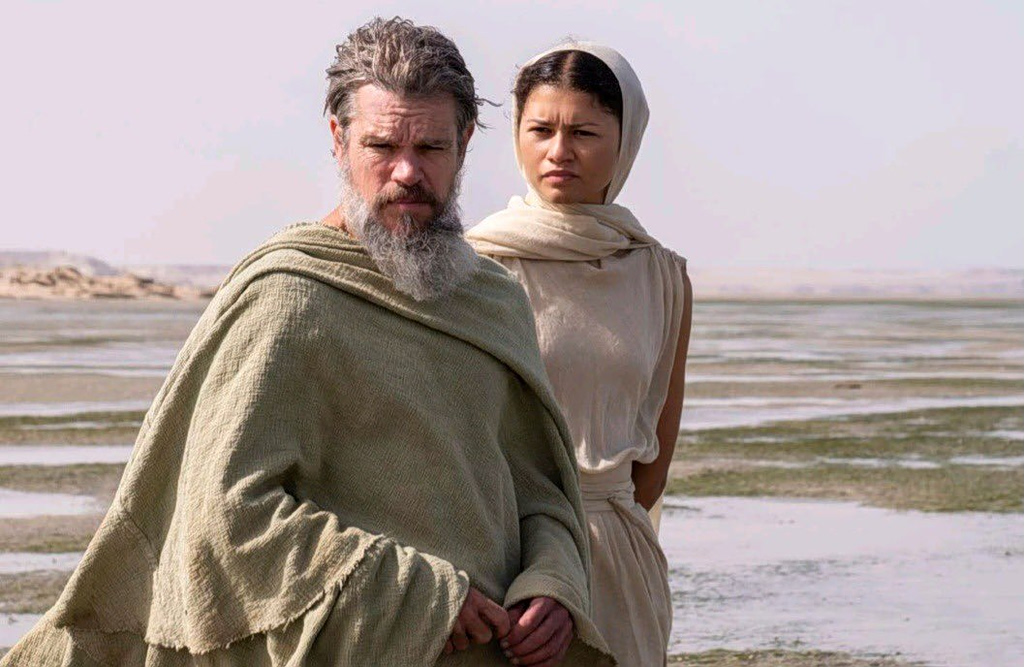
Matt Damon and Zendaya, as Odysseus and Athena, in a still released from Nolan’s “The Odyssey” earlier this year.
It was also reported that the Greek state contributed €6.5 million in public funding to the production—a figure accessible on the Diavgeia transparency portal. In other words, Greek taxpayers helped finance a film rooted in their own cultural heritage and shot on their own soil, but paradoxically featuring not a single Greek actor.
The diaspora speaks
Since the production released its first trailers and announced its cast, a wave of reactions has swept across social media platforms and YouTube, with audiences from around the world expressing their fury in what has become an unprecedented backlash.
Amid this global outcry, members of the Greek Diaspora took a collective stand for the first time—not as scattered voices on social media, but as a unified front. In May 2025, The Greek City Times published an open letter to Christopher Nolan on their behalf: “We did not vanish!” they declared.
Greek City Times published an open letter to Christopher Nolan’s The Odyssey this week. It reads in part:
“We did not vanish. Greek people did not disappear after the age of myth. Greek culture was not frozen in classical marble. We are still here. For more than 3,000 continuous… pic.twitter.com/RFf4fddImQ
— Fandom Pulse (@fandompulse) May 27, 2026
The letter traces more than 3,000 years of Greek identity, arguing that it has endured not by remaining static, but by continuously adapting—from the Mycenaean world and the Homeric epics, through the Classical and Hellenistic eras, the Roman and Byzantine periods, and the centuries of Ottoman rule through to the modern Greek state as part of Europe and the wider world. Throughout all of this, the Greeks emphasized, “something essential remained unbroken: language, memory, and cultural continuity.”
‘Playing Ulysses was the role of my life’
Thanos Veremis, a Greek historian and emeritus professor at the National and Kapodistrian University of Athens with a deep knowledge of Homeric literature, shared his views with TO BHMA International—on the upcoming film, but also on how Hollywood filmmakers broadly understand and approach ancient Greek literature.
On the subject of casting, Veremis notes that there are several Greek actors who could have been included. “It’s a pity they didn’t include Greek actors,” he says, adding that he finds the omission very strange. He also expresses reservations about Matt Damon in the role of Odysseus, arguing that his Anglo-Saxon appearance fails to convey the quintessentially Greek cunning and intelligence that define the character. For him, Kirk Douglas’s portrayal in the celebrated 1950s adaptation remains the finest embodiment of Odysseus’ spirit. Having had the rare opportunity to meet the Hollywood legend in person, he recalls Douglas saying that “playing Ulysses (Odysseus) was the role of his lifetime”—the performance he truly cherished.
Where artistic freedom meets cultural responsibility
The professor speaks of the profound importance of the Homeric epics: “They are not a piece of mythology, as some people think. They are remarkable and delve into the nature of things. They are fantastic, and to distort them is a crime.” For this reason, he firmly disagrees with the idea that filmmakers should enjoy complete creative freedom when adapting works such as The Odyssey or The Iliad.
“I think there should be a very definite line which separates the content of the story from fiction,” he argues. Respect for the culture from which a story originates is essential. Given that Hollywood adaptations reach a global audience, there is a real risk of ancient Greek culture being refracted through a modern artistic lens—one that distorts the reality of the ancient world and leaves audiences with a fundamentally misleading impression of who the ancient Greeks were.
@david1975555 TROY – (2004) #tory #bradpitt #fyp #movie #moviescene ♬ original sound – Dave 🎬 🍿🎵
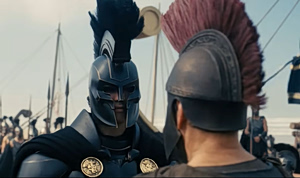
Using Troy (2004) as an example, Veremis argues that Brad Pitt’s portrayal of Achilles was excellent—”it couldn’t have been better”—but that Menelaus and Agamemnon were, by contrast, “ridiculed,”in the film. He points out the internal contradiction: “Helen, who was the most beautiful woman of her time, chose Menelaus among all the young men available to her.” He could not, therefore, have been the ugly, stupid, or roguish caricature depicted in the film. “In fact, he was a very good-looking man. He was brave. He fought with Paris and bested him, forcing Paris to beg Hector for help.” Such distortions, Veremis warns, offer a deeply skewed picture to a global audience with little prior knowledge of ancient Greek culture. “Menelaus was an admirable character,” he insists.
The Casting Controversy
The casting controversy has taken on an additional dimension with the reported casting of Lupita Nyong’o—a woman of African descent and a vocal advocate for authentic cultural representation—in the dual roles of Helen of Troy and her sister Clytemnestra. In a 2018 BBC interview, Nyong’o stated firmly that African or Black people should be cast when the storytelling concerns African culture. Authenticity and fidelity to heritage, she argued then, should be non-negotiable in Hollywood. Yet in a more recent interview, following the disclosure of her casting, she appeared to shift her position, suggesting that The Odyssey is “just mythology” and that questions of authenticity do not therefore apply in the same way.
Helen in Troy (2004) x The Odyssey (2026) pic.twitter.com/hhEKVwcbI9
— Movies Scenes 🎫 (@SceneinCinema) February 1, 2026
More Than Myth
Veremis takes issue with this reasoning. Mythology, he argues, is far from trivial: “In fact, it is a kind of religion. Most ancient Greeks had read the two epics—they were the equivalent for Christians having read the Gospels. These two epics are the epitome of our collective memory.” To diminish them, he says, is a serious mistake. “People in antiquity who read The Iliad and The Odyssey believed what they read—they did not think of it as mythology. Alexander the Great was brought up on these texts. He considered Achilles a role model and felt compelled to live up to him.” Veremis adds pointedly: “And he was no ordinary individual—he was a man who had Aristotle as his teacher. Greek mythology is very wise. It is not a stupid story a granny tells her grandchildren. It is not a fairy tale.”
Ithaca Beyond the Silver Screen
The myths, wisdom, and values at the core of Homer’s epics remain deeply embedded in contemporary Greece. On the island of Ithaca—legendary home of the ingenious Odysseus—The Odyssey continues to serve as a central pillar of cultural life and an enduring source of artistic inspiration, as reflected in the island’s annual theater festival. Athena Arseni, a municipal official and the festival’s Artistic Director, reminds us that The Odyssey is a work of global cultural heritage with Greek roots, and that it would certainly be an honor to see more Greek actors participating in a major production such as Nolan’s film. Greece, she notes, is home to artists of international caliber, and the presence of Greek talent in works inspired by Greek heritage is always welcome and deeply symbolic.
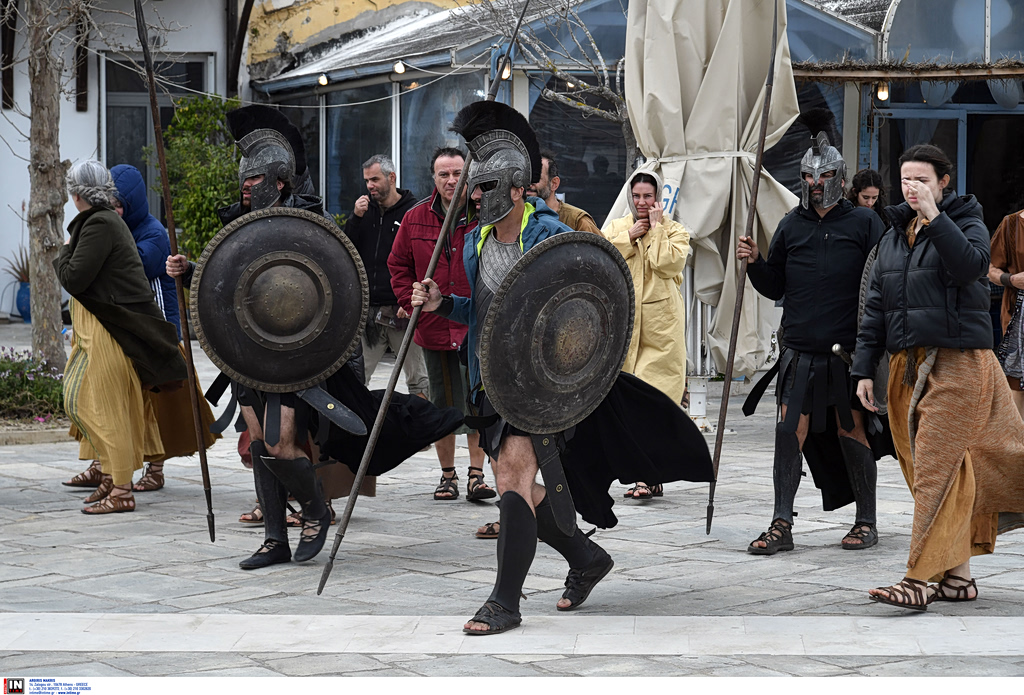
Behind the scenes of “The Odyssey” in the Messina region, Greece. NIKITAS KOTSARIS/INTIME NEWS
That said, Arseni is careful to draw a distinction. Every creator who engages with The Odyssey brings their own artistic vision to it, and a historical documentary—which seeks to present documented facts—is a fundamentally different enterprise from a feature film that draws on Homer’s work to craft a new narrative. After all, she observes, that is the very essence of art: to find inspiration in a great work and approach it through a fresh creative perspective.
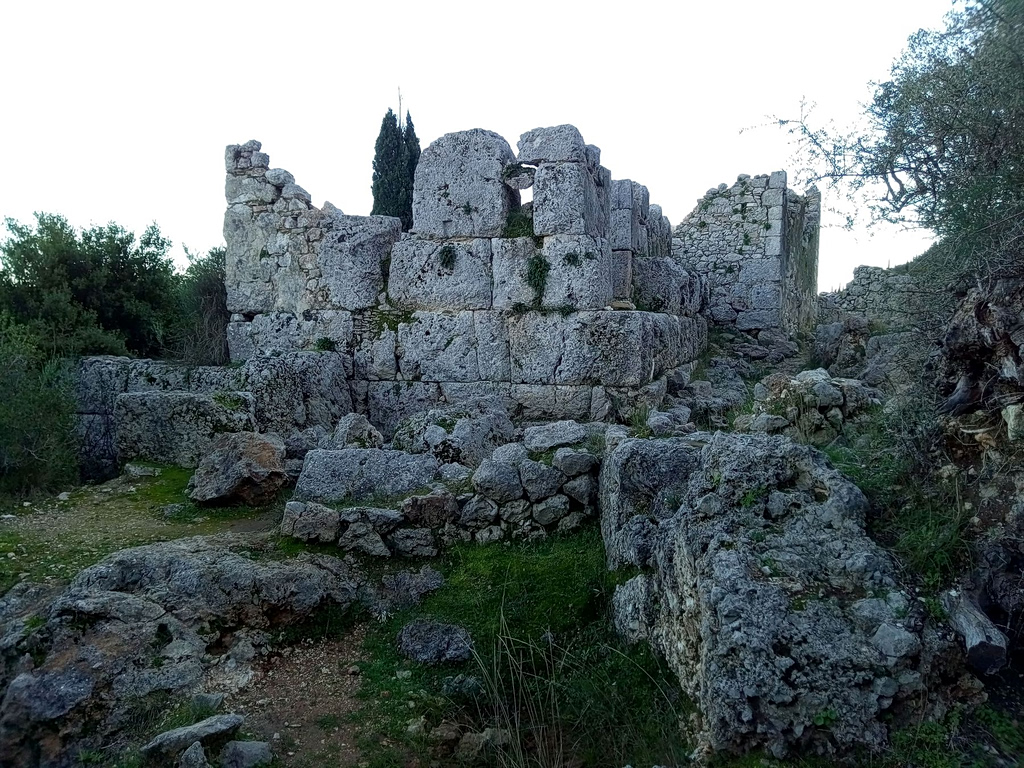
Ithaca, Agios Athanasios – School of Homer. View of the Hellenistic-period tower-like structure at Ano Andiro, seen from the north. © Chr. Mparampeas
As for Ithaca itself, Arseni is unequivocal: the island does not need a film production to secure its place on the world cultural map. For thousands of years, it has stood as a universal symbol of homecoming, hope, patience, and the human capacity to endure in the face of adversity.
And it will continue to do so long after the credits roll.