
 Μake us preferred on Google
 Dr. Henry Heimlich devised a new technique more than 50 years ago to stop people from choking. Simplicity, studies, shrewd promotion by its inventor—and a demonstration on The Tonight Show Starring Johnny Carson —made the Heimlich maneuver a go-to method.
Now, it is fighting for the stage.
Advocates, companies and some politicians argue that the Heimlich maneuver and back blows, another established method of rescuing people from choking, aren’t always enough. On social media and in state legislatures, they are plugging portable anti-choking devices, designed to suction stuck food or other objects from a person’s airway.
Texas enacted a law last year requiring school districts to stock at least one such device on each campus with at least one employee trained to use it. New York City passed one, too. At least nine other states have weighed or are weighing bills to put devices into schools or other facilities.
“It’s a priority,” said New Jersey state Sen. Kristin Corrado , who co-sponsored one bill. “If we have the opportunity to save a life, we have to use all means available.”
The main U.S. maker—a company called LifeVac—has donated more than 10,000 devices to schools across the country. CEO Arthur Lih believes every school should have them in the cafeteria, the nurse’s office, the principal’s office and the physical education department. That is good business: The company sells a school kit that includes four LifeVac devices and retails for nearly $280, though it offers schools a 20% discount. Lih said he expects the company will bring in $70 million in revenue globally this year.
While a few other anti-choking devices are marketed on social media, the LifeVac is the sole suction-based, anti-choking device authorized by the Food and Drug Administration. The agency gave it the green light in March as a second-line tool to be used only after traditional methods for dealing with choking have failed .
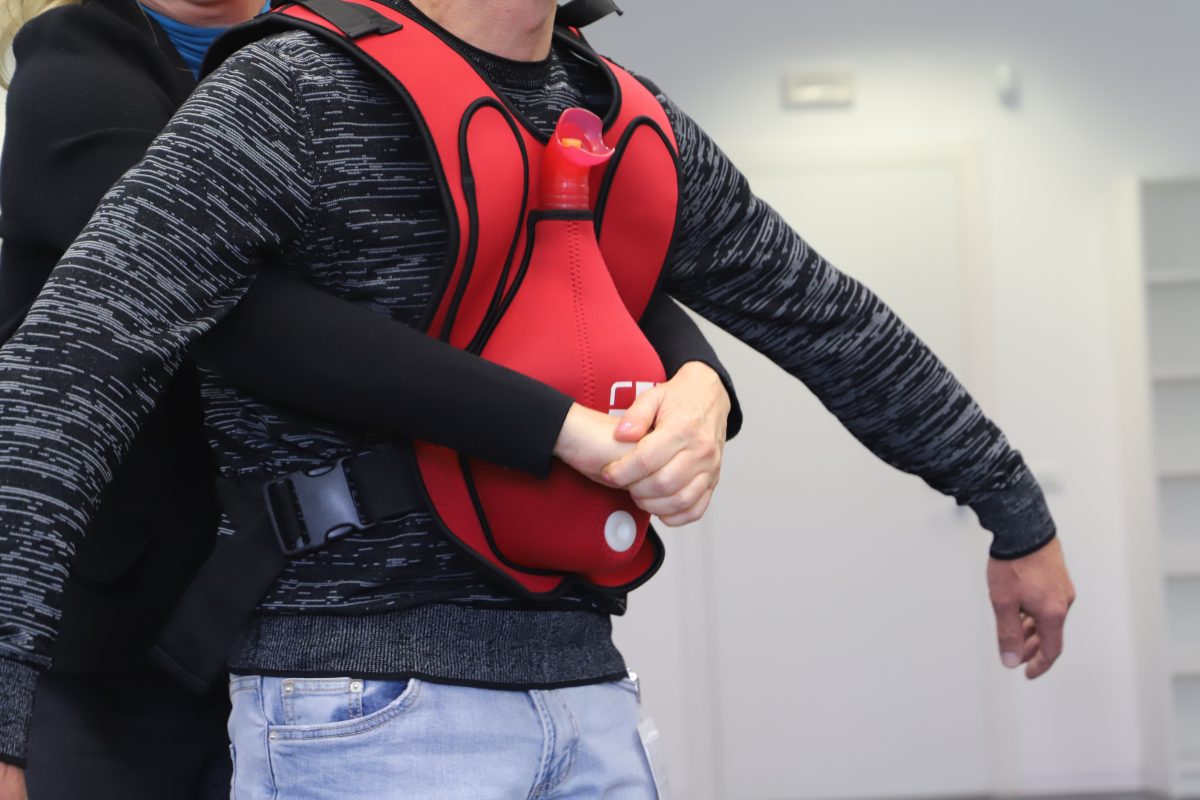
It consists of a mask that is placed over a victim’s nose and mouth and a suction device that creates negative pressure to pull out a stuck object. Lih said inspiration for his design came from a sink plunger from Home Depot and suction devices in ambulances.
But medical guidelines and many researchers say there isn’t enough evidence to recommend anti-choking devices. State health departments, emergency responders and teachers unions have pushed back against proposals to require them in schools because medical guidelines haven’t endorsed them. New York City said it wouldn’t implement its law unless the devices are recommended in medical guidelines.
Among those voicing concerns and championing the role of the Heimlich maneuver are the children of the doctor behind it.
Phil Heimlich , a former prosecutor and former county commissioner in Cincinnati, said that in their marketing, makers of anti-choking devices tout their products but don’t emphasize that they are for use only as a second-line option. “There’s massive amounts of money going to promote these devices,” he said. “If they were serious about informing people about how to save lives, they would put the Heimlich maneuver on top of their website.”
Lih, who invented the device, said his company isn’t trying to supplant the Heimlich or back blows and instead promotes it for use only when those established methods fail. “If someone’s choking, try and get them to cough, do the Heimlich, back blows, do it, do it, do it, do it,” he said. “If it doesn’t work, you got a backup.”
“We are promoting the heck out of the Heimlich. Everything we say is, use it after protocol,” Lih said. The anti-choking device also offers a rescue option for people with disabilities or other conditions like obesity or pregnancy that make established methods “impossible or impractical,” he said.
The American Heart Association and American Red Cross, which offer first-aid courses, don’t recommend use of the devices in their choking guidelines. “It might work, but we don’t know,” said Dr. Benny Joyner , a pediatrician and co-chair of the AHA’s pediatric basic life-support guidelines. Studies on the devices so far are too limited to base a recommendation on them, he said.
Recommending the devices would be a step toward incorporating them into first-aid training programs. The American Red Cross said that while its scientific advisory council once discussed a potential recommendation for these devices, its guidance remains unchanged, and anti-choking devices aren’t included in its courses or training programs.
Knowing how to rescue a choking victim is critical. About 5,000 people die every year from choking in the U.S. It is one of the leading causes of pediatric death. Children can be at risk particularly in school lunchrooms, where they often eat quickly and are distracted. Any intervention needs to be quick and effective: A person who is choking can lose consciousness and go into cardiac arrest within three to five minutes.
Some emergency-response experts express concern that people will waste precious minutes grabbing an anti-choking device when they should be doing back blows, the Heimlich maneuver—officially known as abdominal thrusts—or CPR. The FDA warns that “using an anti-choking device before established protocols could delay critical life-saving action.”
In addition to schools, LifeVac promotes the device to police departments, families, as a baby shower gift in ads on social media and on talk shows and through a national spokesperson—Dr. Ben Carson, former secretary of housing and urban development and a retired pediatric neurosurgeon.
Eight-year-old Nicholas Gray died in February after choking on a grape at school in Manvel, Texas. School staff, including a nurse, and emergency responders tried multiple techniques, including the Heimlich maneuver and a LifeVac anti-choking device, as well as a defibrillator and CPR, according to his mother Kenzie Gray and reports of the incident reviewed by The Wall Street Journal.
Gray believes that teachers need hands-on training in the traditional techniques to rescue people from choking. In-person training became mandatory at the school only after her son’s death, she said. The school didn’t respond to requests for comment.
“It was a very expensive price for me to pay in that my child is now in heaven,” she said.
Lih said his company didn’t receive confirmation that a LifeVac was used in the incident. The device has been used to resolve 120 choking incidents successfully in schools, the company said, and overall, it has reports of more than 6,500 lives saved with its device.
LifeVac’s road to authorization was rocky. The FDA warned the company four times in 2025 to stop marketing and distributing its device prior to authorization, and then pointed out that it hadn’t complied with those requests.
When it authorized the device in March as a second-line treatment after the Heimlich and back blows, for adults and children over 1 year old, the FDA required LifeVac to conduct a study collecting data on device use, including adverse events, and further performance testing on the device to show it works as intended.
Lih said scientific evidence shows the device is safe and effective, including 22 independent studies.
A summary of its request to the FDA for authorization showed 961 cases of complete or partial success, 87% of the uses analyzed from the company’s database. undefined undefined But the study also showed 53 serious adverse events related to choking from 2016 through 2025 including 15 deaths. The company said none of the deaths were related to its device.
The FDA said the deaths don’t establish that the device caused or contributed to those deaths.
Dr. Cody Dunne , who led one of the studies among the 22 cited by LifeVac, said more studies are needed. Published research so far on anti-choking devices is based on case reports—which selectively report choking events—as well as studies on mannequins and cadavers, which don’t directly simulate a live human choking, he said.
“Initial data is promising and there may be a role, but we just don’t have the clear data to tell us exactly where that role is,” said Dunne, an emergency medicine physician and Ph.D. candidate at the University of Calgary who has conducted four studies on anti-choking devices and hasn’t taken funding from LifeVac.
He and other researchers are also studying the established methods more closely, to determine how well they work, whether one works better than another and to compare them to the anti-choking devices.
Most important right now, Dunne said, “would be to make sure that every single teacher, every high-school student, every principal, every janitor knows basic CPR and basic life support because that’s the first line, and there’s no sense having the second-line therapy if everyone’s not comfortable doing the first line.”